Upholstering Chairs from Fabric to Finish

Re-inventing an old chair is one of the easiest furniture makeovers, and it is so rewarding to create a one-of-a-kind gem like this!

Queen Anne Before After

Free Queen Anne chairs found through Craigslist: from worn and boring to fresh and elegant!

When I debuted my Queen Anne chair makeover, I provided some tips for painting. Today, I’ll cover the basics of reupholstering a chair seat. I had also mentioned in the earlier post that I had discovered a great fabric choice for seats, so let’s start there.

Choosing Fabric:

The secret is that this beautiful fabric, with its bold graphic pattern and textured weave, is not a standard decorator upholstery fabric but an outdoor fabric! It won’t stain, fade, or wear out. You can wipe or even scrub it clean! These days, the options for colors, patterns, and textures in outdoor fabrics are immense. I’ve used outdoor fabrics on several projects, and the results have been great!

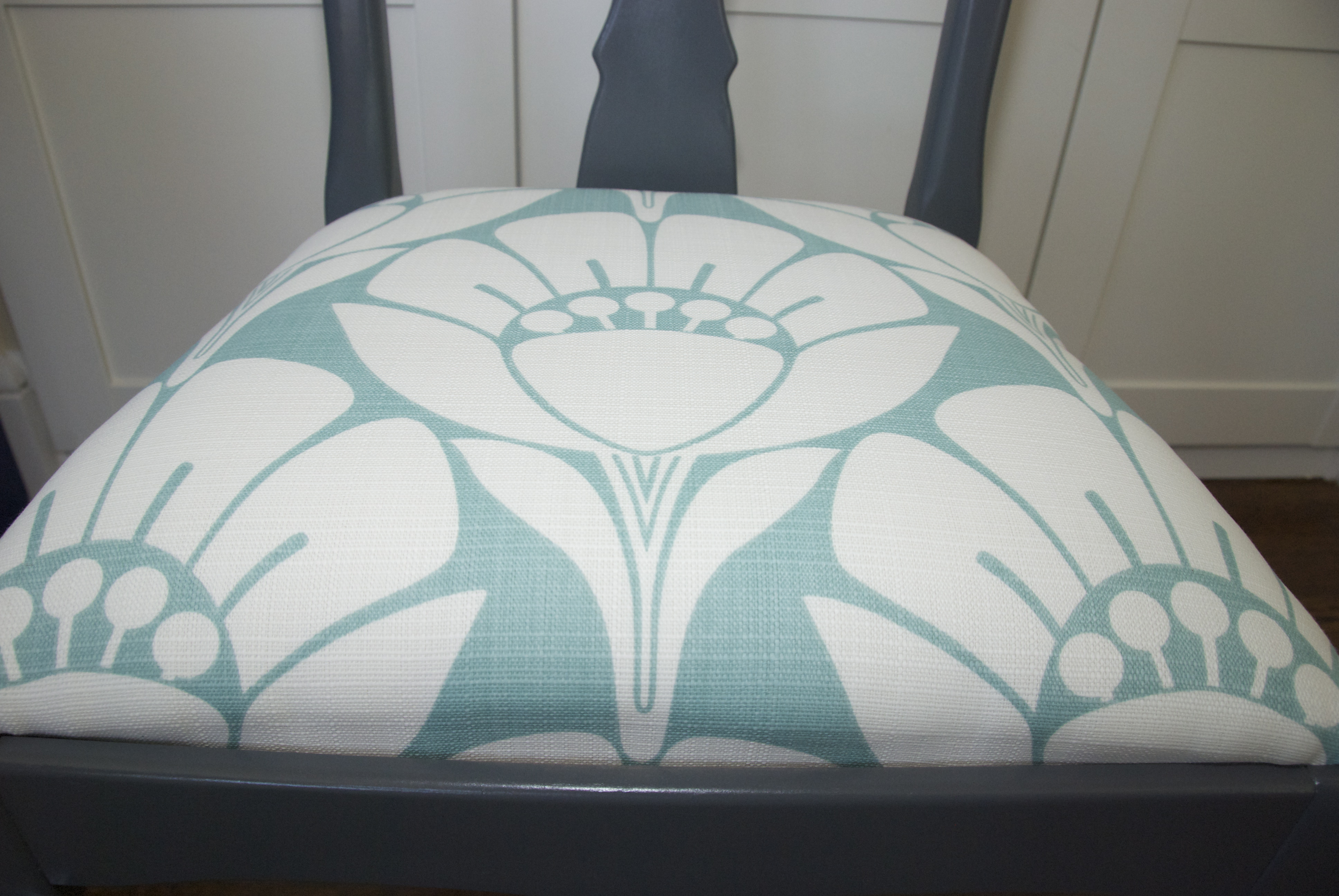
P. Kaufmann fabric seat

“Muse” by P. Kaufmann in Aqua. A colorful outdoor polyester fabric with a linen texture.

Robert Allen fabric

“Lake Paradise” by Robert Allen in Spa. Another outdoor polyester with a whimsical print. These are our dining room chairs. More about them soon!

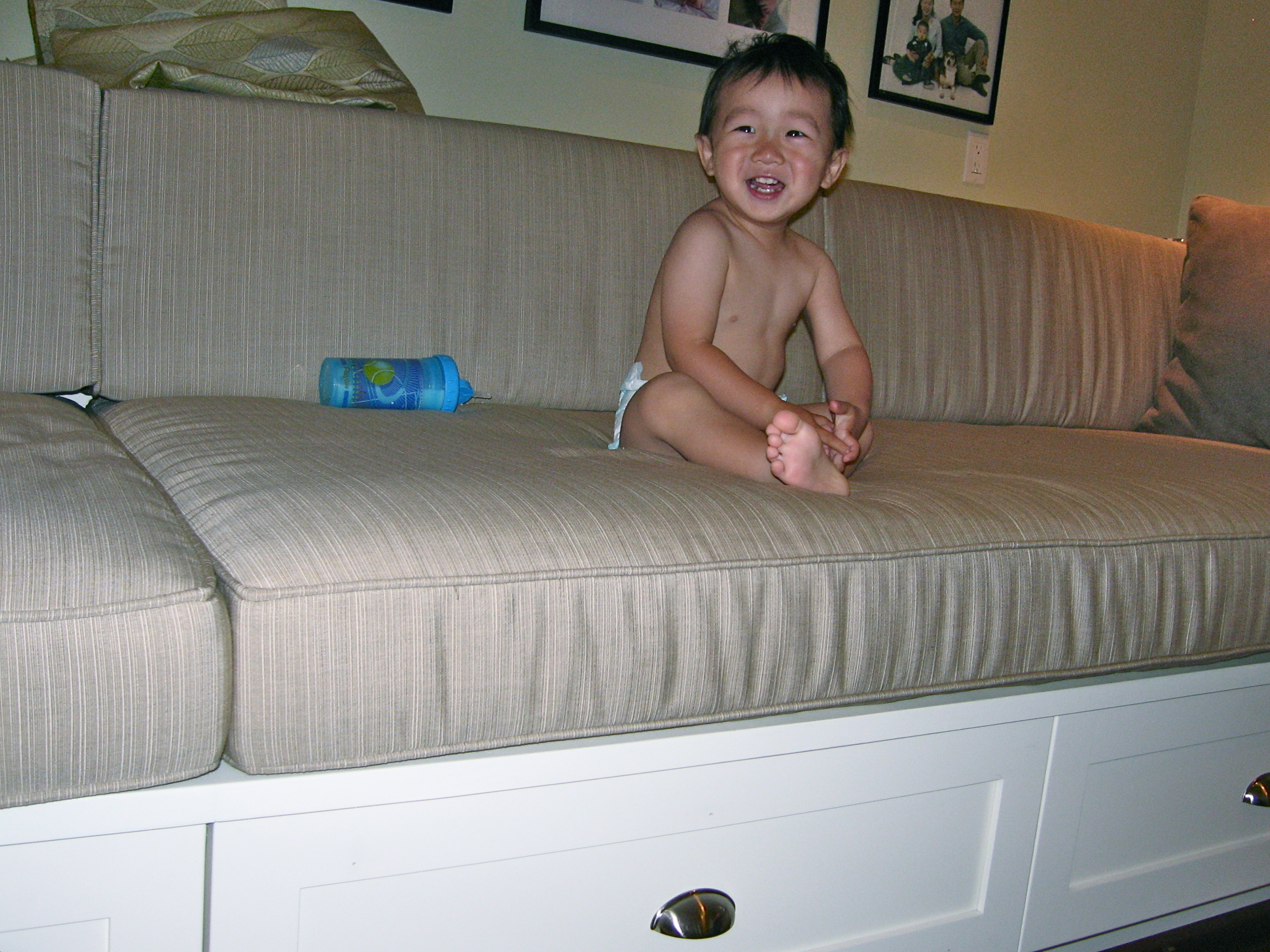
built-in bench

“Dupione” by Sunbrella in Sand. This acrylic weave indoor/outdoor fabric was on a built-in bench in our old house and was clearly toddler- and sippy cup- friendly. I’d love to recreate that bench in our current home. It was great for lounging and had lots of storage in those drawers underneath.

I bought the Lake Paradise and Muse fabrics from fabricguru.com. This is definitely my favorite source for online fabric shopping. They have good prices and selection, and they make it easy to search, which can be overwhelming with some of the other sites. I bought the Sunbrella Dupione from a marine supply store online.

A couple of caveats: the polyester outdoor fabrics are stiffer than cotton upholstery fabric, so they don’t feel as soft or wrap as neatly around corners as a cotton. Also, while fine for the upholstery, they would feel stiff on a cushion, so if you want to create coordinating pillows or other items, you might want to look for the same print in a regular decorator cotton. I found the acrylic was much softer to the touch, though I did not do the sewing on those fabulous bench cushions. I also have noticed some slight piling on our dining chairs, but it’s very minor, and I am sure that they would be in much worse shape by now, if I had used a standard cotton fabric, because we eat there every day.

Upholstering a Seat:

You will need:

  • flat head screwdriver and pliers
  • sheet of foam (unless you are reusing the existing seat cushion)
  • upholstery fabric
  • scissors
  • staple gun and staples

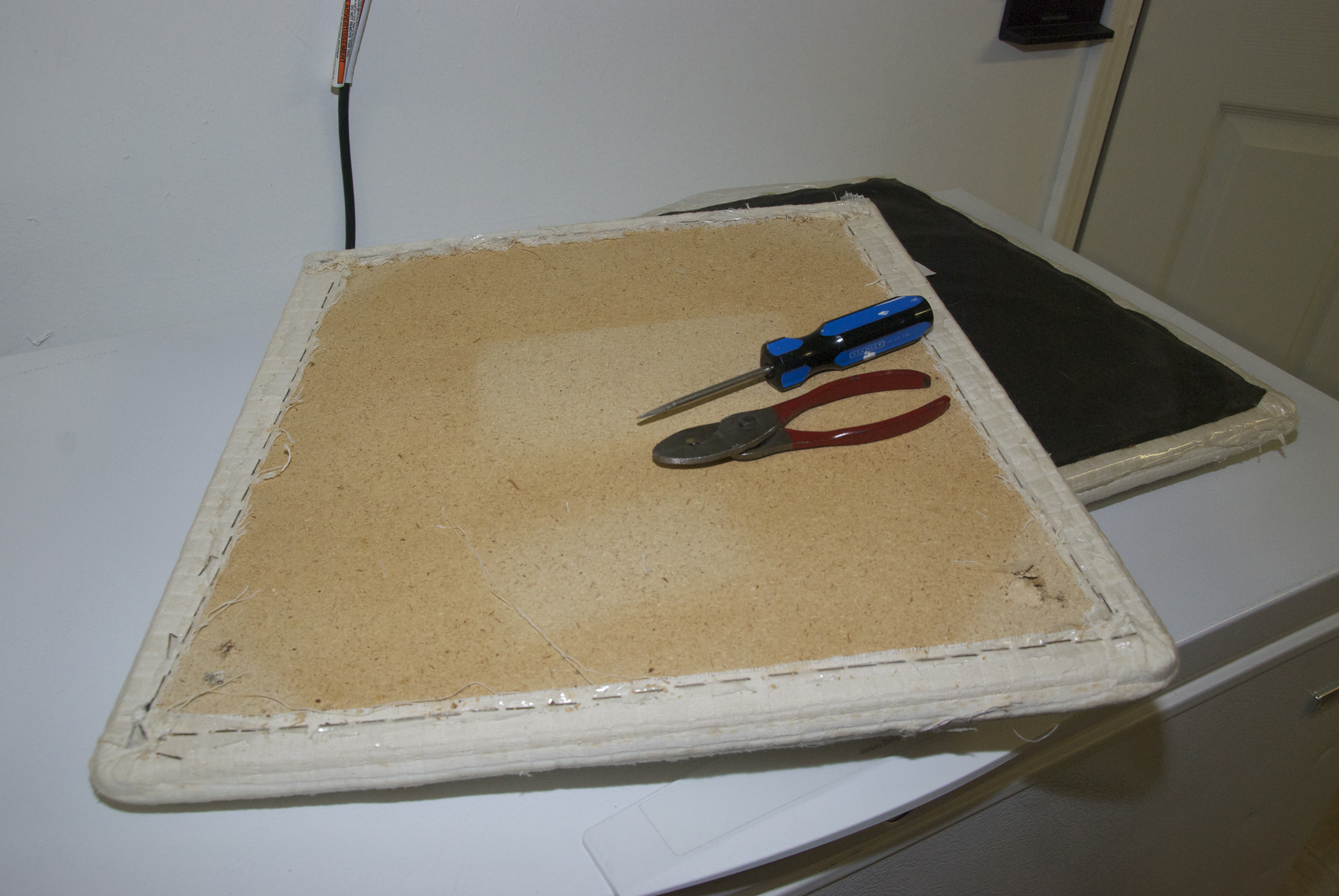
1. Use a flat head screwdriver and pliers to remove all the old staples. Argh! Look at all those staples. This took a long time!

remove staples

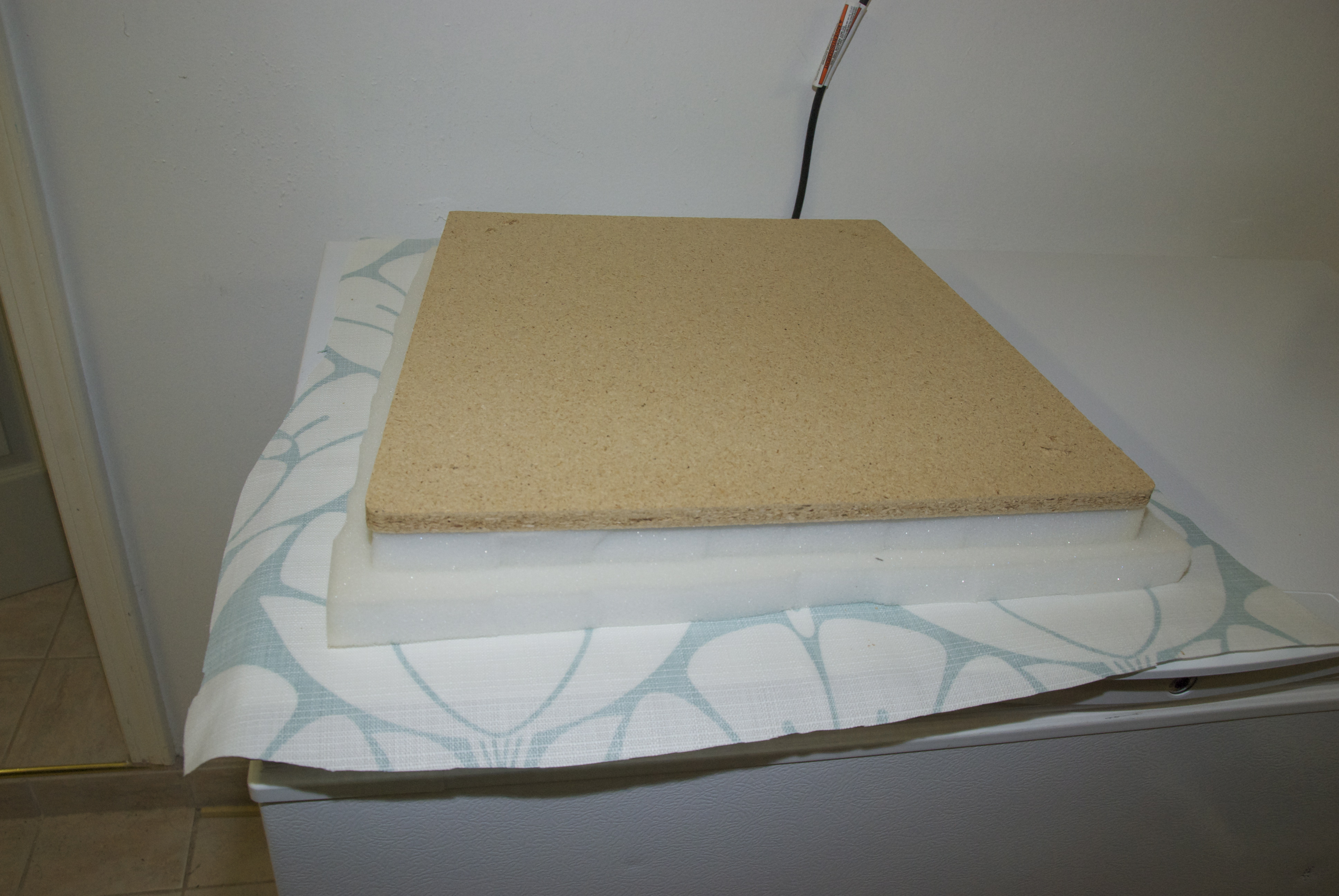
2. If you aren’t reusing the old foam, cut a new cushion from a sheet of foam from the craft store. I used two pieces of 1/2″ foam, one cut to fit the seat exactly and the other a bit wider, to wrap around the outside of the seat.

new foam

3. Center the fabric under the foam and seat bottom. For a large print, like the “Muse” on my Queen Anne chairs, pin the fabric in place, to make sure the pattern is centered.

Center fabric

4. Using the staple gun, tack the fabric onto the seat bottom on the center of each side. (Apparently, I forgot to take a picture of this!)

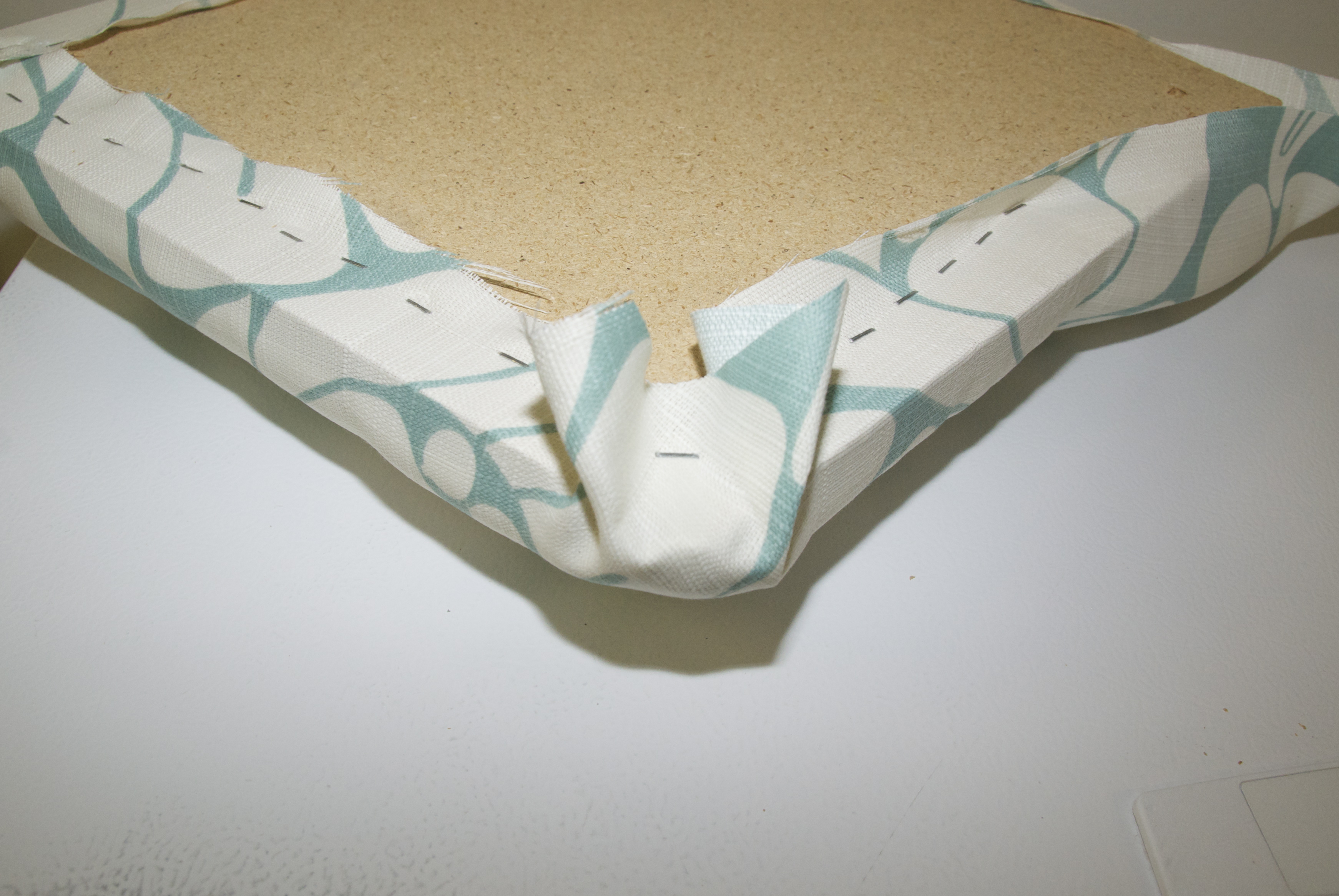
5. Next, staple from the center of each side towards the corners, stopping about two inches from the corner. Fold up the fabric at the corner and tack it to the bottom of the seat:

Tack the corner

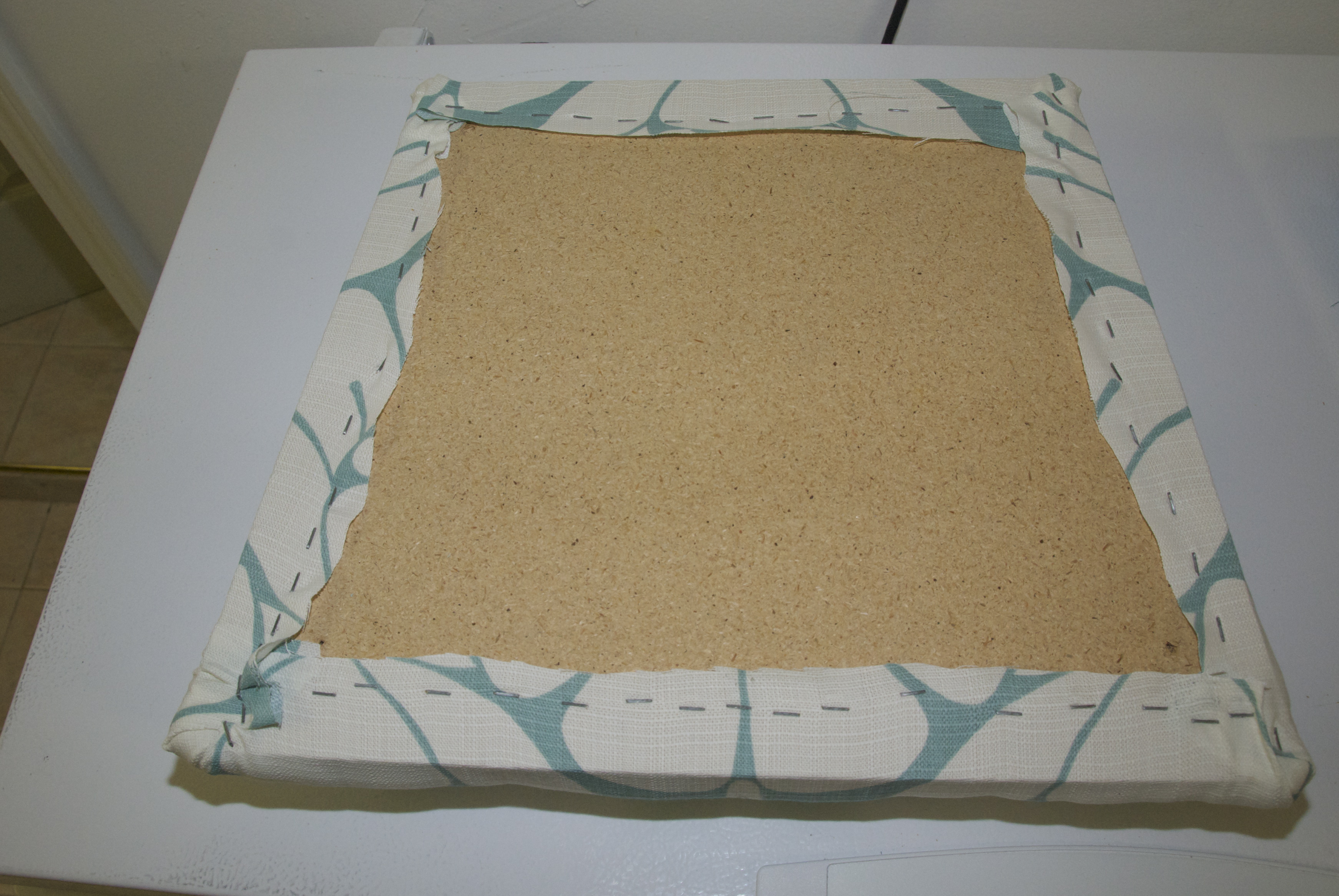
6. Now finish stapling the fabric on the sides. Depending on the angle, sometimes you need an extra fold in the fabric.

7. Repeat for all sides and corners, and you’re done!

Let me know if you have any questions!

“Jewels”

Chair Makeover: The Queen’s New Clothes

I have a confession: I am in love… with my newly made-over chairs.

I like a lot of classic furniture, but I never was interested in traditional ornate wooden chairs. The curves and details just didn’t do it for me… until I saw how fabulous they can look when painted in a fresh color! Here are some of the inspirations that made my heart go pitter-patter.

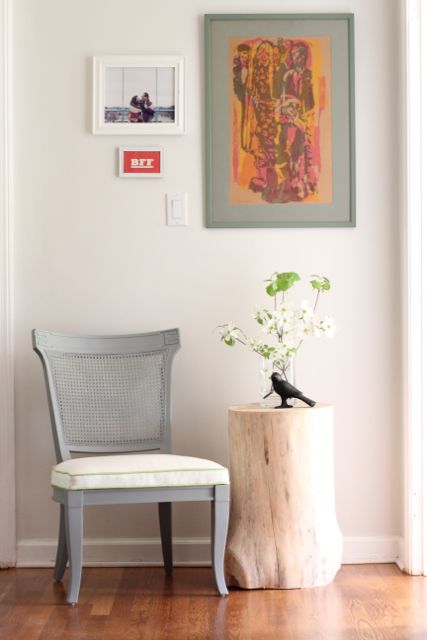
A fresh-looking chair in grey with a white and green seat by Molly at the Nesting Game. Click the picture to see the details on her blog.

Go to The Nesting Game

Gold leaf and blue chair

Kate at Centsational Girl has so many great ideas for furniture makeovers, including this sweet desk chair in blue with gold leaf.

Go to Centsational Girl

When I saw these chairs, I desperately and urgently wanted to make my own! And I could not believe my luck when, on the first day I looked, I found someone giving away two Queen Anne chairs for free on Craigslist. The chairs are not vintage, but all the better, so I needn’t feel guilty about painting them. The guy who was giving them away had several other pieces of furniture for free that had all been victims of his cat, as you can see in the “before” picture.

Queen Anne Before After

From worn and boring to fresh and elegant!

I wish I had the space and a use for ten of these chairs, because I’d love to paint some in apple green, light blue or white. The upholstery options are endless, too. For this project, I decided on grey. Grey is the popular “new neutral,” and I agree that it is beautiful and timeless.

Painting furniture can be broken down into just a few simple steps:

1) Prep: sand and wipe down your surface.
2) Prime: it’s worth the time and money to use a coat of primer, as this will seal the existing wood or paint and help the new paint adhere.
3) Paint: I used a grey spray enamel from the hardware store.

  • Tip: chairs like these have lots of of angles and curves, and it’s easy to miss areas, so I try to work my way around systematically. I stand on each of the four sides and spray anything that is facing me, working my way around the chair. Then, I work my way around again, standing at each of the four corners and again spraying anything that is facing me. By doing this, you shouldn’t miss any spots.

4) Clear topcoat: this step is also worth the time and money, as the paint will wear and could rub off on walls or other furniture.

queen anne after

Another look at the new chair. I love the feminine and elegant look! have a secret about that beautiful fabric that I’ll share soon!

I love home decorating ideas that don’t have to cost a lot of money to get a one-of-a kind beautiful result.  I definitely have my eye out for the next great find!  These chairs are for my sewing and craft room, which is also our guest room. In a house full of boys, it’s the one place where I have fun adding some flowers and curves.

UPDATE: I followed up with a post about the upholstery, including my new favorite choice for durable and beautiful fabric.

“Jewels”

This project is shared at:
HookingupwithHoH

Sew a Growth Chart – Tutorial

Bad news: I’m blogging and sewing tonight while sitting on a step stool. Good news: it’s because I am in the middle of making over my free Craigslist Queen Anne chairs for the sewing room. They are already repainted, and I just need to re-do the seats, which I hope to do this weekend.  Wait! What was I supposed to be talking about… oh yes…

In a recent post, I brainstormed ways to help my friend preserve the record of her children’s heights marked on a door jamb in their house. I loved looking at all the great ideas out there, as well as coming up with some of my own.

At the end of that post, I included a picture of the hanging fabric growth charts I made for my kids. In case you want to make one for your family or as a gift (I first designed this as a baby shower gift!), I’ve broken down the steps here. Let me know if you have any questions!

As I mentioned last time, I’m sure there are similar growth charts out there, but I designed this one myself, keeping in mind that I wanted it to be

  • portable – so that we could take it with us when we moved (a feature this post proves is valuable!)
  • easy to store – fabric can be rolled up for compact storage and ironed later – wood, obviously, cannot, and paper could get folds and wrinkles – though you could wrap around a paper towel roll to minimize this.
  • complete – I wanted to be able to record my kids’ growth from birth to adulthood. Many ready-made growth charts stop around five feet. Granted, most tweens and teens may not have any interest in growth charts anymore, but their parents might, so I made mine go up about 6’2″, just in case!

The finished size of this growth chart is approximately 11.5″ wide x 54.5″ high.

For each chart, you will need:

  • fabric markers or sharpies
  • white fabric (8.5″x58″): I used white cotton twill, which I chose for its stability and weight
  • backing fabric: I used twill or denim, again to add stability and weight
  • border fabric (equivalent to 1/2 yard of 42″ wide calico): I won’t be bossy here – use whatever you like!
  • 1/2″ diameter wooden dowel (approximately 2′ long)
  • two small screw eyes
  • ribbon for hanging

1) On a strip of white fabric that is 8.5″ wide for each growth chart, mark out inches from 1’6″ to 6’2″ (or whatever you like) by laying a tape measure on the fabric and using a ruler to draw lines with a fabric marker or Sharpie. I used a different color and longer marking every six inches. The short lines are 1.5″ and the long lines are 2″. Remember that lines on the finished product will be shorter, because a 1/2″ will be in the seam allowance.

If you are making more than one growth chart, you can be efficient and mark lines for two at a time, as shown below. You will need a slightly longer fabric strip and want to number from both ends, so the marks are on the left of each chart.

growth chart

Inches marked on white fabric using fabric markers.

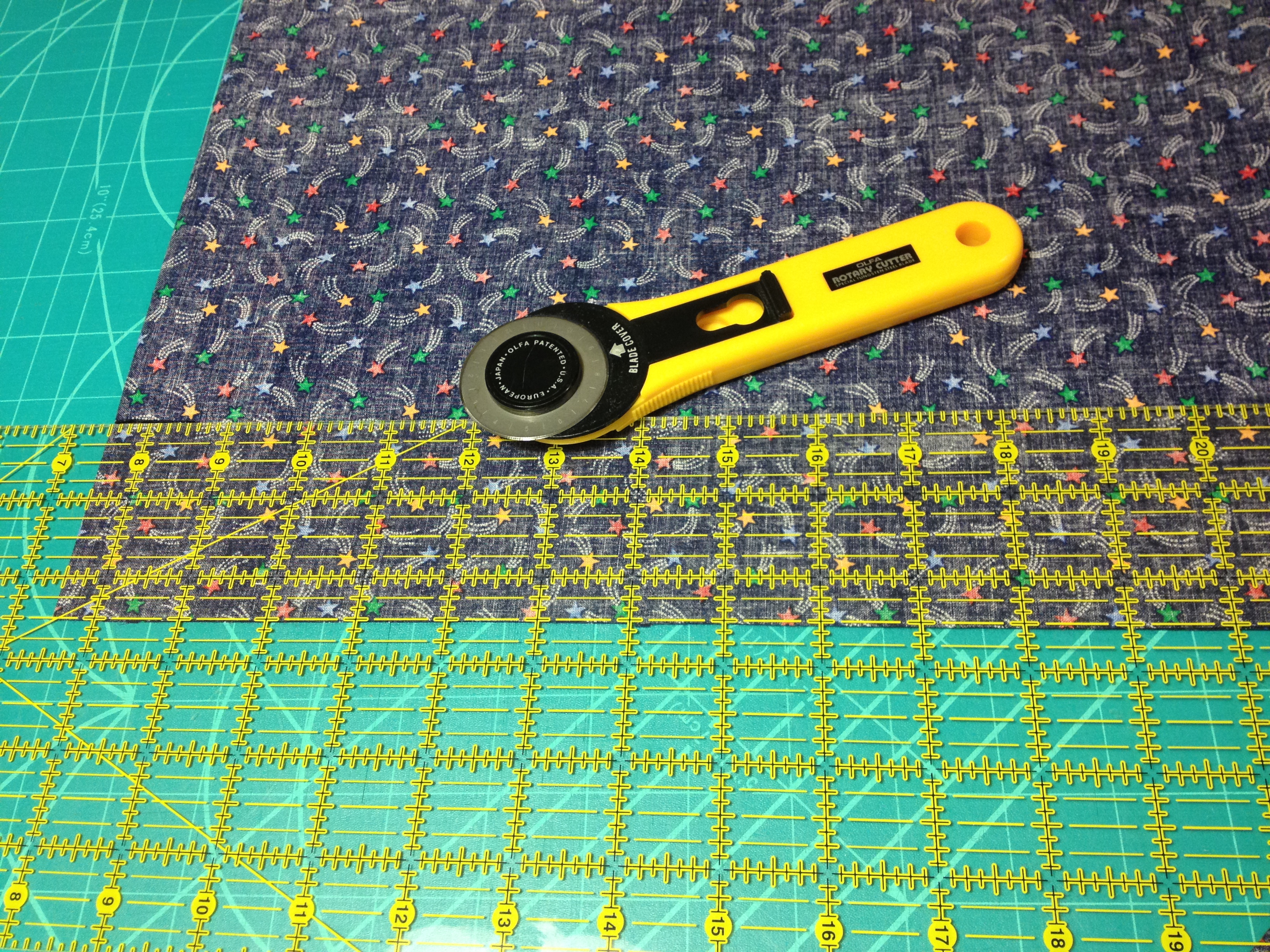
2) Cut out strips for a border. The side strips are 2.5″ wide. The chart should be 58″ long, but cut your strips about an inch longer, in case you are like me, and straight lines magically transform into uneven ones… For preparing the border, I used a rotary cutter with quilting ruler and mat. These tools are designed for quilting, where you have to piece together very precise lines and angles, but they work well for lots of other projects.

Quilting tools

Quilting tools: rotary cutter, quilting ruler, and mat. These are so useful for getting straight lines and square angles on all sorts of projects. I even use the mat and ruler for cutting paper.

3) Sew the side strips onto the white center, using a half inch seam allowance. Iron flat, with the seam toward the border. Trim the border pieces so they are flush with the white section. Again, the quilting tools are great for getting things straight and square.

4) Next, cut strips for the top and bottom border. These are 5.75″tall, and they should be 11.5″ wide. Again, I cut the pieces a bit wider, to compensate for the nasty elves in the sewing machine. Sew these on to the top and bottom, using a half inch seam allowance. Iron with the seam toward the border. Now that the front is complete, trim where necessary to make sure it’s even (square at the corners, same height on both sides, same width at top and bottom).

joiining growth chart

After trimming the center piece, join the top and bottom borders.

You could add any decorations you want to the front at this point. I put each child’s name at the top, piecing together letters from a fun teddy bear alphabet print. I also added a “Made with love by ‘Jewels'” tag to the bottom.

name label

I put each child’s name on his growth chart using letters from this cute teddy bear print.

5) Cut a piece of backing that is the full size of the front (should be about 11.5″ wide and 69″ long, but measure your actual piece).

6) With RIGHT sides together, pin, then sew the front and back pieces together, using a half inch seam allowance, leaving one of the short ends open, so you can turn the piece.

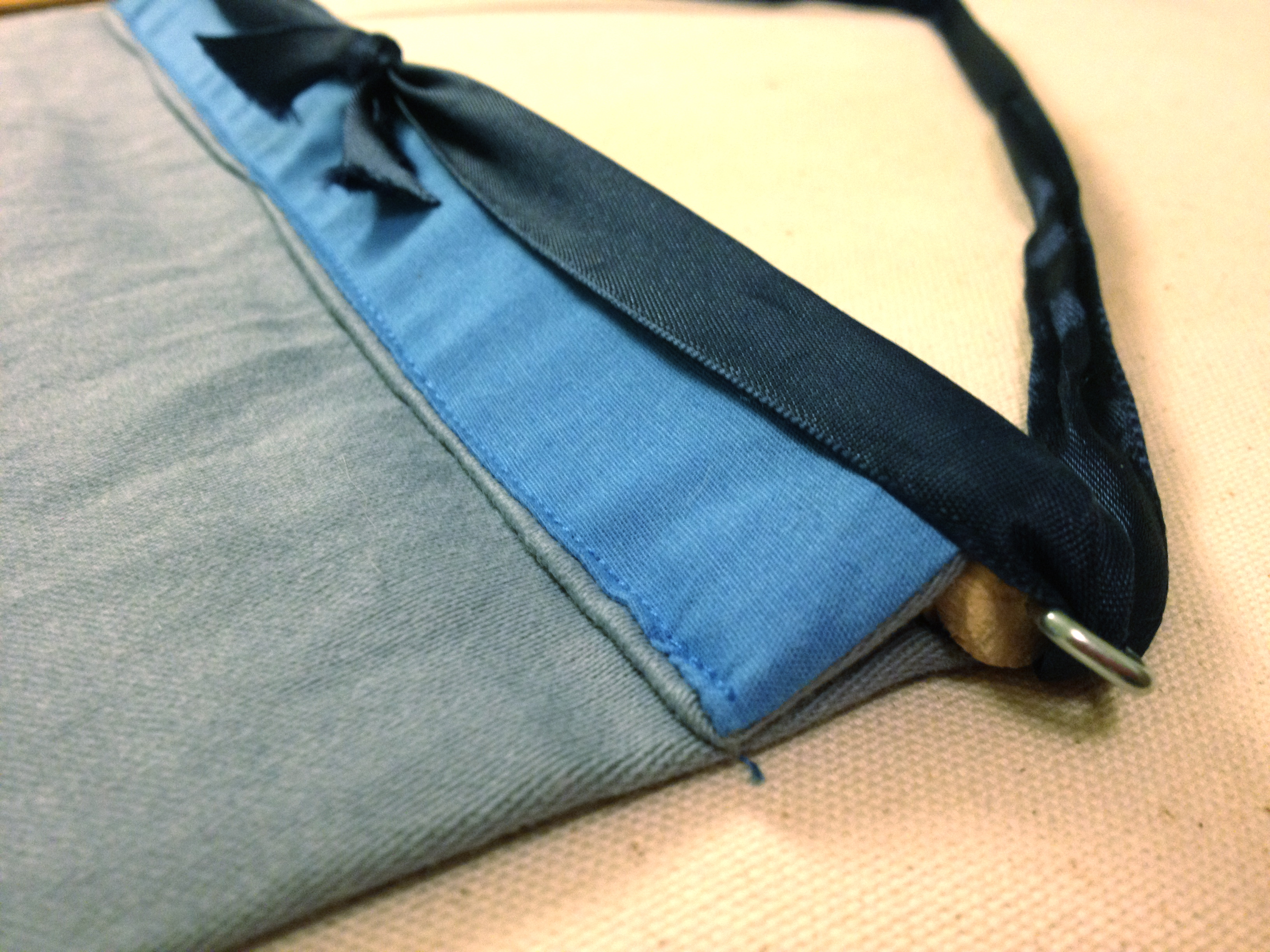
7) Cut diagonal triangles from the corners, so they turn neatly. Then, turn the growth chart right side out and tuck a half inch seam allowance under on the open end. Iron the whole piece flat.

trim corners

Cutting across the diagonal at the corner will give a neater finished appearance.

8) Cut two pieces of doweling that are the same length or a tiny bit shorter than the finished width of your growth chart. Attach the screw eyes to both ends of one piece.

9) Fold towards the back and sew down a 1.25″ flap on the top and bottom to create a pocket for the dowels.  This will also close the end you left open.

10) Insert the plain dowel in the bottom pocket and the one with the screw eyes in the top.  Thread a ribbon through the screw eyes to hang the chart.

finishing the chart

Finish: Sew 1.25″ flaps on the top and bottom to hold the dowels. Insert screw eyes in the top piece and thread a ribbon through for hanging.

Tada!  The finished growth charts are hanging in the hallway outside our kids’ bath, opposite the newly organized laundry area.

finished growth charts

Finished growth charts

Hope I made that clear. I’d love to see pictures, if you make one of these yourself!

“Jewels”
This project is shared at:

Laundry Area Organization: Loads of Charm

When we moved into our house, we renovated the upstairs, and one of our goals was to bring the laundry up from the basement. With the kids, we do so much laundry that I knew this would be a huge improvement for us: no lugging baskets up and down the stairs, no descending into the damp basement daily.

And, indeed, we love having the laundry  close to our bedrooms – well, as much as one can use the word “love” in association with dirty clothes and folding. The laundry area moved to a small hallway next to the kids’ bathroom, which makes it easy for them to drop their things in the hamper when changing. The new location also means that we can quickly start loads, without going out of our way, and we can sort and fold in the comfort of a bedroom.

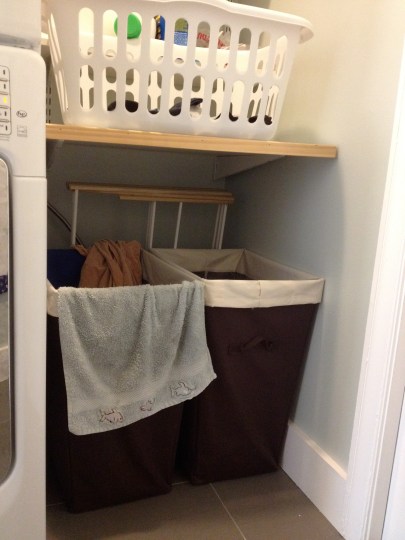
Of course, there are limitations to the new laundry arrangement, too. Because the area was added on, rather than part of the original house design, it’s small: just enough room for a stacked washer and dryer and a few shelves. And because it’s in the hallway, the laundry area is constantly visible – no shutting the doors to hide clutter!

On the bright side, decorating a small space is a doable project! Here’s our laundry area “before.” Not much to work with but also a manageable task that won’t drag on like our powder room.

laundry area before

BEFORE: top of laundry area

laundry area before - bottom

BEFORE: bottom of laundry area

Most of the examples of laundry room designs feature full rooms, and it was hard to apply those ideas to our little space. When I saw this laundry closet makeover by Amy at eat.sleep.decorate., I felt like it was just the inspiration I needed! I love the pretty storage baskets – all tied together by the cheerful green color scheme, but varied to give visual interest and a homey feel. I don’t always like designs to be symmetrical, but I think it works here, where there are so many things in a small space. The labels are adorable and functional too – even in a small space, where you basically know where things are, labels really help in both finding things quickly and in keeping things organized – you (and your family members – nah, who am I kidding?) are more likely to return things to their proper place, when it’s clearly labelled. Finally, I agree with her that a touch of art on the wall really makes this laundry area feel like a part of the home, rather than just a utilitarian necessity.

Amy's laundry closet

My inspiration: Amy at eat.sleep.decorate. created this fresh and organized laundry area. Click the picture to see her entire post with lots of great tips.

Go to eat.sleep.decorate.

I started by taking inventory and sorting what we had in the area:

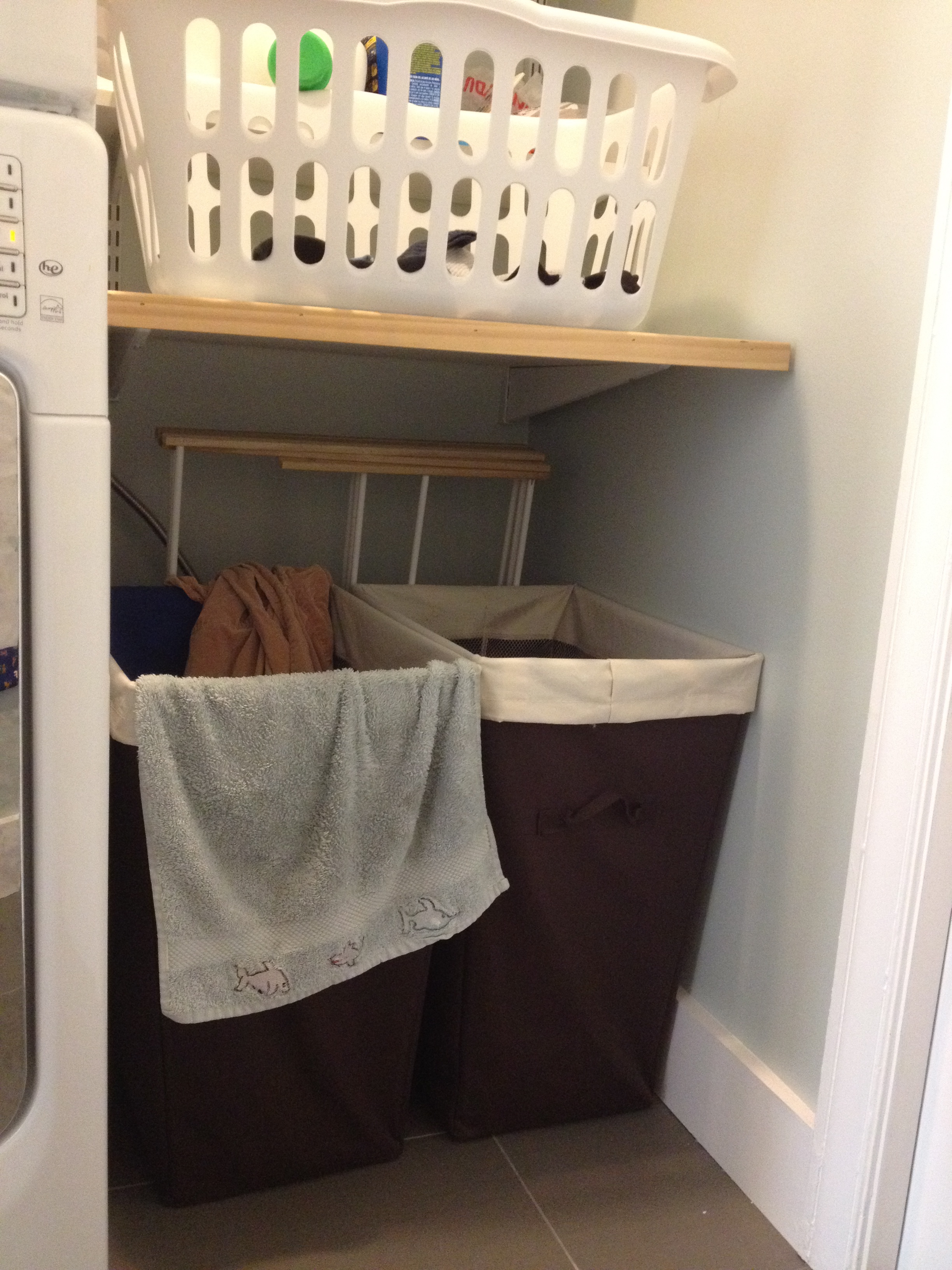
  • Hampers for dirty clothes – I like to have separate ones for colors and whites, which makes starting loads easier, though we occasionally get things reshuffled by our toddler!
  • Baskets for clean clothes – I have one labeled for each child and a few extras.
  • Detergent, stain remover
  • Bags – mesh ones for delicates and wet-bags for cloth diapers.
  • Container for coins and other pocket treasures.
  • Other – garment drying racks, towels, cleaning supplies, etc..

Then I collected a variety of storage baskets to fit with the blue and white color scheme. Like the symmetry, a very simple color scheme works here, because it makes the area look less “busy.” I made some fabric-covered boxes for the top shelf (more on making those boxes in another post!) and the rest were items we had around the house. I love using the “root” basket for collecting coins and other odd items from pockets. It has a bit more style than you would expect for the laundry room, but I wasn’t using it for anything else at the moment, and its rustic shape and material contrasts nicely with the neat white and blue.  I moved around the shelves a little, to make things more accessible, too.
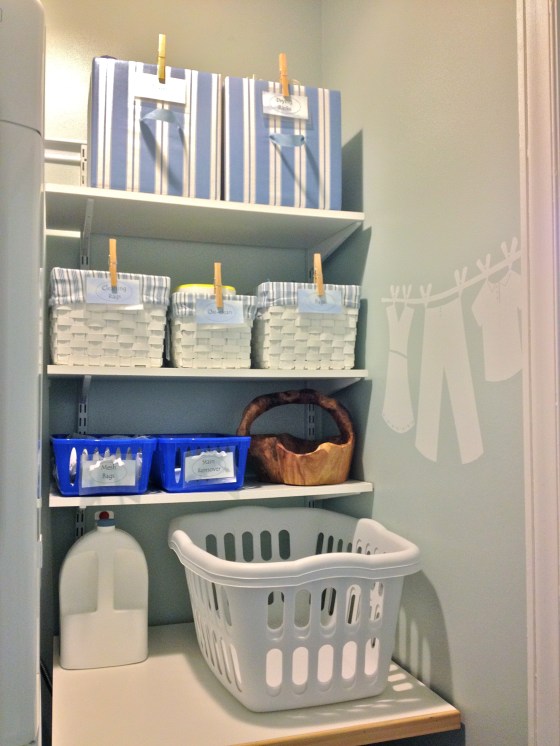
laundry after

AFTER: top of laundry area is neat and bright!

laundry after

AFTER: bottom of the laundry got a little sprucing up, too!

Amy used printables for her labels, and I think they look great. I don’t have a color printer, so I decided to print simple labels in black and white on this paper with blue and white clouds. I “laminated” them with clear contact paper and attached them to the containers either with clothespins or rickrack ribbon. For those, I punched holes, attached them to the baskets with safety pins, then hid the pins with a bit of ribbon.

labels

The labels help make the space feel organized. I tied these on with a bit of white rickrack.

And for the final touch, some art! There are a lot of great ideas out there for laundry area art – vintage soap ads, wooden signs, etc.. I decided to do a simple wall decal. I’ve been hooked on decals since I did one in our nursery. Etsy has a lot of great ones with cute phrases, clothespin motifs, and more. I liked this laundry line decal and decided to try making one myself.
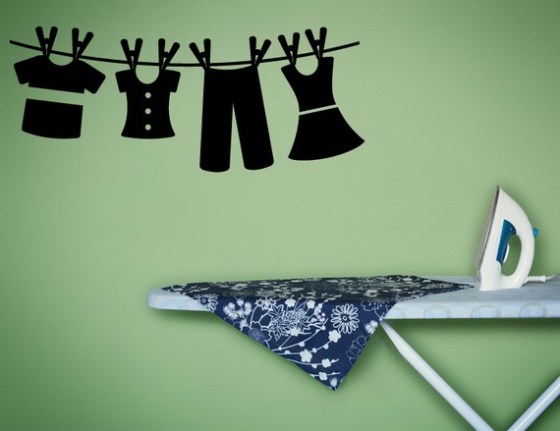
laundry decal

Adorable clothesline decal from Vinyl Wall Accents shop on Etsy. Click the picture to see all their designs and color options.

Go to shop on Etsy.

To make my decal, I cut a piece of white contact paper the size of the area I wanted to cover. On the back, I sketched my design. If you try this, remember that the finished decal will be a mirror image of your drawing – not an issue in this case, but definitely important if you are doing letters! Also, I freely disclose that I have never tried using contact paper to make a decal, and I’m not entirely sure that it is safe for the wall, but it is supposed to be removable, and from a quick browsing of the internet, it looks like other people have tried this, so I was willing to assume the risk (daredevil, I know!).

20120429-180901.jpg

To make your own decal from contact paper, sketch your design – in reverse – on the back of the paper. Then cut it out and hang!

laundry wall decal

I made the clothesline decal for our laundry area from white contact paper. It adds the perfect finishing touch!
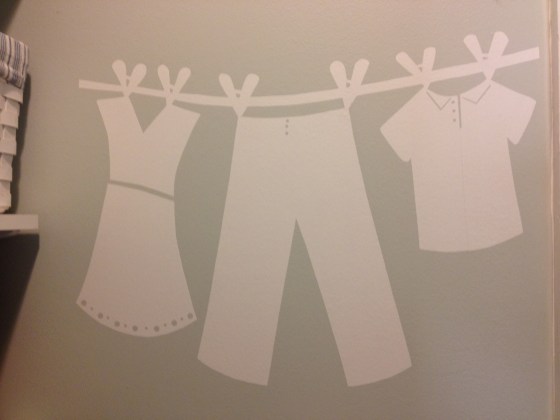
decal

Close-up of the wall decal, cut out of white contact paper.

By the way, working on this area has made me think about a recent change to the laundry duties at our house.  I have been the main person doing laundry in our house (hubby more than makes up for it in the kitchen!), and it is a lot of work! Recently, our oldest, who is eight, asked if he could earn some money. He had just lost $6.50, most of his saved spending money, because I made him pay for his purchased lunch, the third time he forgot the one his dad packed (told you hubby more than makes up in the kitchen!).  So, what I saw was a win-win situation: I could be relieved of some laundry duties, while he could earn some spending money and also learn how to do laundry. The latter isn’t trivial – there was a boy in my freshman dorm who turned his bed sheets pink by washing them with some red clothes. Honestly, this doesn’t just happen in sitcoms; I saw it with my own eyes!

A small part of me feels a bit guilty about our kid doing our laundry to earn money, like when he mentioned the other day, “It seems like what is a lot of money to me is not a lot to you,” which is true. But overall, I think we have a great arrangement – my son gets to learn some domestic skills and earn spending money; I get more time to browse Pinterest and do projects for the blog. Okay, I’m (partially) kidding – I do also use some of the time to get ahead on other things around the house.  And, I never tell our son he has to do the laundry, but for now, he’s so excited about it that we have to stop him sometimes!

So, when you are thinking of home decorating ideas, don’t overlook your laundry area, no matter how small.  It’s a place where we all spend a lot of time, so I hope you got some inspiration to make your laundry area a pleasant place to be, too!

“Jewels”

Lining Bookshelves: Decorating Inside the Box

I’m always amazed at how easy it is to beautify a bookcase by decorating the back. There are lots of great examples out there of using paint, wallpaper, wrapping paper, or fabric.

In my most recent project, I wanted to add some color and personality to our baby/ toddler’s room. I was thinking of a solid red background for his shelves, but then I lucked out and stumbled upon this fun graphic paper from nineteenseventythree.com. At four dollars a sheet, I was able to cover the entire back of the bookcase for twenty dollars and have some gorgeous paper leftover for cardmaking or another art project. The company is based in Britain, but I found the paper at a local store, Lavish, in Hayes Valley.

Red wrapping paper on bookcase

Graphic red and white wrapping paper lining a nursery bookcase.

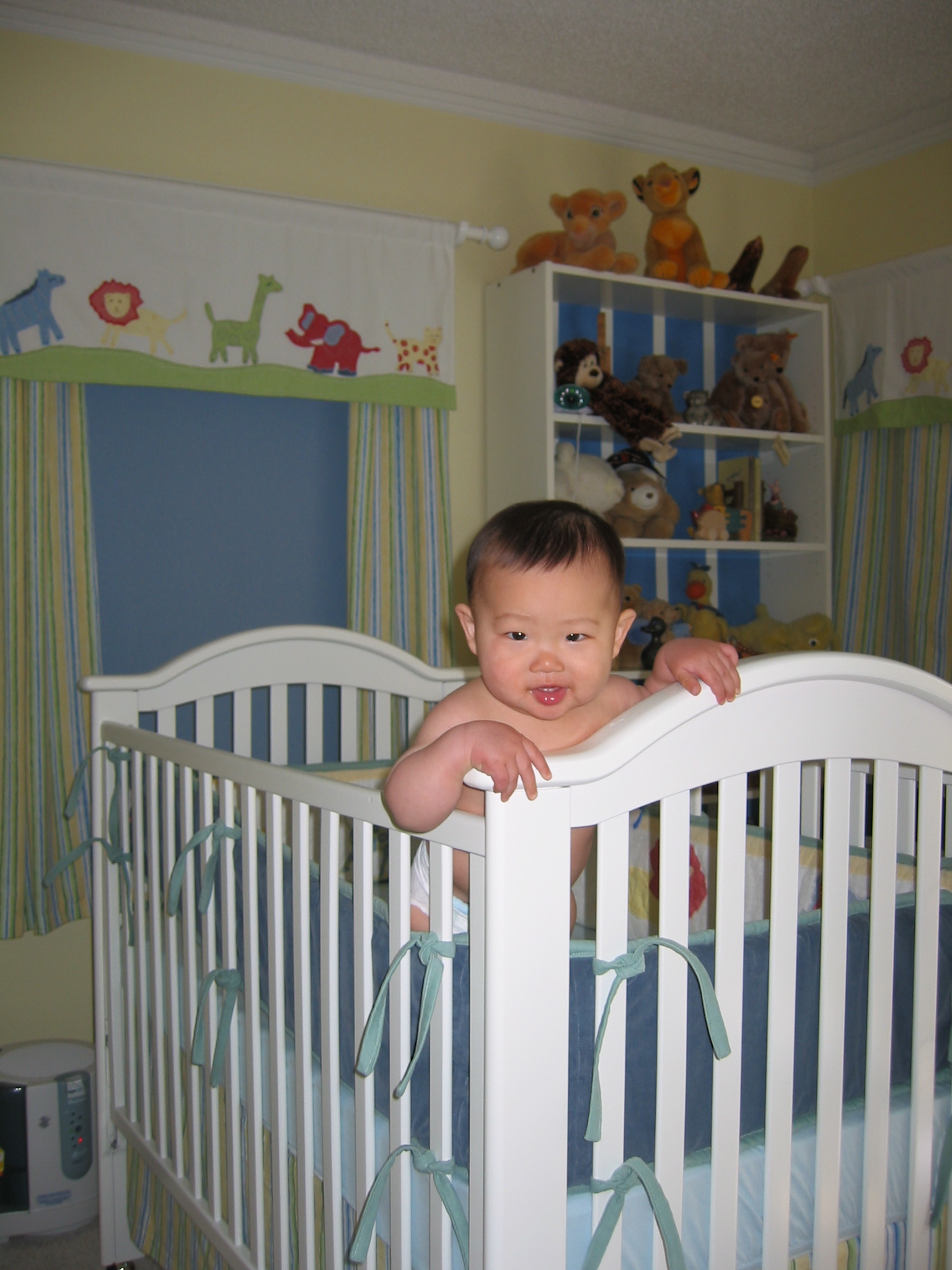
For our first’s nursery, I spray-painted the backs of old white Ikea bookcases with blue, masking off some white “stripes” with painter’s tape, and I loved that effect, too. I was able to take the back piece off to paint, which made it a lot easier. I never took a picture of the furniture specifically, so you will have to make do with a baby pic and the shelf in the background.

Blue and white painted bookcase

Blue and white stripes painted on back of nursery bookcase.

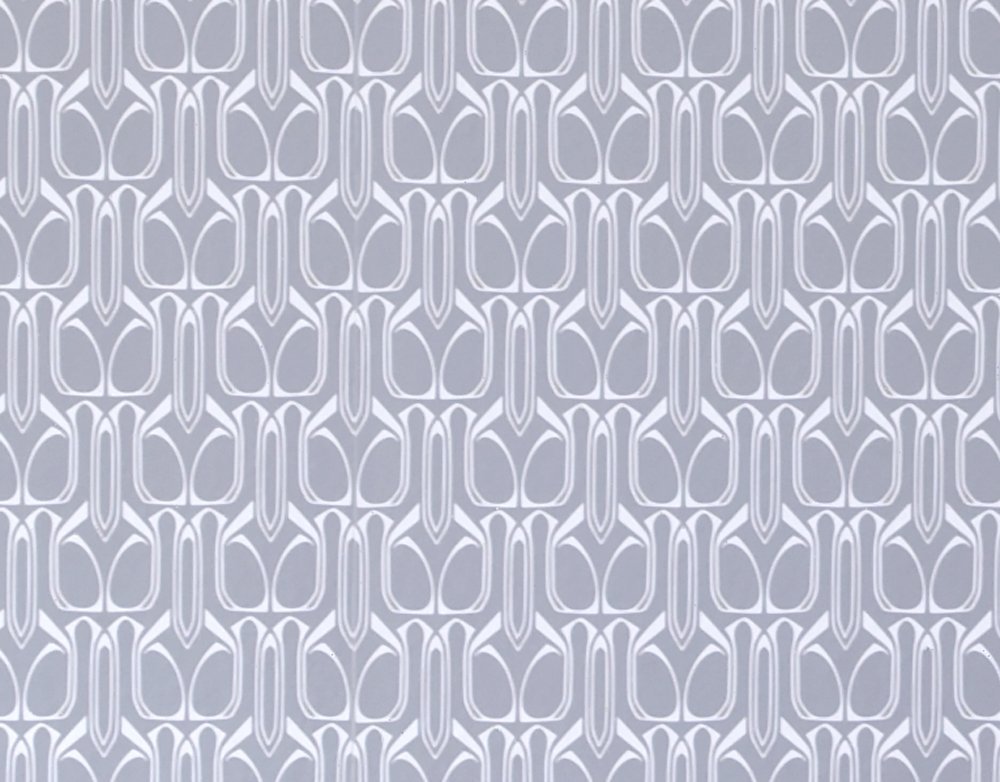
I think the nursery projects were my favorite results, but I’ve also experimented downstairs with our living room and kitchen storage. I went through a die-hard Arts and Crafts phase, when we bought a lot of very heavy wood pieces in that style. I still love these bookcases for their classic look and incredible quality, but I wanted to brighten them up for our current decor. I chose Imperial Trellis wallpaper in Silver by Schumacher for its gorgeous classic pattern and the glow of the silver. It’s pricey, but you need so little for a project like this that I bought a single (well, it comes as double, though you can find it sold as a single with a cutting fee) roll for this project and one wall in our powder room, and I will still have some left over. I have to say that the effect was not as dramatic as I hoped, because they are still very dark and heavy, but I think it’s a move in the right direction, and I couldn’t bear to paint or alter the shelves in any other way.

Imperial trellis wallpaper on bookshelf

Imperial trellis wallpaper in silver. (The bookcase styling needs some more work.)

Finally, I also applied some fabric to the back of some glass-front shelves in our kitchen. I got the idea, because I felt that our white bowls, cups, etc. were just “disappearing” visually in the white cabinets, so I wanted to add some color for a backdrop. It was a quick fix using fabric scraps from another project, but I think it’s an improvement!

Fabric lining kitchen cabinet

Green print fabric lining display cabinet in the kitchen.

Mounting tip: In the past, I have used 3M mounting strips of various kinds for attaching fabric or paper to the back of a bookshelf. With the wrapping paper project, I was eager to get started and didn’t have time to run to the store, so I just used blue painter’s tape, and it worked fine. Since the wallpaper came in small sheets, I also used tape on the back to join the pieces as I applied them. If you are using a heavier material – such as fabric or wallpaper – or a material that you want to preserve, the 3M strips are stronger and photo-safe (not that these are photos, but I assume that means they are not acidic, etc.). I definitely wanted the photo-safe for mounting on our Arts and Crafts style bookcases, for example. However, the blue painter’s tape is an easy and inexpensive tool, if you’re in a hurry and hanging something light and not-too-valuable.

More favorite papers:

Stunning temporary wallpaper for your next DIY project!

Tempaper Self-Adhesive Gio Temporary Wallpaper in Silver

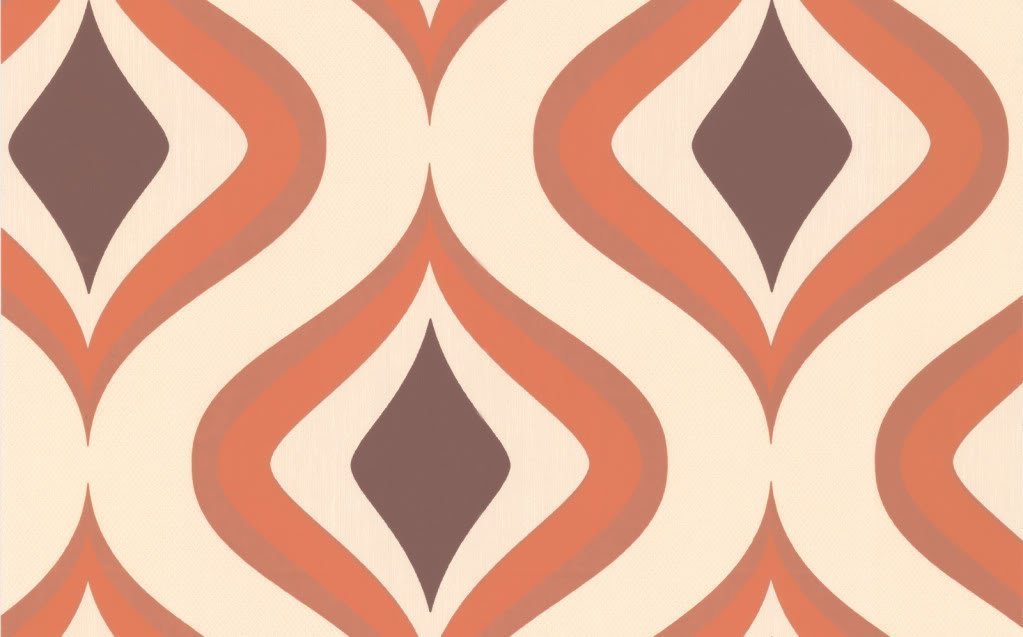
Graham & Brown Trippy Wallpaper in Orange

710UvRChlgL._SL1500_

York Wallcoverings Silhouettes Fretwork Trellis Wallpaper, Mint Green/White

Hope you enjoy making your furniture look outside-the-box by decorating inside it!

“Jewels”

This post is shared at:

Lovely Crafty Home