Antiques Faire and Sunday Streets

I usually complain about my kids getting me up too early, but this morning, I voluntarily (more or less) rose before the rest of the family to head to the Alameda Point Antiques Faire with a couple of girlfriends. As I mentioned at the end of the rummage sale post, this is a huge flea market-style event that is held the first Sunday of every month. There is an unbelievable number and variety of finds, and it’s even a fun place to “window shop,” since you’re out in the fresh air by the San Francisco Bay.

Click the picture to go to the Antiques Faire website.

Click the picture to go to the Antiques Faire website.

It was a beautiful morning turning into a hot day as we wandered around exploring. There is definitely something for everyone there – every style from shabby chic to mid-century modern, and price from pennies to thousands of dollars. I can’t say I’m not a little sad that we didn’t find anything fantastic like a Henry Link Bali Hai dresser or Faux bamboo armchairs (which are my two current obsessions), but I also realize that it’s not a sustainable habit to bring home major pieces of furniture every time I go, so I’m not completely disappointed. It was also great to have a little time to chat with my friends when we are not running around busy with kids and work.

I did find an old wooden tray for $5 that I’m going to dress up with some paint and/or decoupage, so keep an eye out for that project.  My friend picked up a cute pair of trays, so we’ll transform them together and post the results.

20120506-174411.jpg

Wooden tray with metal trim for $5. Waiting for a project!

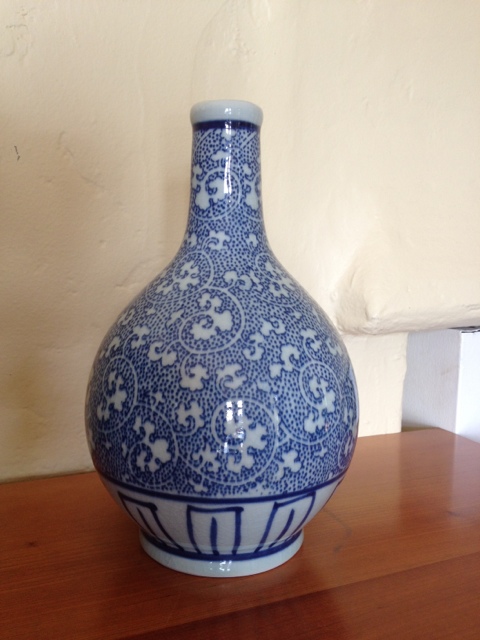
And I also found this Japanese sake jar that makes a great vase and display item for the living room.

20120506-174338.jpg

Sake jar for $20 makes a pretty vase for the living room. Hubby says he wants to use it as a cup.

After the antiques fair, our family went to Sunday Streets in the Mission. Through the summer, San Francisco closes some streets to cars and opens them to pedestrians, bikers, musicians, and other entertainers. It was so fun for the boys to be able to bike down the street, and there were many great spectacles, including elaborate bicycles with bubble blowers, pianos, and more.

20120506-154207.jpg

Such a cheerful afternoon, with this lady spreading pink bubble joy and music, biking up and down Valencia.

20120506-154240.jpg

Well, it’s a good thing this guy was moving very slowly with his piano-bike, as he was playing as he went!

I’m just finishing gathering some details for the post on upholstering chair seats, so that should be up in the next day or two!

Hope you had as lovely a weekend as we did!

“Jewels”

Sew a Growth Chart – Tutorial

Bad news: I’m blogging and sewing tonight while sitting on a step stool. Good news: it’s because I am in the middle of making over my free Craigslist Queen Anne chairs for the sewing room. They are already repainted, and I just need to re-do the seats, which I hope to do this weekend.  Wait! What was I supposed to be talking about… oh yes…

In a recent post, I brainstormed ways to help my friend preserve the record of her children’s heights marked on a door jamb in their house. I loved looking at all the great ideas out there, as well as coming up with some of my own.

At the end of that post, I included a picture of the hanging fabric growth charts I made for my kids. In case you want to make one for your family or as a gift (I first designed this as a baby shower gift!), I’ve broken down the steps here. Let me know if you have any questions!

As I mentioned last time, I’m sure there are similar growth charts out there, but I designed this one myself, keeping in mind that I wanted it to be

  • portable – so that we could take it with us when we moved (a feature this post proves is valuable!)
  • easy to store – fabric can be rolled up for compact storage and ironed later – wood, obviously, cannot, and paper could get folds and wrinkles – though you could wrap around a paper towel roll to minimize this.
  • complete – I wanted to be able to record my kids’ growth from birth to adulthood. Many ready-made growth charts stop around five feet. Granted, most tweens and teens may not have any interest in growth charts anymore, but their parents might, so I made mine go up about 6’2″, just in case!

The finished size of this growth chart is approximately 11.5″ wide x 54.5″ high.

For each chart, you will need:

  • fabric markers or sharpies
  • white fabric (8.5″x58″): I used white cotton twill, which I chose for its stability and weight
  • backing fabric: I used twill or denim, again to add stability and weight
  • border fabric (equivalent to 1/2 yard of 42″ wide calico): I won’t be bossy here – use whatever you like!
  • 1/2″ diameter wooden dowel (approximately 2′ long)
  • two small screw eyes
  • ribbon for hanging

1) On a strip of white fabric that is 8.5″ wide for each growth chart, mark out inches from 1’6″ to 6’2″ (or whatever you like) by laying a tape measure on the fabric and using a ruler to draw lines with a fabric marker or Sharpie. I used a different color and longer marking every six inches. The short lines are 1.5″ and the long lines are 2″. Remember that lines on the finished product will be shorter, because a 1/2″ will be in the seam allowance.

If you are making more than one growth chart, you can be efficient and mark lines for two at a time, as shown below. You will need a slightly longer fabric strip and want to number from both ends, so the marks are on the left of each chart.

growth chart

Inches marked on white fabric using fabric markers.

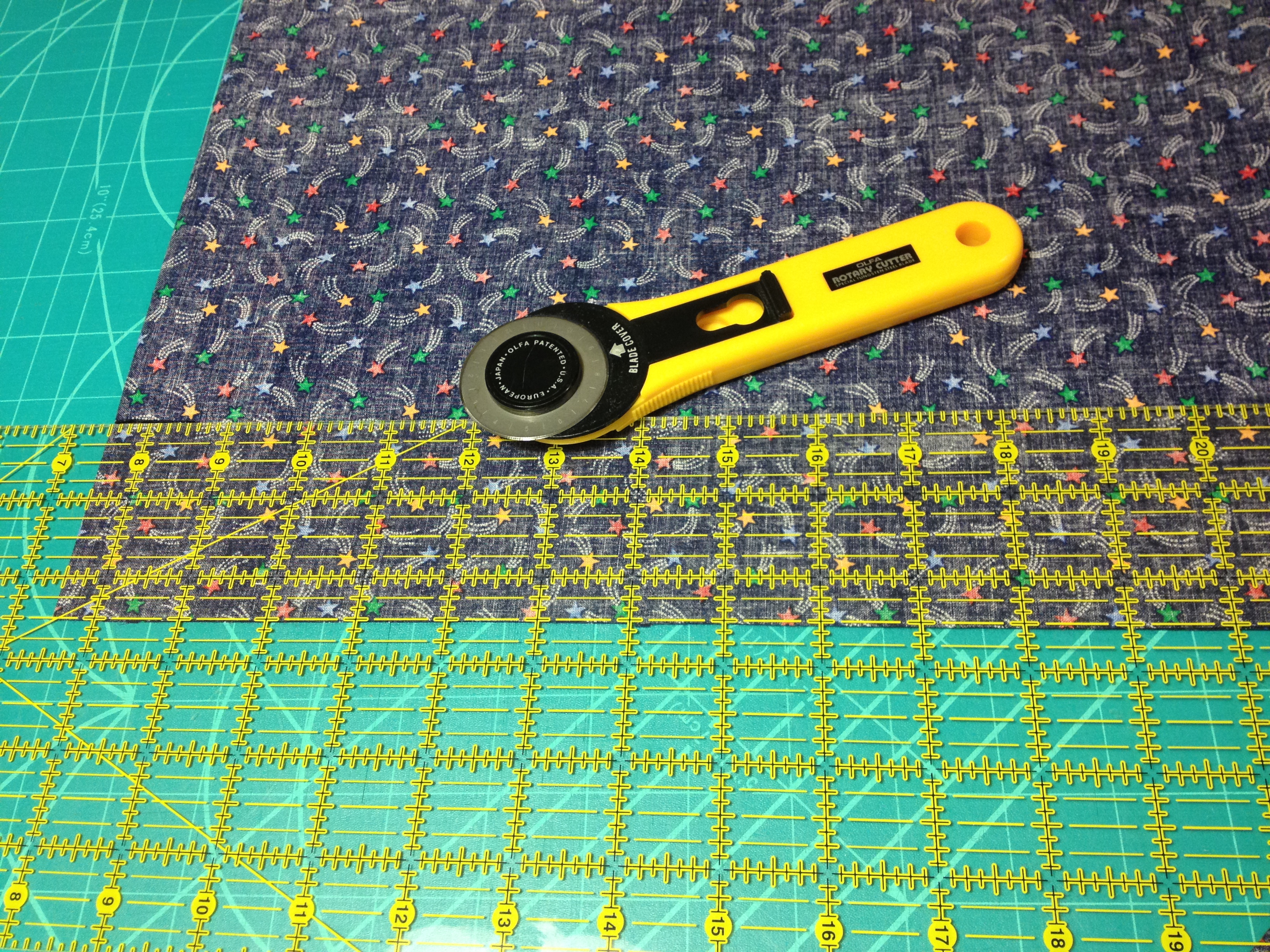
2) Cut out strips for a border. The side strips are 2.5″ wide. The chart should be 58″ long, but cut your strips about an inch longer, in case you are like me, and straight lines magically transform into uneven ones… For preparing the border, I used a rotary cutter with quilting ruler and mat. These tools are designed for quilting, where you have to piece together very precise lines and angles, but they work well for lots of other projects.

Quilting tools

Quilting tools: rotary cutter, quilting ruler, and mat. These are so useful for getting straight lines and square angles on all sorts of projects. I even use the mat and ruler for cutting paper.

3) Sew the side strips onto the white center, using a half inch seam allowance. Iron flat, with the seam toward the border. Trim the border pieces so they are flush with the white section. Again, the quilting tools are great for getting things straight and square.

4) Next, cut strips for the top and bottom border. These are 5.75″tall, and they should be 11.5″ wide. Again, I cut the pieces a bit wider, to compensate for the nasty elves in the sewing machine. Sew these on to the top and bottom, using a half inch seam allowance. Iron with the seam toward the border. Now that the front is complete, trim where necessary to make sure it’s even (square at the corners, same height on both sides, same width at top and bottom).

joiining growth chart

After trimming the center piece, join the top and bottom borders.

You could add any decorations you want to the front at this point. I put each child’s name at the top, piecing together letters from a fun teddy bear alphabet print. I also added a “Made with love by ‘Jewels'” tag to the bottom.

name label

I put each child’s name on his growth chart using letters from this cute teddy bear print.

5) Cut a piece of backing that is the full size of the front (should be about 11.5″ wide and 69″ long, but measure your actual piece).

6) With RIGHT sides together, pin, then sew the front and back pieces together, using a half inch seam allowance, leaving one of the short ends open, so you can turn the piece.

7) Cut diagonal triangles from the corners, so they turn neatly. Then, turn the growth chart right side out and tuck a half inch seam allowance under on the open end. Iron the whole piece flat.

trim corners

Cutting across the diagonal at the corner will give a neater finished appearance.

8) Cut two pieces of doweling that are the same length or a tiny bit shorter than the finished width of your growth chart. Attach the screw eyes to both ends of one piece.

9) Fold towards the back and sew down a 1.25″ flap on the top and bottom to create a pocket for the dowels.  This will also close the end you left open.

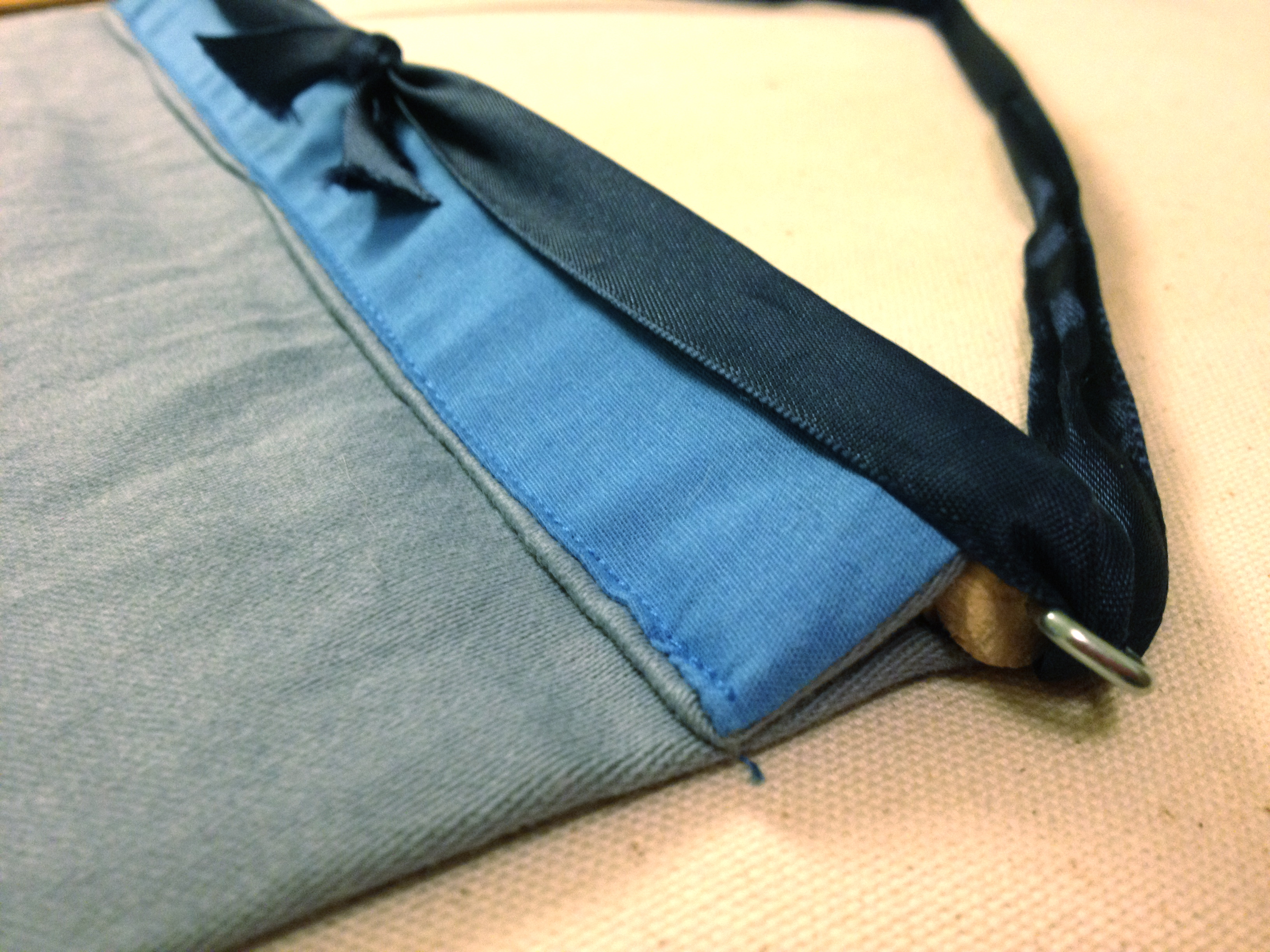
10) Insert the plain dowel in the bottom pocket and the one with the screw eyes in the top.  Thread a ribbon through the screw eyes to hang the chart.

finishing the chart

Finish: Sew 1.25″ flaps on the top and bottom to hold the dowels. Insert screw eyes in the top piece and thread a ribbon through for hanging.

Tada!  The finished growth charts are hanging in the hallway outside our kids’ bath, opposite the newly organized laundry area.

finished growth charts

Finished growth charts

Hope I made that clear. I’d love to see pictures, if you make one of these yourself!

“Jewels”
This project is shared at:

May 2012 Givewaway – A Custom Wall Initial

The giveaway is now closed.  Thanks for all the comments.  The lucky winner is Jenny.  Since her two girls share a room, she convinced me to make a letter for each of them.  I’ll post those soon.

Original post:

Welcome to the first Jewels at Home Giveaway! Remember these custom oversize initials I made for the kids’ rooms?

DIY paper-wrapped wall initials by Jewels at Home

DIY paper-wrapped wall initials for my boys’ rooms!

Here’s how one of them looked in the nursery:

J in nursery

“J” mixing nicely with some whimsical accents in the nursery.

Well, this month, I’ll make one for a Jewels at Home reader! They are 9″ high, and you can choose the letter (duh! You mean, you don’t all want “J”s?) and color. They are great for the wall or for a door.

To enter, just comment on any post (why don’t you try exploring the blog and comment on a post besides this one) between now and May 15. I’ll get the winner’s letter in the mail to you by the end of the month.

By the way, I promise not to use your information for anything other than sending the winner a letter – no spam, no sharing of your information.  I just want to thank my readers and encourage you to keep reading and sharing your ideas, too.

Thanks for all your support.  It has been a fun first month!

“Jewels”

Laundry Area Organization: Loads of Charm

When we moved into our house, we renovated the upstairs, and one of our goals was to bring the laundry up from the basement. With the kids, we do so much laundry that I knew this would be a huge improvement for us: no lugging baskets up and down the stairs, no descending into the damp basement daily.

And, indeed, we love having the laundry  close to our bedrooms – well, as much as one can use the word “love” in association with dirty clothes and folding. The laundry area moved to a small hallway next to the kids’ bathroom, which makes it easy for them to drop their things in the hamper when changing. The new location also means that we can quickly start loads, without going out of our way, and we can sort and fold in the comfort of a bedroom.

Of course, there are limitations to the new laundry arrangement, too. Because the area was added on, rather than part of the original house design, it’s small: just enough room for a stacked washer and dryer and a few shelves. And because it’s in the hallway, the laundry area is constantly visible – no shutting the doors to hide clutter!

On the bright side, decorating a small space is a doable project! Here’s our laundry area “before.” Not much to work with but also a manageable task that won’t drag on like our powder room.

laundry area before

BEFORE: top of laundry area

laundry area before - bottom

BEFORE: bottom of laundry area

Most of the examples of laundry room designs feature full rooms, and it was hard to apply those ideas to our little space. When I saw this laundry closet makeover by Amy at eat.sleep.decorate., I felt like it was just the inspiration I needed! I love the pretty storage baskets – all tied together by the cheerful green color scheme, but varied to give visual interest and a homey feel. I don’t always like designs to be symmetrical, but I think it works here, where there are so many things in a small space. The labels are adorable and functional too – even in a small space, where you basically know where things are, labels really help in both finding things quickly and in keeping things organized – you (and your family members – nah, who am I kidding?) are more likely to return things to their proper place, when it’s clearly labelled. Finally, I agree with her that a touch of art on the wall really makes this laundry area feel like a part of the home, rather than just a utilitarian necessity.

Amy's laundry closet

My inspiration: Amy at eat.sleep.decorate. created this fresh and organized laundry area. Click the picture to see her entire post with lots of great tips.

Go to eat.sleep.decorate.

I started by taking inventory and sorting what we had in the area:

  • Hampers for dirty clothes – I like to have separate ones for colors and whites, which makes starting loads easier, though we occasionally get things reshuffled by our toddler!
  • Baskets for clean clothes – I have one labeled for each child and a few extras.
  • Detergent, stain remover
  • Bags – mesh ones for delicates and wet-bags for cloth diapers.
  • Container for coins and other pocket treasures.
  • Other – garment drying racks, towels, cleaning supplies, etc..

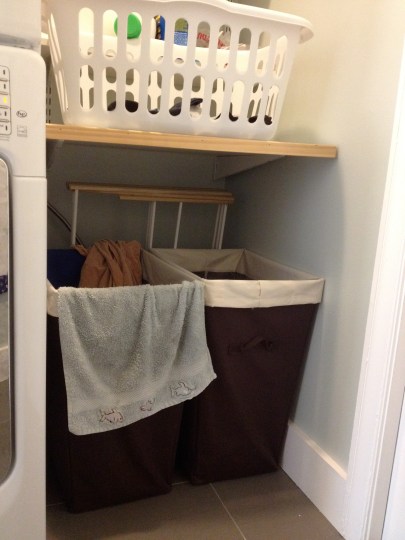
Then I collected a variety of storage baskets to fit with the blue and white color scheme. Like the symmetry, a very simple color scheme works here, because it makes the area look less “busy.” I made some fabric-covered boxes for the top shelf (more on making those boxes in another post!) and the rest were items we had around the house. I love using the “root” basket for collecting coins and other odd items from pockets. It has a bit more style than you would expect for the laundry room, but I wasn’t using it for anything else at the moment, and its rustic shape and material contrasts nicely with the neat white and blue.  I moved around the shelves a little, to make things more accessible, too.
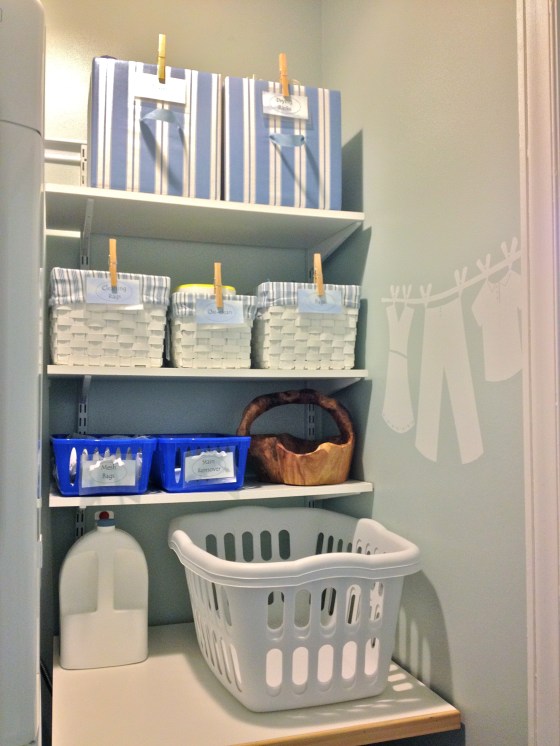
laundry after

AFTER: top of laundry area is neat and bright!

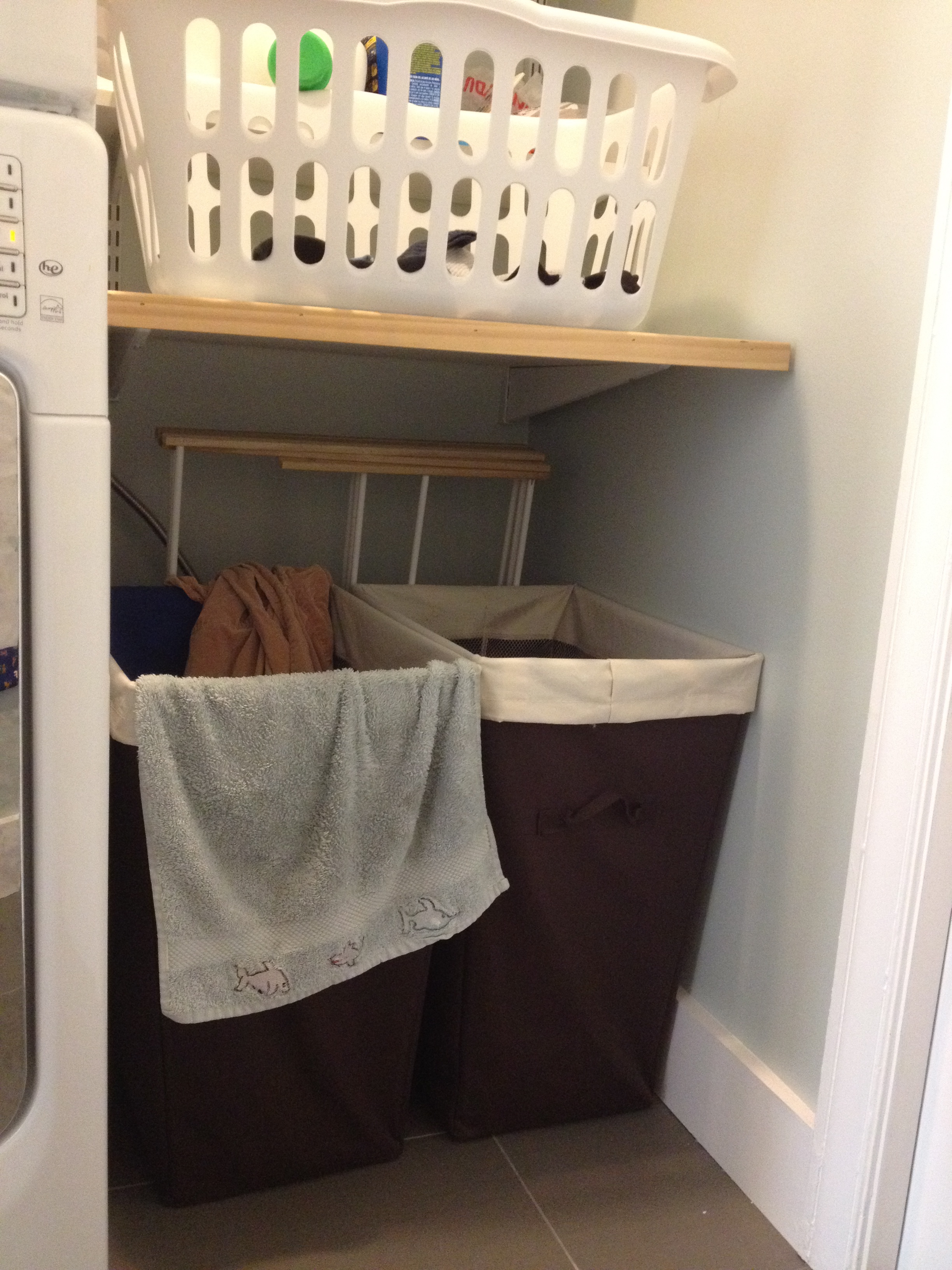
laundry after

AFTER: bottom of the laundry got a little sprucing up, too!

Amy used printables for her labels, and I think they look great. I don’t have a color printer, so I decided to print simple labels in black and white on this paper with blue and white clouds. I “laminated” them with clear contact paper and attached them to the containers either with clothespins or rickrack ribbon. For those, I punched holes, attached them to the baskets with safety pins, then hid the pins with a bit of ribbon.

labels

The labels help make the space feel organized. I tied these on with a bit of white rickrack.

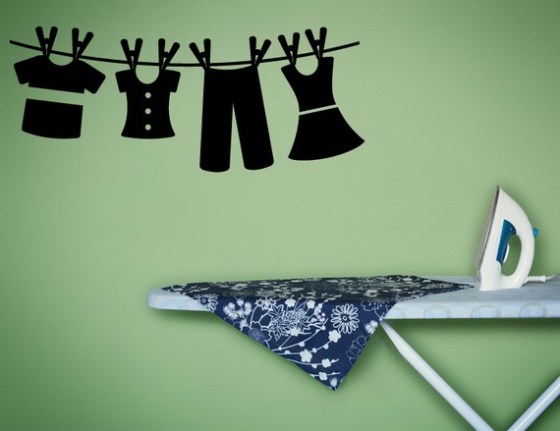
And for the final touch, some art! There are a lot of great ideas out there for laundry area art – vintage soap ads, wooden signs, etc.. I decided to do a simple wall decal. I’ve been hooked on decals since I did one in our nursery. Etsy has a lot of great ones with cute phrases, clothespin motifs, and more. I liked this laundry line decal and decided to try making one myself.
laundry decal

Adorable clothesline decal from Vinyl Wall Accents shop on Etsy. Click the picture to see all their designs and color options.

Go to shop on Etsy.

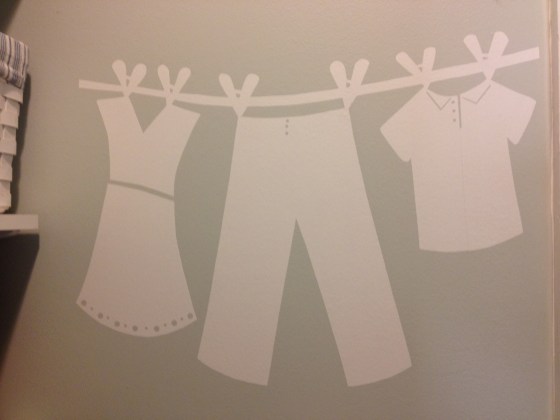
To make my decal, I cut a piece of white contact paper the size of the area I wanted to cover. On the back, I sketched my design. If you try this, remember that the finished decal will be a mirror image of your drawing – not an issue in this case, but definitely important if you are doing letters! Also, I freely disclose that I have never tried using contact paper to make a decal, and I’m not entirely sure that it is safe for the wall, but it is supposed to be removable, and from a quick browsing of the internet, it looks like other people have tried this, so I was willing to assume the risk (daredevil, I know!).

20120429-180901.jpg

To make your own decal from contact paper, sketch your design – in reverse – on the back of the paper. Then cut it out and hang!

laundry wall decal

I made the clothesline decal for our laundry area from white contact paper. It adds the perfect finishing touch!
decal

Close-up of the wall decal, cut out of white contact paper.

By the way, working on this area has made me think about a recent change to the laundry duties at our house.  I have been the main person doing laundry in our house (hubby more than makes up for it in the kitchen!), and it is a lot of work! Recently, our oldest, who is eight, asked if he could earn some money. He had just lost $6.50, most of his saved spending money, because I made him pay for his purchased lunch, the third time he forgot the one his dad packed (told you hubby more than makes up in the kitchen!).  So, what I saw was a win-win situation: I could be relieved of some laundry duties, while he could earn some spending money and also learn how to do laundry. The latter isn’t trivial – there was a boy in my freshman dorm who turned his bed sheets pink by washing them with some red clothes. Honestly, this doesn’t just happen in sitcoms; I saw it with my own eyes!

A small part of me feels a bit guilty about our kid doing our laundry to earn money, like when he mentioned the other day, “It seems like what is a lot of money to me is not a lot to you,” which is true. But overall, I think we have a great arrangement – my son gets to learn some domestic skills and earn spending money; I get more time to browse Pinterest and do projects for the blog. Okay, I’m (partially) kidding – I do also use some of the time to get ahead on other things around the house.  And, I never tell our son he has to do the laundry, but for now, he’s so excited about it that we have to stop him sometimes!

So, when you are thinking of home decorating ideas, don’t overlook your laundry area, no matter how small.  It’s a place where we all spend a lot of time, so I hope you got some inspiration to make your laundry area a pleasant place to be, too!

“Jewels”

Art Clips for Kids’ Fridge Gallery

Well, first of all, I never dreamed I would put a picture of our fridge in this blog. The whole kitchen is terribly dated and doesn’t reflect our style at all. However, it works, and given the cost of a kitchen renovation, we’ve decided to live with it for a while.

I’ve been trying to spruce the space up a bit and add some functionality – for example, I got a kitchen island cart that added just enough storage and counter space, as well as a small eat-in area for the kids. If you can’t afford a renovation right now, it’s definitely a good option, and there is a huge range of size and styles.

Sometimes, it’s the little things. It sounds a bit silly, but even though we are living with the pink (yes, you read that correctly) counters and floor and the impractical cabinet layout, we were really missing having a place to display our kids’ art. Like a lot of fridges, ours does not hold magnets. And I only wish this were because it is cool stainless steel – no, it’s 80s/early 90s black.

I will credit hubby for coming up with the idea of using clips to attach art to the fridge. His “beta” version used plain clips and poster putty, which showed behind the clips and lasted about a month before falling off. I decided to take his idea and “Jewels-ify” it with some improved engineering and design.

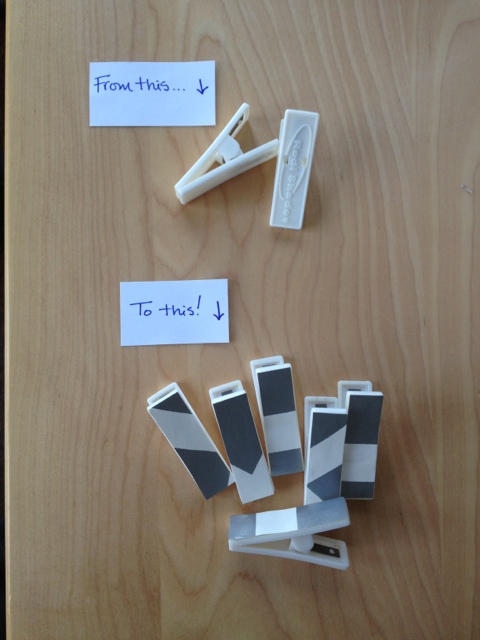
I started with plastic clips leftover from the temporary shades we had everywhere when we moved in. They are great for this project, because they are small and lightweight. The spring is not as strong as a clothespin, which makes them easier to use when attached to a surface.

I cut out strips from scraps of our Imperial Trellis wallpaper to fit the clips. I think it would have worked to cut random strips, but I tried to make patterns like stripes, “V”s, and zig-zags. This wallpaper went in the powder room and living room bookshelves. It has been the Energizer bunny of home decorating for me – it just keeps going and going! I’m totally in love with the elegant, classic, clean-lined pattern and the glow of the silver.

covered clips

plain plastic clips covered in wallpaper. I used hot glue, because the clips are not flat. (By the way, someone really needs to teach me some photo editing, so I can do proper "before and after"s!)

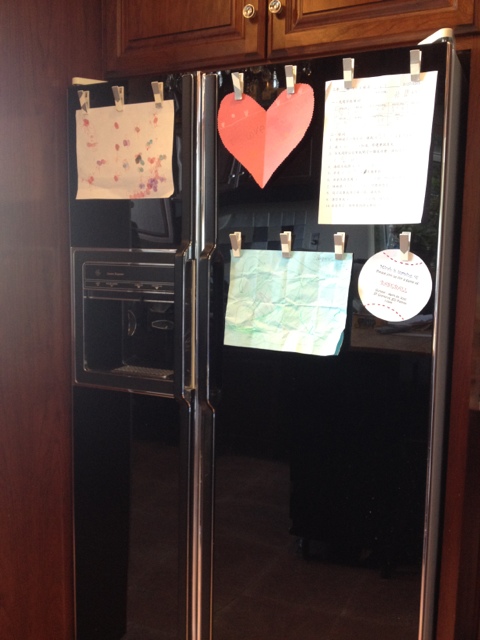
Finally, I used command adhesive strips from 3M to attach the clips to the fridge, and now we have a place to hang artwork and reminders! Yay!

20120429-075750.jpg

command adhesive strips to hold the clips on the fridge.

art on fridge

Finished fridge gallery.

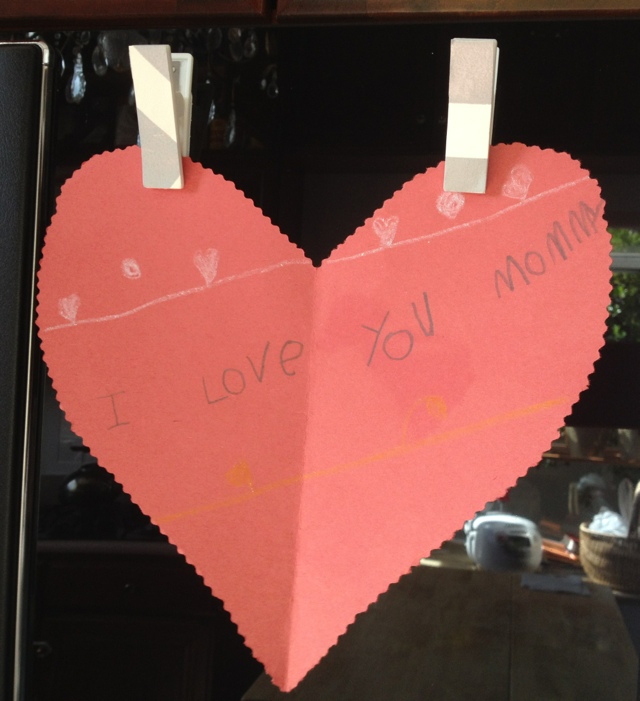
20120429-155931.jpg

Close-up: how happy am I to look at this every day?!

I think these clips would also work on a door, art display board, or wall, not just on the fridge, so give it a try and send a picture of your results!

What a good feeling to have at least one thing in our kitchen that I enjoy looking at!

“Jewels”

Growth Chart Ideas: Where Did the Time Go?!

My dear friend Cathy just gave me a challenge: she’s moving out of the house her family has lived in for many years and wants to preserve her children’s heights recorded on a door jamb. Here is her treasured growth record. You can see why she doesn’t want to leave it behind. I used to babysit her youngest when he was five, which is the lowest mark in this picture, and I can hardly believe that he has grown so much! Where did the time go?!

Cathy has been recording her three boys’ heights on this door jamb for ten years!

I’d love to hear your creative solutions to this dilemma. I’m also wondering how many people have all their kids heights combined in one place like this and how many have individual charts for each child. I can see the benefits and downsides to either approach. Here are some of my ideas, including the growth charts I sewed for my kids.

1) Transfer the entire jamb: You could remove the piece of wood with the markings and replace it. In the new house, it could be installed in a doorway or hung on a wall. This would allow you to retain all the quirky charm of the original – with the different colors and handwriting over the years. I personally think this would look so sweet as a piece of “art” in a family room or kitchen. (However, I think Cathy is going to be reluctant to pursue this idea, as she’s sort of worn out on DIY projects after prepping their house for sale.)

growth panel

This family recorded their children’s heights on a piece of wooden paneling. When they moved, they removed the plank from the wall and hung it in their new home (quite a surprise for the buyers of their old house!).

From: Like Mother, Like Daughter blog

2) Take photos and transfer: Like everyone else who has a smart phone, I find myself taking pictures of everything – usually five pictures of everything…. at least five times a day. All this picture-taking can get a bit ridiculous, but it also has its uses. I love the idea of taking photographs of the door jamb – it would probably take five or so photos to capture it all. I was trying to think of ways to keep track of the scale, so you can reproduce it accurately. One way would be to mark off 10 inch sections and take a picture of each section on its own, so you know it’s to scale if you print an 8″X10″ picture. Another way would be to take some notes on reference points (eg. Junior was 4 feet tall in May 2007), to help you work out the right size later. Once you have printed out your pictures to scale, you could

  • frame them, either in several simple frames stacked one on top of each other or in a long frame, designed for posters
  • decoupage them onto a wooden board or a new door jamb. This option requires no construction work (which I am sure Cathy will appreciate!) and would still capture the personality of the original. For this project, print onto plain paper, rather than photo paper.
  • make iron-on transfers and display on a piece of fabric.

3) Transfer the information to a new growth chart: Cathy did this the last time she moved, transferring the heights to a piece of masking tape, which is a great idea! Once you have the information, your imagination is the limit for ways to display it. There are so many beautiful ideas for growth charts out there, but here are some of my favorites, including what I did myself. A tutorial for making my growth chart will be in an upcoming post.

  • plain plank of wood – this would be easy, inexpensive, and give the new record a similar feel to the original door jamb. You could paint the wood first or leave the wood grain.
  • purchase a ready-made growth chart to hang. These come in endless variety made from wood, fabric, or paper.
  • wall decals – decals are such an easy way to make a beautiful statement in a room. I customized a tree branch decal in our nursery. There are dozens of gorgeous examples of wall decal growth charts out there. I particularly love this one!
wall decal growth chart

Wallies Wall Play Woodlands Growth Chart

From: Fab Baby Gear website

And last but not least… Jewels’ hanging fabric growth chart!

20120429-065944.jpg

Jewels’ own hanging fabric growth chart. Tutorial coming up soon.

I’m sure there are similar growth charts out there, but I designed this one myself, keeping in mind that I wanted it to be

  • portable – so that we could take it with us when we moved (a feature this post proves is valuable!)
  • easy to store – fabric can be rolled up for compact storage and ironed later – wood, obviously, cannot, and paper could get folds and wrinkles – though you could wrap around a paper towel roll to minimize this.
  • complete – I wanted to be able to record my kids’ growth from birth to adulthood. Many ready-made growth charts stop around five feet. Granted, most tweens and teens may not have any interest in growth charts anymore, but their parents might, so I made mine go up about 6’2″, which is more than generous, if you could see how tall I am!

UPDATE 5/3/2012:  Here’s the link to the tutorial for making your own growth chart!

Please let Cathy and me know if you have more great ideas about how to preserve her treasured memories!

“Jewels”

Whimsical Retro Nursery

Here is the first room tour of Jewels at Home. The tours are my motivation to “finish” (and clean up!) our house, room by room. In reality, our spaces are a constant work in progress, reflecting the dynamic nature of our lives, but it’s a great feeling when a room gets to the point where it’s ready to share. Let me know if you have a room in your house to share on Jewels at Home!

Our house was a fixer-upper when we bought it last year. Besides maintenance problems (clogged sewer pipe!) and cosmetic issues (pink, pink, pink!), the house was built as a sort of grand space that meant a small number of large and formal rooms, when what we wanted as a modern family of five was more separation of spaces for sleeping, working from home, and playing. I’m glad I spent so many hours staring at the real estate brochure with floor plan, because I figured out that we could convert the “dressing room” off the master bedroom into our ensuite bath and create an entrance through a hall closet to turn the old master bath into another bedroom. Adding the bedroom, that we are using as a nursery, has been a huge value for us.

Bedroom before

BEFORE: This space was the dated and pink master bath. By making a new entrance through a hall closet, it became a new bedroom!

I figure the reason that the nursery was the first room in the house to be “finished” is probably because it’s a small room, and, of course, because it’s SO fun to decorate a nursery! A child’s room is a place where your imagination is the limit!

Whether it’s because we are indecisive or enjoy change, we’ve moved a lot, and each of our kids has had a different nursery. I’ve loved putting them together, and while there are elements that have naturally been shared by all of them, each is also unique. Our current nursery has established itself with a whimsical retro feel. I preferred to make our kids’ first rooms pretty neutral – no car or princess themes here. I know from experience that they will develop their specific interests soon, but I chose not to make them a focus in the nursery.

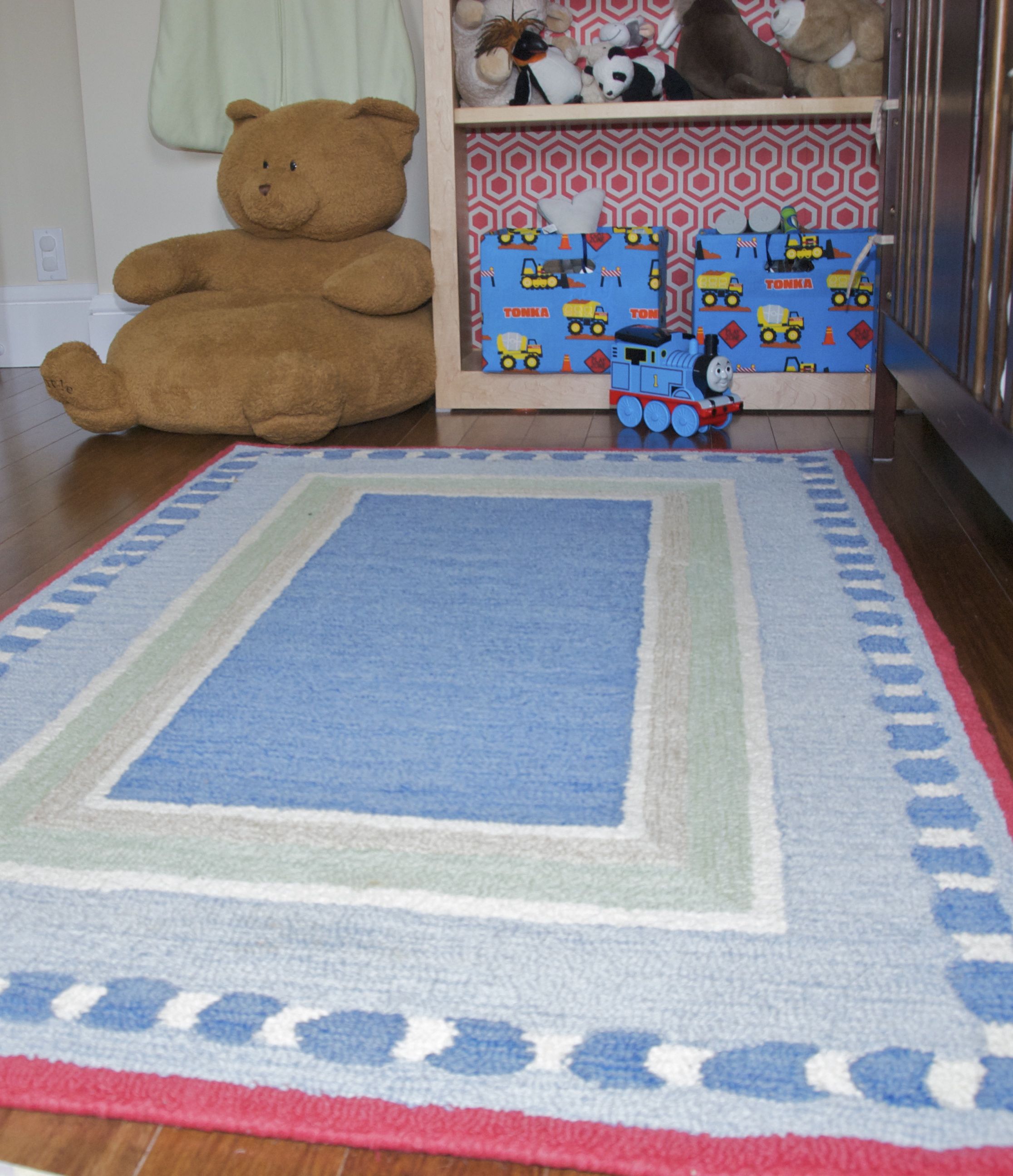
This “Connor” rug from Pottery Barn Kids circa 2003 was the jumping off point for the colors in the room. I love its palette of dark and light blue, sage, and red. Cheerful for a child’s room, but not too juvenile and cutesy.

Connor Rug

"Connor" rug from Pottery Barn Kids has the inspiration colors for the nursery. The red is picked up by the wrapping paper on the inside of the bookshelf, and the blue in the toy bins (which are old diaper boxes wrapped in fabric!). The sage green is in the bedding, including the sleepsack hanging on the wall.

The roman shades from Country Curtains are a find that I cannot recommend highly enough! They are attractive, safe and easy to use (cordless and raise and lower with a spring, like a roller shade), and inexpensive. They’re not custom, and they didn’t have a size that was right for our other rooms, or I would have bought more! Even though they have a “thermal” rather than blackout lining, I find they cut a lot of light for nap time, maybe because of the dark color.

reading chair

Here is our cozy chair for reading, nursing, and snuggling.

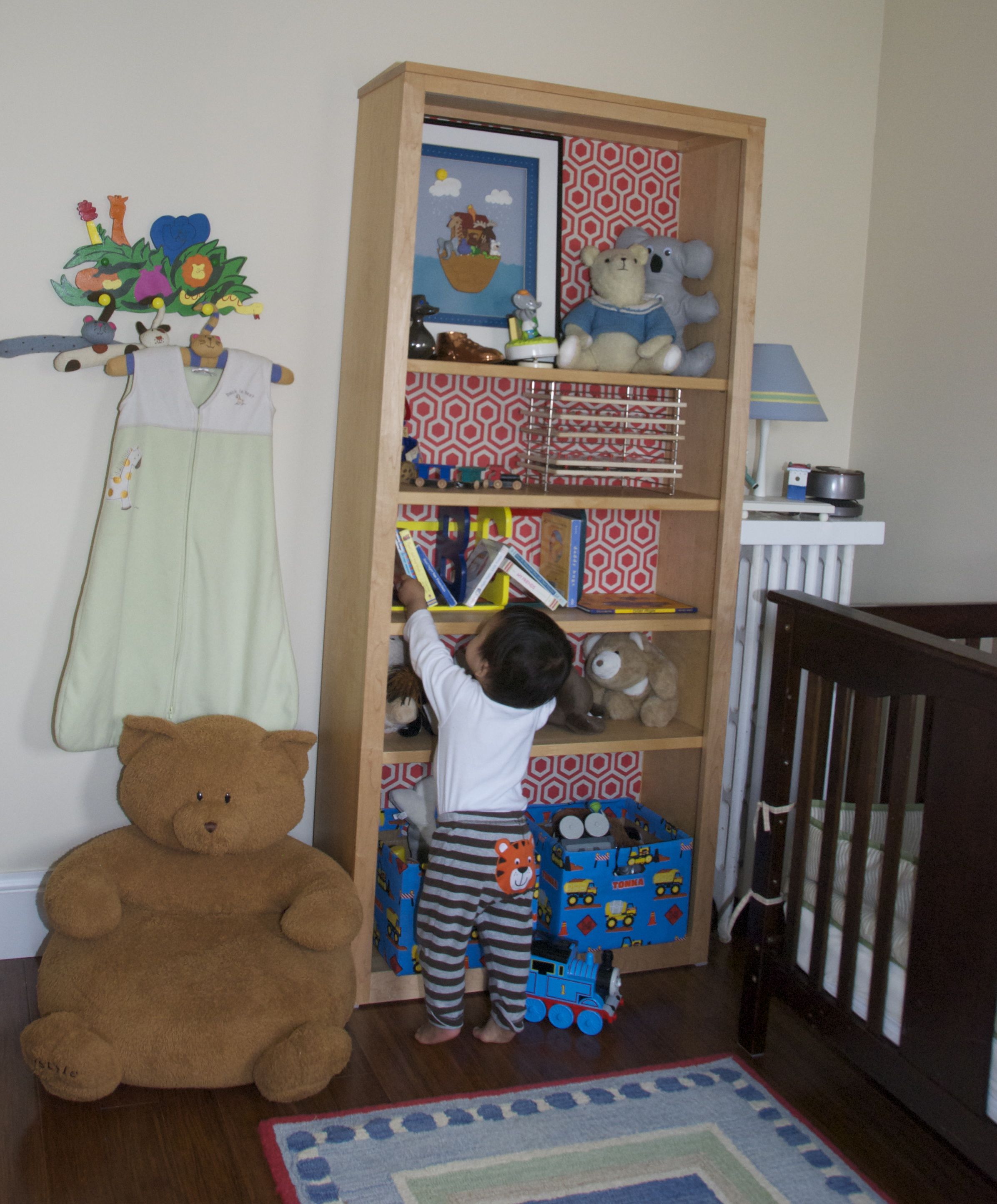
I didn’t buy any new furniture for this room when we moved in, because I figured that a nursery arrangement is always temporary anyway. I took a tip from one of my favorite designers, Sarah Richardson, and even though I mixed wood tones, I made sure that each wood tone was found at least twice in the space, so it doesn’t look out-of-place: the crib and dresser have an espresso color, the bookshelf and picture frame on the opposite wall are a light wood, and the floor and chair have a medium tone. I added the wrapping paper to this bookcase in this post on dressing up bookcases: “Decorating Inside the Box.”

bookcase wall

The bookcase has room for display and storage. The mix of dark and light woods can work, as long as you have each wood tone in multiple places in the room.

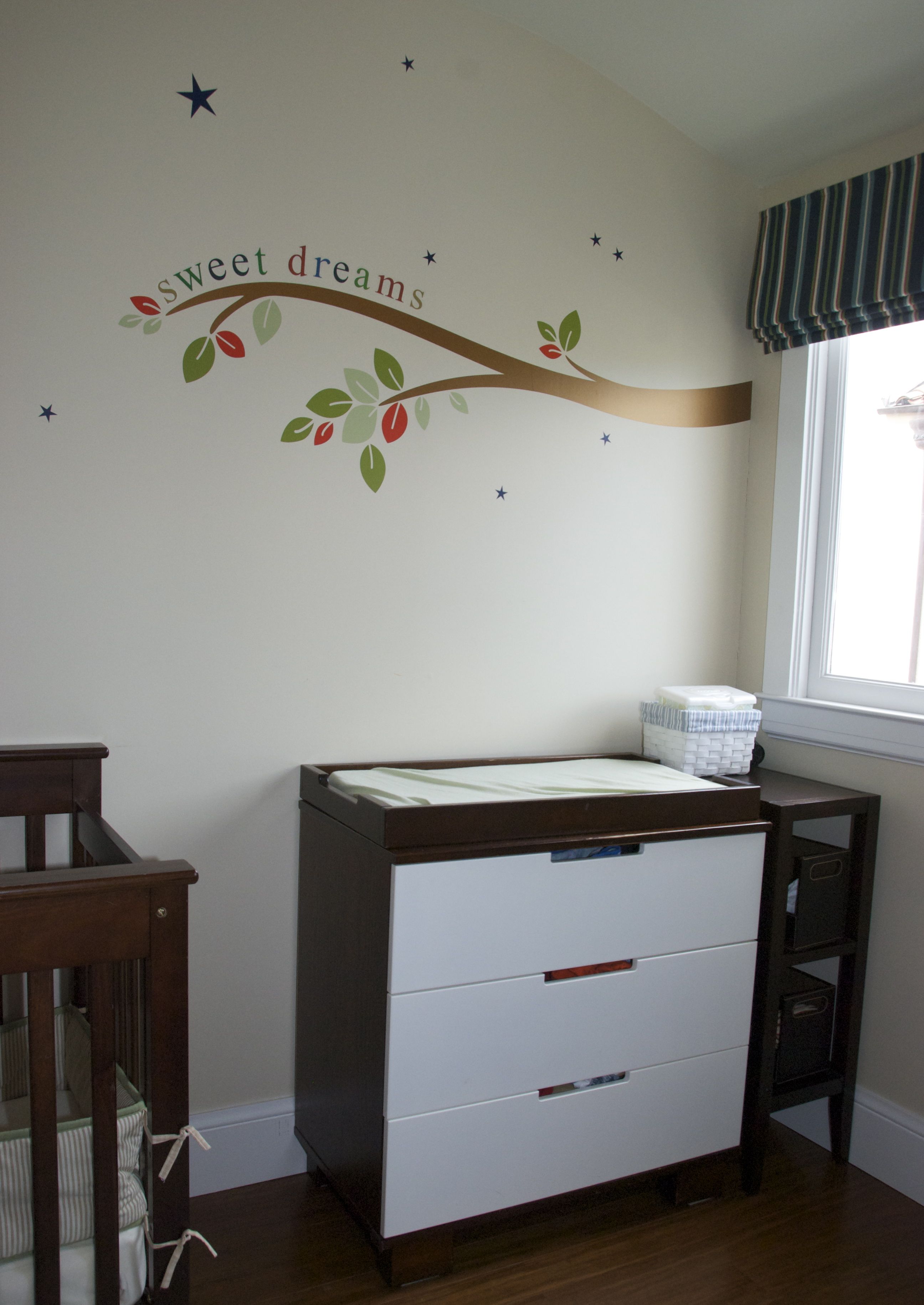
Change table

This change table is an inexpensive version of the popular modern nursery furniture. I love the wall decal of a branch right next to the window, extending the outdoors into the space. I customized it by adding the letters spelling "sweet dreams."

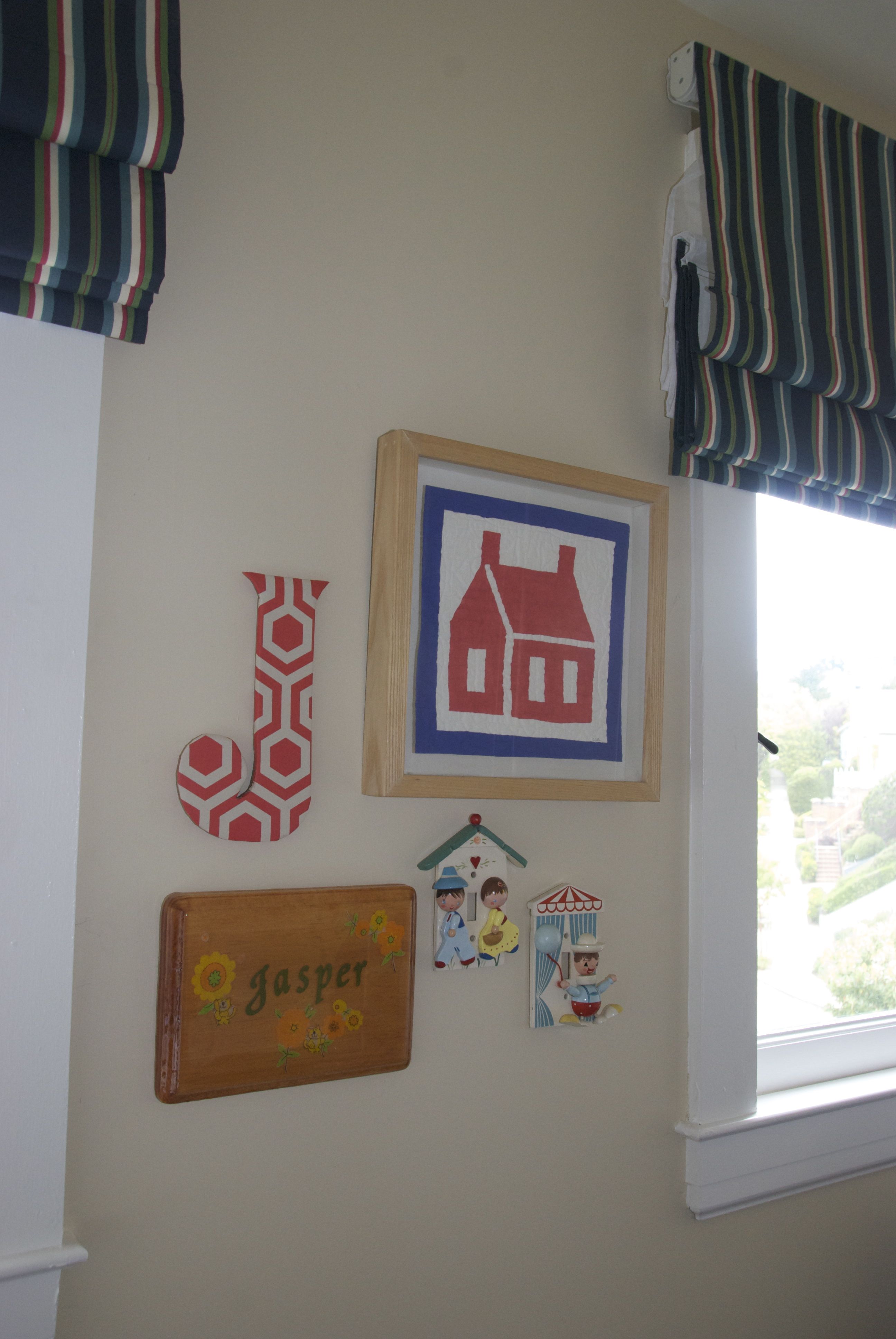
A lot of the accessories in this room have special meaning. On the shelf and off to the right are a lot of accessories from my childhood, including the lamp, a bronzed shoe, and a “ducky bank”. In our reading corner, I made the quilt, and my close friend knit the baby blanket on the arm of the chair. The display wall between the windows has a paper quilt block from an old friend, a name plaque with motifs from MY baby blanket, vintage switch plates from my baby room, and an oversize letter “J.” You can see how I made the letter here. The jungle animal clothes pegs next to the book shelf is special, because my mom, who did not survive to meet her grandchildren, bought this for them in anticipation many years ago. Last but not least, the squeaky “Jumping Jack” below was a gift she bought for me as a newborn baby with her first paycheck after returning to work. My parents told me, he made me laugh for the first time, and all my kids gave enjoyed him too.

20120423-172040.jpg

My baby toy is bringing smiles to the next generation.

The end result of this transformation is a cozy, comfortable room that brings a smile wherever you look!

“Jewels”

Oversized Letter Decor: Let’s Start at the Very Beginning…

… a very good place to start!

Art that features initials is so versatile. It looks great as part of a wall display, on a shelf, or on a door. It could make a great gift for a baby or child – it makes a kids – and the parents – feel so special to see their name on things!

There are lots of great ideas for projects featuring artistic initials, and I want to try them all! I decided to start with a simple 3-dimensional cut-out initial wrapped in paper or fabric. Here’s how I did it!

1) Buy or make a base letter: I’ve seen oversize wooden and cardboard letters at craft stores, so you could definitely start with one of those. In this case, I was feeling lazy and cheap – not to mention I do my projects when the kids are either napping or in bed at night, which makes trips to the craft store hard! So, I decided to cut out my own letters from cardboard. I had some extra-thick cardboard leftover from “dish pack” boxes from our move. These are great for lots of cardboard projects, because they are made from a double layer of corrugated cardboard and thus stronger and warp less.

You can find endless fonts by searching on the internet. I settled on Archive Garfield for a classic feel:

Archive Garfield

Archive Garfield upper case letters example from Myfonts.com

My Fonts website

Whole alphabet at Fonts.com

You could print out the letters you want, enlarge and then trace them, but I decided to wing it freehand. First, I decided on the overall dimensions I wanted – nine inches high – and marked that area on the cardboard. Then, I sketched the letters inside the space, using a ruler to make the straight lines. I also made some of the areas a little thicker than they are in the original font, so they would not be too fragile when cut out. I ended up using a popsicle stick to reinforce the thin part of the “K.” Also try to avoid narrow gaps – the inside curve of that “J” turned out to be tricky to wrap around. I used white glue on the very short tabs of paper and held them in place by wedging some bubble wrap in the gap until the glue dried. It turned out fine.

20120415-210502.jpg

Sketch or trace the letters onto cardboard using a ruler to help. Make sure the lines are not too thin and also try to avoid narrow gaps.

2) Apply paper or fabric: This is where you could get creative and use scrapbook paper, wrapping paper, maps, photos, fabric, whatever! I would recommend cutting leaving a one inch margin around your letter – I didn’t have that much, because I was using a scrap leftover from decorating the back of our little guy’s bookcase, which made it harder. Also, if you are using corrugated cardboard, I would just put a couple of spots of glue from a glue stick on the front, because if you glue it down thoroughly, the corrugation will show.

Cut tabs to help ease the paper around curves and corners and then glue down the tabs. Because I had a small margin, I needed to use some tape to help. Once I had the paper wrapped around, I used a popsicle stick with a little white glue on it to help smooth any areas where you could see the tabs, like around the curves.

20120415-212742.jpg

Lightly glue your letter to the back side of your paper or fabric. Cut out with a one inch margin (more than I had!) and cut tabs for the corners and curves. Glue!

3) Voila! and Finish! You could clear coat your letter with clear spray paint or Modge Podge. I wouldn’t do it with the corrugated, because, again, it would make the corrugation show through. It would be a nice finish for wooden letters, though.

20120415-220836.jpg

Finished product! A 3-D initial wrapped in beautiful paper.

4) Hang and enjoy! I’m using 3M Command Picture Hanging StripsEdit. These are very easy to use and have the additional benefit of adding more dimension to the letter, so it really stands out from the wall.

20120415-220903.jpg

3M Command (TM) Picture Hanging Strip – easy and removable!

This initial is for our youngest’s room as part of the wall collection below. The “quilt block” is actually made of paper and was a gift from my friend Penny many years ago. And the vintage nursery switch plate covers go beautifully here, too. The one on the left is mine from when I was little. The other one was picked up at a garage sale for $1. They can also be found on eBay for about $15-25. I didn’t really have a functional use for them, but I think they work perfectly in this display. This whole wall relates back to the other side of his room, where the same paper is lining the bookcase, and a vintage lamp from my childhood provides a reading and night light.

Nursery wall

The “J” in its place on the nursery wall.

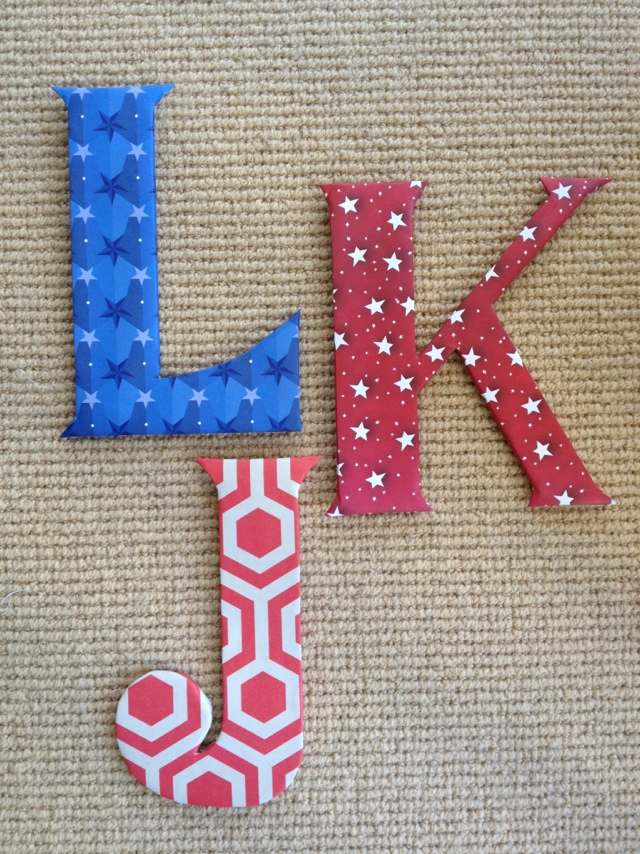
And now, here’s a sneak peek at the other kids’ initials! I let them pick their own paper. I was thinking stripes, but I love how the stars turned out.

DIY paper-wrapped wall initials by Jewels at Home

DIY paper-wrapped wall initials for my boys’ rooms!

“Jewels”
Puppy Love and Loss

It’s a story that has been told many times. Cooper was, as they say, our first baby. We even named him after hearing the name from one of hubby’s coworkers, who had used the name for his new (human) baby! For years, our lives happily revolved around this adorable furball, from weekend outings to vacations, he inspired us to explore and experience so many new places.

Cooper puppy

Cooper, just a day after we brought him home in October 1997. Our friend took this picture with a polaroid camera!

Years later, when the kids came along, Cooper was the faithful guardian who learned to bravely tolerate their expressions of love, including the classic tail-pulling, ear-tugging, and yes, even a “haircut” by our oldest, when he was three and Cooper was nine. We learned quickly to never put our baby down near other dogs, as Cooper would chase them all away. Even if they disrupted his peace, Cooper embraced the boys a treasured members of his “pack” with a loveable curmudgeon-liness.

And now, finally, after surviving a cancer two years ago, old Coops is slipping away from us. I am endlessly amazed at how much life teaches us. I will confess to, previously, having a somewhat limited ability to empathize when others lost an elderly loved one. Where I work, I see and hear so many stories of people who have died young. And having lost my own mom when she was in her early 50s and I was 25, I always thought that I would be nothing but grateful to be so fortunate as to watch someone grow into old age.

And so, even though the tears are flowing, I am really grateful for Cooper and for what this new experience is teaching me – about how it is possible to be thankful and heartbroken at the same time. About what a wonder it is to share life with another species – and to witness a full life in a time that for us is relatively brief. It is such a vibrant illustration of how youth evolves into maturity and maturity into old age.

Cooper vacation

Cooper on vacation with us this past week. He has gotten very thin and slow, but I hope he still feels loved by us.

While I am treasuring my own memories and, yes, wallowing in my own heartache, I am touched by how hubby and I are navigating the decisions around Cooper’s care, how in that process we are learning new things about ourselves and each other, and how my memories of Cooper are intimately interwoven with our marriage, which is only barely older than he is.

I am also thinking about how to share this experience with the kids and support them with the first major loss in their lives. We’ve been preparing them over the past few weeks. There are some good suggestions here at Kids Health and from the American Academy of Child and Adolescent Psychiatry. Since I’m just reading these now, it’s reassuring to know that we’ve been doing a pretty good job “winging it.”

Among other resources, a friend suggested the book The Tenth Good Thing about Barney, and I also found Saying Good-bye to Lulu. For a more spiritual approach, there are several choices, including The Legend of Rainbow Bridge. I’ll try these out with the kids. Both of the older ones have been writing books recently at school and at home. Maybe, they would like to write their own book about Cooper. I would love to hear things from their perspective.

With a grateful though heavy heart,

“Jewels”