Scrapbook Paper Clothespin Wreaths {Inspired by Kojo Designs}

The idea for these brilliant clothespin wreaths came from Kirstin at Kojo Designs, who made it as a tea wreath, and it is one of my favorite projects.

O Tea Wreath, how do I love thee? Let me count the ways. You are

  • easy to make
  • inexpensive
  • eco-friendly, reusing items that would other get recycled or trashed
  • a showcase for gorgeous papers
  • frugal, using up small scraps of paper
  • the perfect gift – beautiful, unique, and useful!
  • versatile – start with tea and adapt for many other displays

Collage of wreath ideas


I think Kirstin’s tutorial pretty much covers it all. I had only a few variations for making mine. I also loved thinking up new ways to use these wreaths!

Here are the simple steps with my tips.

Creating the wreath base:

  • Cut a cardboard wreath using sturdy corrugated cardboard or two pieces of thinner board glued together. I used a plate for tracing the outside circle and a scrapbooking template for the inner circle, though you could also use a cup. If you are using scrapbooking paper, make sure your wreath is no bigger than 11 inches in diameter, so you can wrap the 12 inch paper around.
  • Cut your paper in a circle 1/2 to 1 inch bigger all around than your wreath. The more room you have the easier it will be to wrap the paper around. I used a beautiful wrapping paper called Hydrangeas by Kate & Birdie. I’ll have more projects with that paper coming up!
  • Center your cardboard base on the paper and glue in place. I preferred to use a glue stick for this step, to give a smooth finish.
  • Cut tabs around the outside and the center. I didn’t cut all the way to the cardboard, so the the tabs would not show on the sides.
  • Glue down the tabs in the back. I used the glue stick here, also.
20120518-203554.jpg

Wrapping the wreath base. After glueing the circle in place, cut tabs around the outside.

20120518-203602.jpg

I used a craft knife to cut the tabs in the center and held the wreath up to the light to see where to cut.

20120518-203612.jpg

I liked the glue stick for glueing down the tabs. It sticks quickly and doesn’t wrinkle the paper.

Creating the clothespins:

  • You can find wood clothespins online or at a hardware or craft store. Try the dollar store, too!
  • Cut strips of paper the width of the clothespins. This is a great way to use up all sorts of small scraps of paper that are too beautiful to waste. To cut the thin strips, I used the trusty quilting ruler and mat I used in making the fabric growth charts.
  • Glue the strips to the pins. I used white glue to attach the paper to the clothespins, because it soaks into the porous surface of the wood and leaves a smooth finish. I spread the glue on one pin and then pressed it against a second one, to get a thin layer that completely covered the side of the pin.
20120518-203621.jpg

I used a quilting ruler and mat to cut precise strips of paper for the clothespins.

glueing onto clothespins

I used white glue for covering the pins with paper. By pressing two pins together, you get a thin even layer of glue.

Covered clothespins

Wow! These clothespins are so beautiful!

Finishing the wreath:

  • Using a glue gun, attach the pins around the wreath, with the clips facing outward.
  • Loop a ribbon around for hanging. You could also use some adhesive strips on the back, if you don’t want to see the ribbon. I like the 3M picture hangers I used for putting up the oversize wall initials.
glueing pins to wreath

Finish the wreath by glueing the pins in place with a hot glue gun and adding a ribbon to hang it.


Endless ideas!

I made several of these wreaths for Christmas and birthdays recently, including teacher gifts, and they were always a big hit. I made them in a variety of colors for many different looks

While I gave the wreaths away with tea bags, my friends and I have found new uses for these beautiful wreaths. Here are some of our ideas. I’d love to hear yours, too!

  • Appreciation wreath – My friend Monica used hers to write messages of appreciation to her kids. She used index cards cut in half and wrote in a different color for each child.
  • Inspiration board – I’m using mine to pin ideas for craft and DIY projects.
  • Photo display – what a pretty way to display your favorite pictures!
  • Card holder – for holiday cards, birthday cards, business cards.
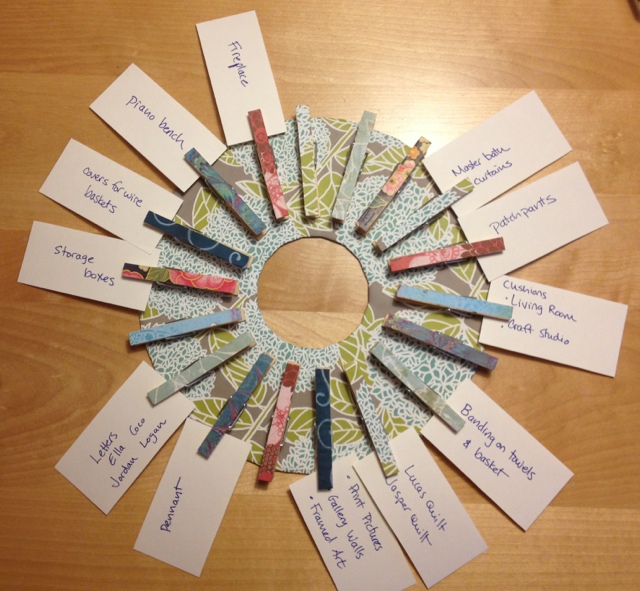
Inspiration wreath

I’m using my wreath to organize ideas for projects. I might need some more pins!

I think there are lots of great uses for the decorated clothespins themselves, too. You could

  • Mount the pins on a rectangular backing for a memo board or photos.
  • Put magnets on the back to use on fridges or magnet boards. If you don’t have a fridge that holds magnets, you can stick the clips directly on the fridge with a removable adhesive, which is what I did with these clips for kids art.
  • Set up a “clothesline” art gallery and use these pretty clips to easily hang and change the kids’ projects.
  • Clip together papers or swatches to organize your office or craft room.

Thanks again to Kirstin at Kojo Designs for this wonderful project idea. It has become a standby for me, and I hope you will let me know if you come up with new ideas for these beautiful wreaths and pins!

“Jewels”
Stenciling on Fabric – Lampshade and Pillow

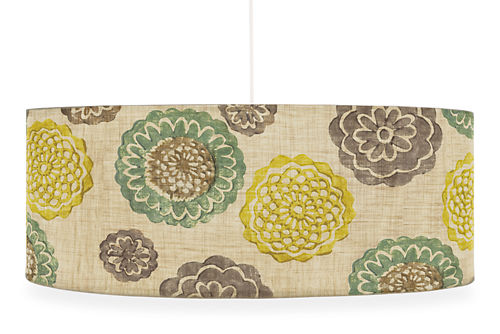
Have you seen these fabulous pendant light drum shades at Room and Board? I’ve been drooling over them for years, with all the gorgeous prints and colors. They’re a splurge at several hundred dollars a shade, but they are really beautiful. Go check out all the beautiful and funky prints they have!

Zinnia Cool Pendant

Galbraith & Paul drum shade from Room and Board in Zinnia Cool pattern.

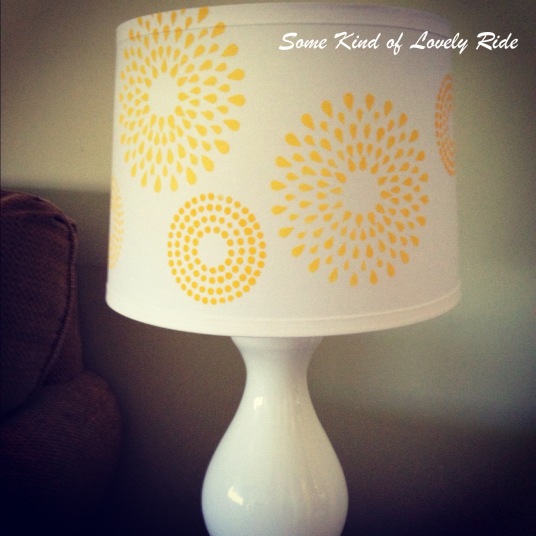
As always, I was wondering if I could make something like this myself, and in browsing ideas, I found some great examples, including this one from Laura at Some Kind of Lovely Ride. She did a beautiful job on her shade and had great instructions that helped me conquer my apprehension about this project!

laura's lamp

Yellow floral stencils on a lampshade by Laura at Some Kind of Lovely Ride. A perfect DIY inpsiration!

I was so excited to get started, I rushed to the craft store to pick up my supplies and get to work! I stenciled the lampshade in my craft studio and while I was at it, I also stenciled a piece of fabric for a throw pillow. I used Laura’s basic instructions and discovered a few tips along the way, so here’s how it went:

Supplies:

20120517-164054.jpg

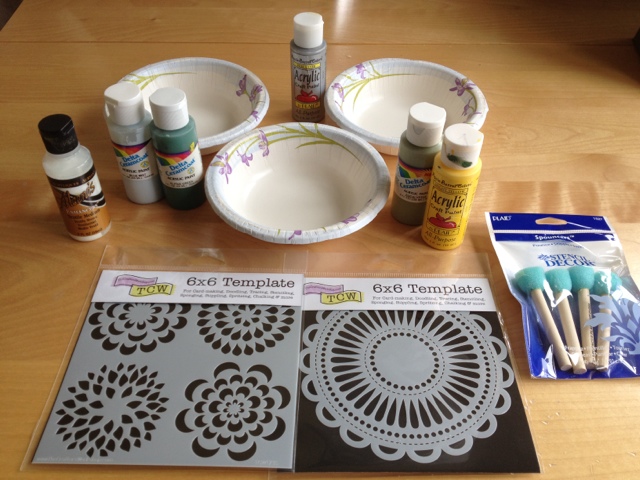
Supplies for stenciling on fabric.

  • Stencils – I used Mini Peony and Mini Mums by The Crafter’s Workshop.
  • Stencil brushes or sponges – These sponge “pouncers” are inexpensive, easy to use, and washable for reuse.
  • Paint – I had a variety of acrylic craft paint around, and I did mix some to get the colors I wanted. It’s optional, but I also added some “textile medium” to my paint, which makes the paint more flexible when dried. This wouldn’t be an issue for the shade, but I thought it would help on the pillow. I mixed the paints in paper bowls.
  • Tape – I used painter’s tape to hold the stencil in place and mask off any areas of the stencil I didn’t want to use.

Stenciling

Basic stencil:

  • Tape the stencil securely in place
  • Put a small amount of paint on your pouncer. If you load on too much paint, it will run under the stencil and smudge your pattern.
  • Lightly dab through the stencil, moving only up and down. Don’t brush side to side, as this will also make paint run under the stencil.
  • Carefully remove the stencil and blot the back on a clean piece of paper to remove any excess paint
  • Repeat!
20120517-164124.jpg

Tape your stencil in place and lightly dab on the paint.

Adding a color:

  • Wait until the first color is completely dry.
  • If you are going to overlap designs, like I did, think ahead about which color you want to be “on top” and start with the colors that are on the bottom.

Finishing the fabric:

  • This is not necessary for a shade, but for a pillow or other fabric that will be touched and possibly washed, you’ll want to set the paint. When the paint is thoroughly dry, iron the stenciled fabric from the reverse side with a dry iron on medium-high for three to five minutes to set the colors. You can repeat this on the front, laying a thin cloth over the stenciled fabric, so the paint doesn’t stick to your iron.

Finished stencils!

Here is how the shade looked before:

20120517-164114.jpg

A simple drum shade. Pretty, but I wanted to add some color!

And here’s the finished shade:

20120517-164139.jpg

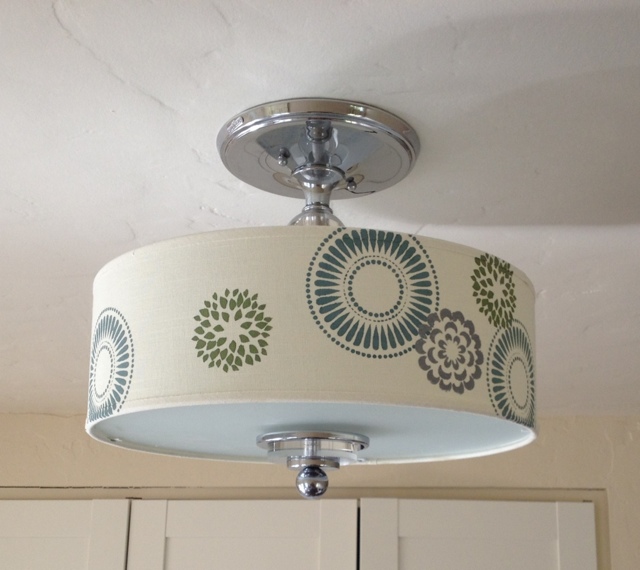
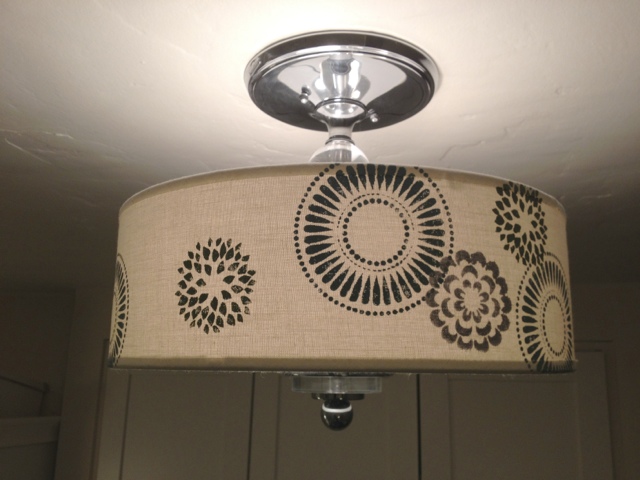
Drum shade transformed with floral stencils in blue, green, and silver. I dare say, I like this better than the inspiration shade!

20120517-165842.jpg

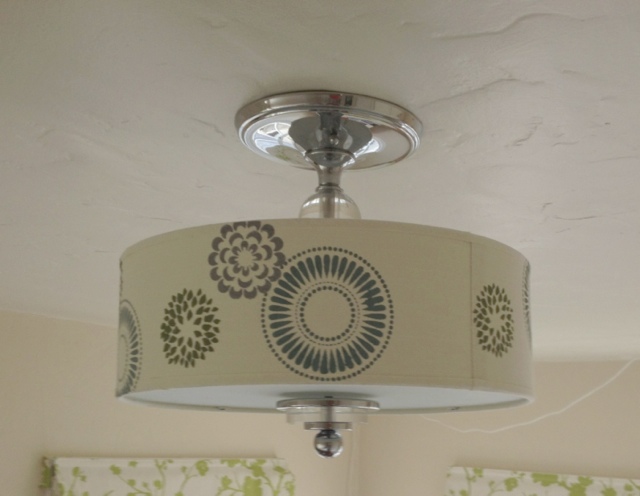
The random pattern of stencils gives a different look from every side. And it makes it easier, because you don’t have to worry about lining up the pattern.

20120517-213651.jpg

Lit up at night. No, I’m not tired of looking at it. Can you tell?

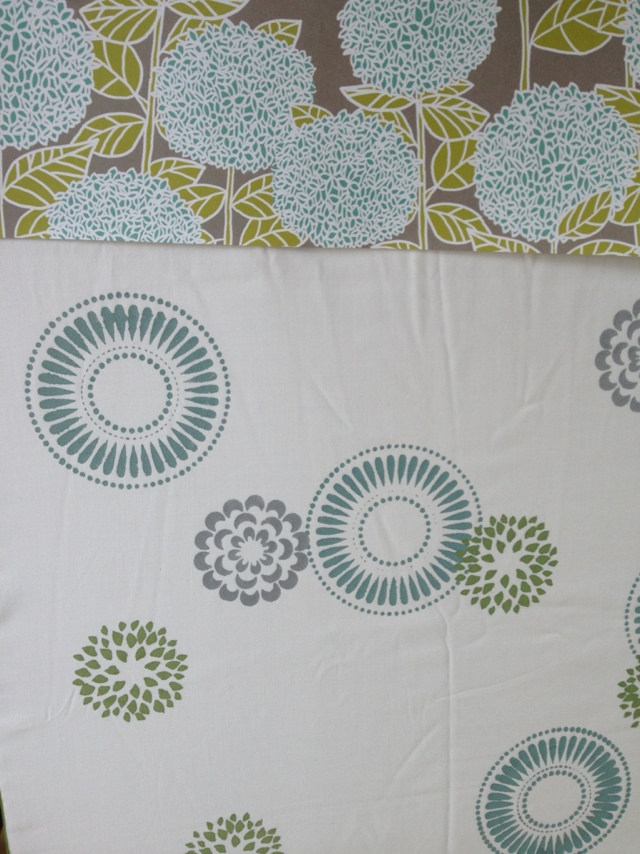
Here’s the finished fabric. I’ve got a lot of pillow projects lined up, so I should work on those soon!

20120517-164150.jpg

The stenciled fabric, on the bottom, will be a throw pillow for the daybed. The colors coordinate with the hydrangea print paper I found. I’m making desk accessories and some other projects with the paper.

“Jewels”

This project is shared at:
The Shabby Nest

Decorative Pillows to Sew – Idea Book

Inspirations for Pillows

Happy Mother’s Day! (Well, for many years, I didn’t find this day happy at all, because it made me feel my mother’s absence even more, but with three little ones of my own, it is happy again, and I celebrate the many wonderful memories of my own mom, whose creativity and talent are constant inspiration for me. So, if this is a hard day for you, hugs! And I hope it will get better.)

I’m making some throw or accent pillows for our home. Sewing straight lines is a doable project for me, and I like to make pillows using some of the same fabrics that are in other parts of a room (such as the upholstered chairs in our dining room and my craft room), to tie the space together.

With a beautiful fabric, a very simple pillow design will work well. There are also many ways to add interest and details to your pillows, and I’ve been collecting some of those ideas to try:

Embellish with Ribbon:

Ribbon motif pillows

By Caitlin Wilson Textiles. Click the picture for details.

grosgrain ribbon pillow

I like this pattern shown at Better Homes and Gardens. They used fusible web to attach the ribbon. Click the picture for more pillow ideas on their website.

These ribbon details on simple pillows gives a classic and elegant feel. You could also do a simple square.

Use Contrasting Fabric on Back:

reversible throw pillows

I love the look of a different color on the front and back. This picture is from Grosgrain, where Kathleen has some tips on making a quick pillow cover.

Embellish with Buttons:

button pillow

Add a letter or other pattern with buttons. This is a beautiful example by Peggy at Letter Perfect Designs on Etsy. (And I’m not just saying that, because it’s a “J”!) Click the picture to see more beautiful button art!

3-D Felt Embellishments:

butterfly pillow

These three dimensional felt butterflies are so sweet! Click the picture to see the tutorial from Better Homes and Gardens.

Piping/ Welting:

pillow with piping

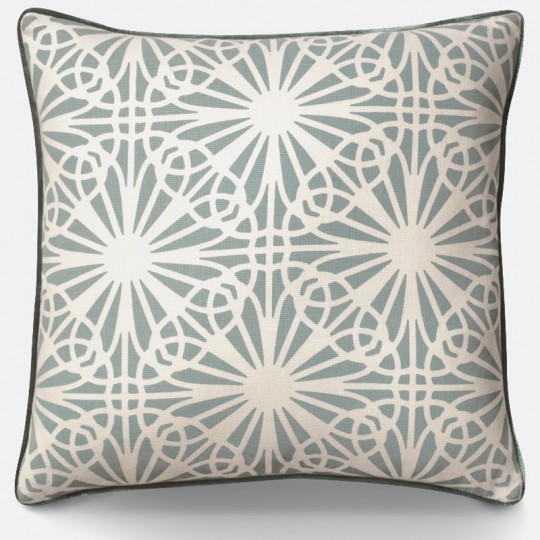
This pillow is made by Weego Home. Click on the picture to see their stunning collection.

A stunning print like this would be beautiful on its own, but I love the piping detail. Here’s a tutorial on eHow for applying store-bought welting or piping. I’d love to learn how to do that!

Silhouette:

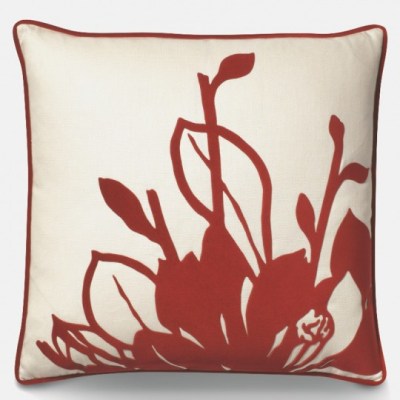
silhouette pillow

This incredible pillow by Weego Home is cut velvet appliqued on linen. I think you could get a similar look with painting on fabric, though obviously, it won’t have the rich feel of this original. Click to see their collection.

Pieced Pillow:

pieced pillow

I like the use of panels made from two fabrics, especially the way it is asymmetrical. This pillow is from Anthropologie, though it is no longer sold.

These are some of my favorite ideas – what are some of yours?

Hope to post my new pillows soon!

P.S. Don’t forget that there’s a May Giveaway. Comment on any post by May 15, and I’ll select a winner to receive a custom wall initial.

“Jewels”

Shoebox Makeovers – Mani-Pedi Kit and Decorative Box

I’m lucky to have a sister for so many reasons – she’s the one person with whom I can be completely myself and share all the funniest and saddest moments. As a fun bonus, little sis loves designer shoes, and I get the beautiful boxes!

Today is definitely TGIF. Work was busy this week, and I’m ready to shift gears for the weekend. Tomorrow is our school’s annual dinner, and I love the chance to get dressed up and enjoy some time with friends. I don’t get fancied up often, but I decided to paint my nails tonight and was reminded of how easy and fun it was to decorate this shoebox to organize my nail polish and accessories.

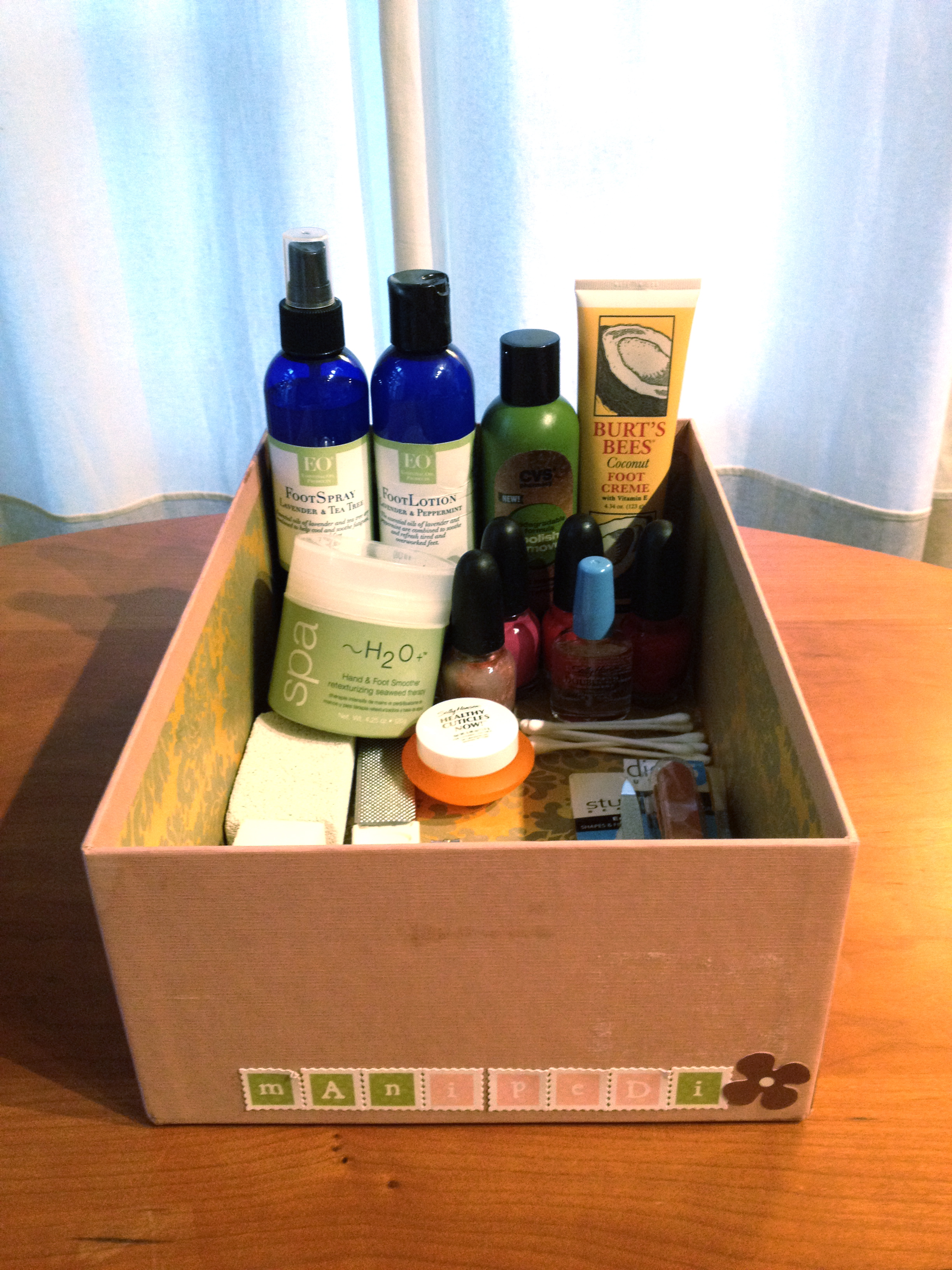
Easy mani-pedi kit made from an old shoebox.

Easy mani-pedi kit made from an old shoebox.

Mani-pedi kit inside

There’s enough room for nail polish and accessories. I love the damask lining of this box. You could add your own to a sturdy plain box.

This box was already lined in that pretty metallic damask, but you could glue in a paper or fabric liner to any sturdy box. I used a ribbon and some stickers on the outside to cover up the printing, and now practical little me gets to feel girly and pink once in a while.

shoebox decorated for display.

This beautiful shoebox has a ribbon closure. I added scrapbook paper to the outside.

Another of my sis’ shoeboxes is in our living room. This time, I glued some scrapbook paper over the printing, and it’s ready for display. (Yes, putting photos in frames is on my to-do list!). The style of this box, with the attached lid and ribbon closure gave me the idea to cover some extra test kit boxes from work. Hope to show you that soon.

Okay, now go raid your (sister’s) shoe closet and create your next project!

“Jewels”

Ikea Dining Chairs All Grown Up – Craftsman and Regency Makeovers

No doubt it’s lovely to buy something new for your house, but it can also be fun when furniture you have had for a long time takes on new forms and uses.

Hubby and I first bought these chairs from Ikea thirteen years ago when we were living on the other side of the continent. There were four of them in birch with white seats around a small matching kitchen table in our apartment. Over the years, we accumulated more from Ikea and then through Craigslist, when Ikea stopped making them. Our collection of twelve chairs has moved across the country and through several houses with us. They’ve held up wonderfully as our everyday dining chairs for thirteen years!

I can’t dig up a good picture of the way the set originally looked, but I’ll keep an eye out for it. Meanwhile, I found this old stock photo on the internet.

original ikea chair

This is the original chair we bought from Ikea in birch, tough ours had white seats. I can’t remember its cute Swedish name, but I think it started with “A.”

Ikea borje chair

Ikea Borje chair.  A current model that has a somewhat similar look.

The cute birch table with a glass top met an untimely end (long story), and we replaced it with an Arts and Crafts/ Craftsman/ Mission style cherry wood table. At that time, I put slipcovers in the chairs, since they didn’t match.

Arts and Crafts Makeover:

Three or four years ago, I was shopping for chairs to go with the Arts and Crafts style dining table, when I realized the solution was right beneath my nose! I still liked the elegant geometric lines of the Ikea chairs, which I think are reminiscent of Frank Lloyd Wright, perhaps the most well known architect of the Arts and Crafts movement. It was just the light color of the wood that didn’t work. Staining the chairs would have involved stripping the finish and trying to match the color. Even if i had been able to do that perfectly – and that is not likely – the grain of the woods would still not have matched.

In any case, it really isn’t necessary to have chairs that match your table – nor nightstands that match your bed. It actually looks so much more interesting to mix and match. The chairs at the head of our dining table are not the same as the side chairs, either, and I feel it all works together.

So, our chairs that started as Scandinavian modern evolved to Arts and Crafts with new black paint (tips on painting in an earlier post) and tan microfiber suede seats. Microfiber suede, also called faux suede or ultrasuede, has a nice soft texture but is extremely durable and washable – I have scrubbed these seats with a soapy kitchen sponge on more than one occasion, and they end up looking as good as new. There are microsuedes intended specifically for upholstery that have a backing to give this soft material a lot more structure. If you can find this, it’s highly recommended! Four of the chairs with the tan seats are at our games table, which is our original cherry dining table, in the family room.

ikea to arts and crafts

The first makeover: I adapted our modern Scandinavian chairs to go with an Arts and Crafts style table by painting then black and adding tan faux suede seat fabric.

games table

A round games table in the family room is perfect for art projects and board games with the kids. The tan microfiber seats hold up very well!

Regency Makeover:

We move way too often, but I do like the opportunity to change the design of our rooms. We still have some great Arts and Crafts furniture, but I wanted to brighten up our home and incorporate more contemporary and Asian elements. It’s still a work in progress, but I’m trying to develop a bit of a Hollywood Regency/ Chinoiserie feel in our new living-dining room, and I love that these familiar old chairs have been able to come along for the ride.

So, in our current home, I’ve changed the seats on the majority of the chairs to a whimsical Chinoiserie print in blue and cream: Robert Allen Lake Paradise in spa, an outdoor fabric that’s durable and wipeable. These are chairs that are used daily – including by the kids – and I just didn’t think that ordinary fabric would hold up. The polyester is not as soft as a nice upholstery cotton, but our bottoms haven’t minded. I showed how to upholster the seats in earlier post. Start looking around, and you’ll find that outdoor fabrics now come in almost any color, pattern, or texture. Many great fabric designers have beautiful prints meant to stand up to the outdoors, often including some of the same patterns they have in their indoor collections and more!

ikea to regency chair

Another step in the evolution of our old Ikea chairs. This new fabric gives them an elegant yet whimsical feel that fits in with the Chinoiserie/ Regency look I am working on in our living-dining room.

Dining Room with painted and reupholstered chairs by Jewels at Home

Dining Room with new chairs. The space is still a work in progress.

Dining Room with painted and reupholstered chairs by Jewels at Home

Dining room from the other side. I’m happy with the wallpaper inside the shelves.

The dining room is starting to come together. I do like how the Imperial Trellis silver wallpaper looks inside the bookcase. Now that I look at the collection of plates again, I think I could use a couple more. I also want to make over or replace the sideboard. My fantasy is to find an old Thomasville or Henry Link Bali Hai dresser with faux bamboo accents to repaint for that area. And most of all, I would love to change the fireplace mantel. It is plaster with a cheesy faux marble finish, and there are two disembodied heads that stare out at you! Part of me wants to take the whole thing out, but since it’s historical, I might keep it and try to remove the heads and repaint it. I’d also like to do a few small projects like recover or replace the cushions on the head chairs, sew a runner for the sideboard, work on accessories, etc.. Well, one thing at a time. I’m having fun every step of the way!

“Jewels”

DIY Decorative Trays – Ten Great Ideas

Ten Trays

The best decorating projects combine form and function – they add beauty to your space, serve a purpose, and when you make your own, they are one of a kind! A decorative serving tray is just this kind of project. You can use them to display or transport items on a coffee table, buffet, desk, kitchen counter, and more.

My friend Ari got me excited about decorating our own trays when we were at the flea market this past weekend. I picked up an older wooden tray there for just $5, and I know I have a couple of my own lying around the house. I want to use some for display in the living and dining room, and one for the desk in my craft room. There are so many great ideas, and here are some I would love to try or adapt for myself.

Silhouette and Silver

Silver leaf tray

The botanical silhouette and silver leaf on this tray are beautiful.

Brenna at Design Sponge has a tutorial for how she made this tray from a thrift store find! You could simplify it for a similar look with silver spray paint, though the silver leaf looks amazing, and the glass makes the tray useable for serving.

Monogram

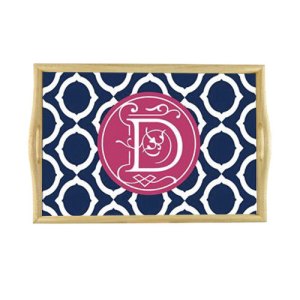
monogram tray

Lots of options to personalize a monogram tray from A Modern Style on Etsy.

This one is by A Modern Style on Etsy. I love the bright colors and graphic design contrasted against the wood.

Wallpaper and Lacquer

Lacquer wallpaper trays

Gorgeous lacquered trays with wallpaper inserts and bold colors from iomoi.

This is from iomoi and hand lacquered, so it would be very durable and stand up to washing and heavy use. The coordinating colors on the body of the tray and the gold trim are gorgeous! I could use some more of the Imperial Trellis wallpaper I have left over from our powder room and lining our bookcases.

Painter’s Tape and Paint

painter's tape tray

Use painter’s tape to mask a design on a plain tray (or paint the tray a background color first). Follow with spray paint – looks great in metallic for a striking graphic design.

Courtney Kaye of Courtney on the Brink made these trays for holding jewelry. They look bold and elegant! I’ve been using metallic spray paint for a lot of projects recently, and I love it!

Tile Mosaic

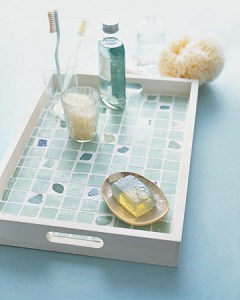
tiled tray

A tile mosaic looks beautiful inside this tray.

This beautiful example, as well as instructions for tiling the inside of a tray, are from the Martha Stewart.

Frame and Fabric

This is an idea to make a tray from a frame and cabinet handles. You can put fabric or pretty paper under the glass.

Patrice from Lemon Tree Creations had this creative idea for making a tray from a frame and cabinet handles. The glass protects the decorative fabric or paper.

Stencil

Stenciled Tray

This stenciled tray is so elegant. I love the painted grey exterior with the white and grey graphic design.

The instructions for stenciling this tray are from HGTV.  Of course, it looks so much like my Imperial Trellis wallpaper, that I could use that for the same look, but there are other great stencil ideas out there, including stenciling words.

Paper Mache

Paper Mache Tray

A sweet little tray made from paper mache and painted different colors inside and out.

Start from scratch! The instructions for making this paper mache tray are at Everything LEB. I love how she used metallic paint inside and the sweet green-blue on the outside.

Decoupage Circles

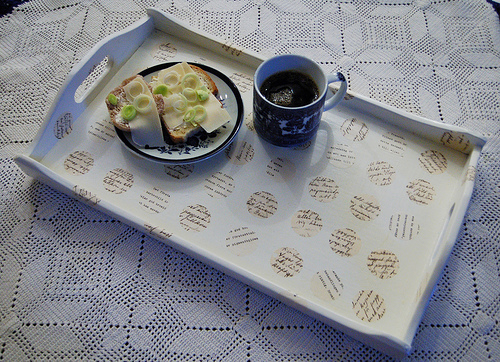
decoupaged tray

These cute circles have text from old books on them. You could do the same with all sorts of fabrics, papers, and shapes.

A fun and unique example of decoupage from iHanna. There are so many great ways to build on this idea!

Photographs

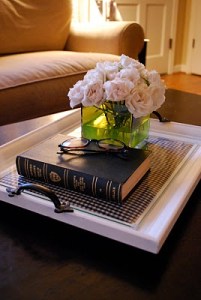
photo tray

This photo in sepia tones looks beautiful mounted inside a tray.

You could print a single large photograph or several small ones and decoupage them to the inside of a tray and/or mount under glass. This lovely example is from Merle Hillary Interiors.

All these projects would be a perfect way to re-use a tray you already have or give new life to a thrift store or garage sale find. There are also new trays that would work well for makeovers. Here are two very different examples:

Glam Base

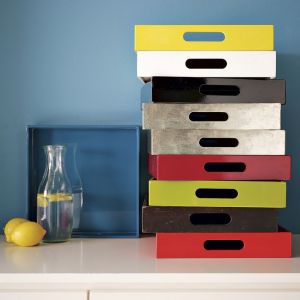
west elm trays

These lacquered trays from West Elm are already gorgeous. You could dress them up in so many ways!

If you want a tray that is already beautiful on its own, these trays from West Elm are a great option. With a simple design and so many colors to choose from, they would also be easy to customize. Only trick I foresee is that it might be a little tricky to get things to adhere well to the lacquer.

Simple Base

For a simple unfinished wood base, try this  Walnut Hollow Unfinished Wood Serving Tray, 15-inch x 11-inch.

Well, that’s my roundup of inspirations for trays to make yourself. I hope Ari and I can find some time soon to work on ours!

“Jewels”

Upholstering Chairs from Fabric to Finish

Re-inventing an old chair is one of the easiest furniture makeovers, and it is so rewarding to create a one-of-a-kind gem like this!

Queen Anne Before After

Free Queen Anne chairs found through Craigslist: from worn and boring to fresh and elegant!

When I debuted my Queen Anne chair makeover, I provided some tips for painting. Today, I’ll cover the basics of reupholstering a chair seat. I had also mentioned in the earlier post that I had discovered a great fabric choice for seats, so let’s start there.

Choosing Fabric:

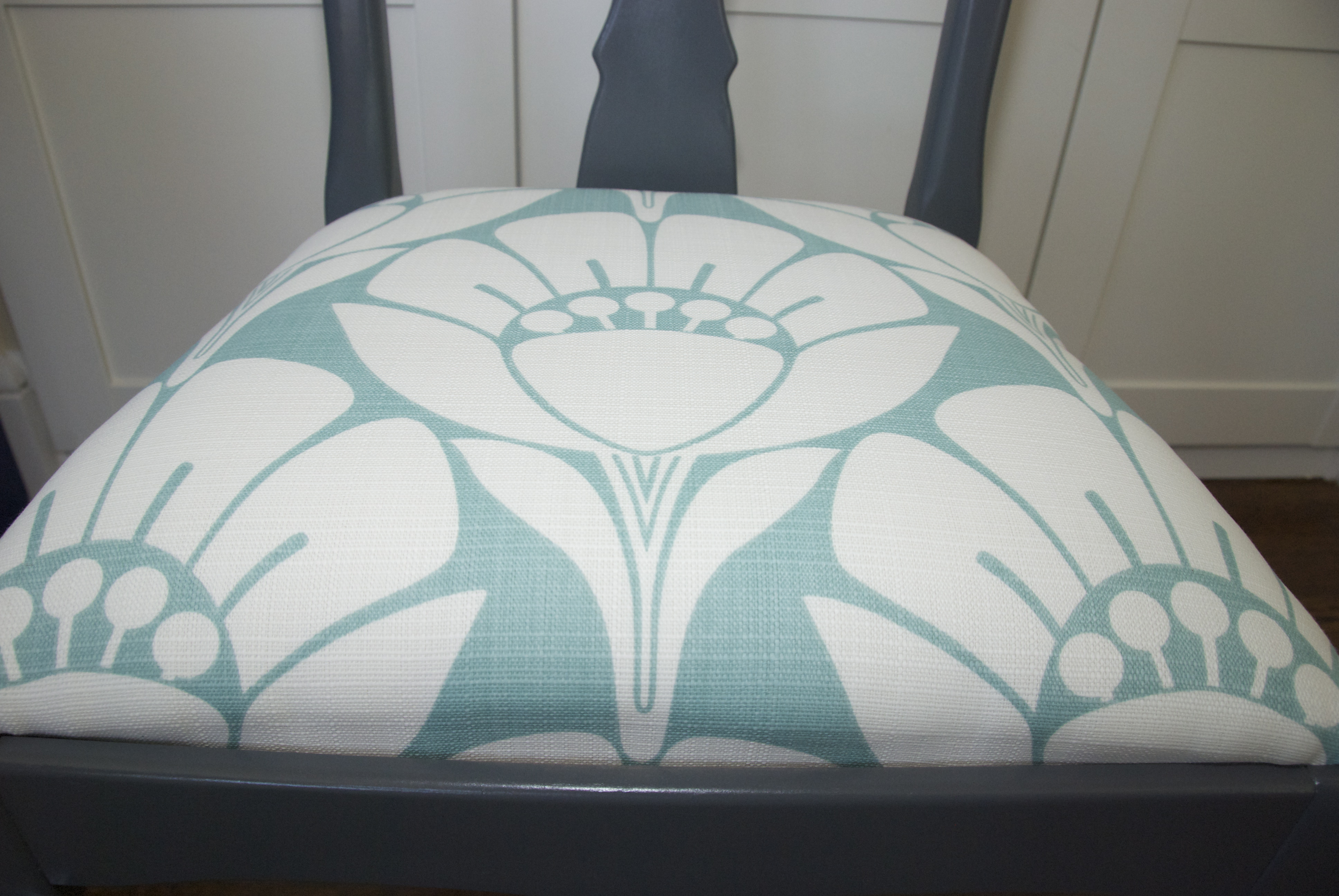
The secret is that this beautiful fabric, with its bold graphic pattern and textured weave, is not a standard decorator upholstery fabric but an outdoor fabric! It won’t stain, fade, or wear out. You can wipe or even scrub it clean! These days, the options for colors, patterns, and textures in outdoor fabrics are immense. I’ve used outdoor fabrics on several projects, and the results have been great!

P. Kaufmann fabric seat

“Muse” by P. Kaufmann in Aqua. A colorful outdoor polyester fabric with a linen texture.

Robert Allen fabric

“Lake Paradise” by Robert Allen in Spa. Another outdoor polyester with a whimsical print. These are our dining room chairs. More about them soon!

built-in bench

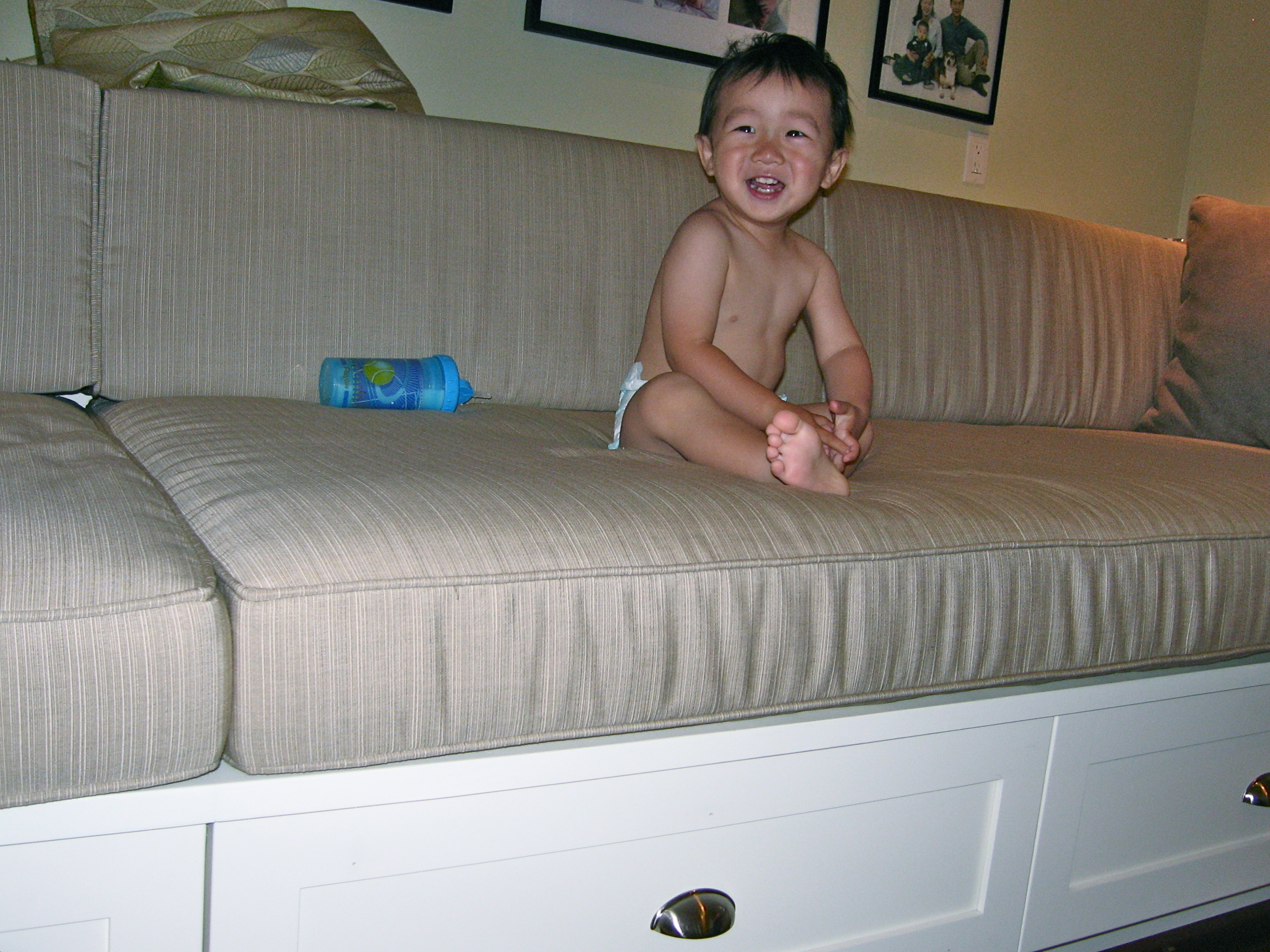
“Dupione” by Sunbrella in Sand. This acrylic weave indoor/outdoor fabric was on a built-in bench in our old house and was clearly toddler- and sippy cup- friendly. I’d love to recreate that bench in our current home. It was great for lounging and had lots of storage in those drawers underneath.

I bought the Lake Paradise and Muse fabrics from fabricguru.com. This is definitely my favorite source for online fabric shopping. They have good prices and selection, and they make it easy to search, which can be overwhelming with some of the other sites. I bought the Sunbrella Dupione from a marine supply store online.

A couple of caveats: the polyester outdoor fabrics are stiffer than cotton upholstery fabric, so they don’t feel as soft or wrap as neatly around corners as a cotton. Also, while fine for the upholstery, they would feel stiff on a cushion, so if you want to create coordinating pillows or other items, you might want to look for the same print in a regular decorator cotton. I found the acrylic was much softer to the touch, though I did not do the sewing on those fabulous bench cushions. I also have noticed some slight piling on our dining chairs, but it’s very minor, and I am sure that they would be in much worse shape by now, if I had used a standard cotton fabric, because we eat there every day.

Upholstering a Seat:

You will need:

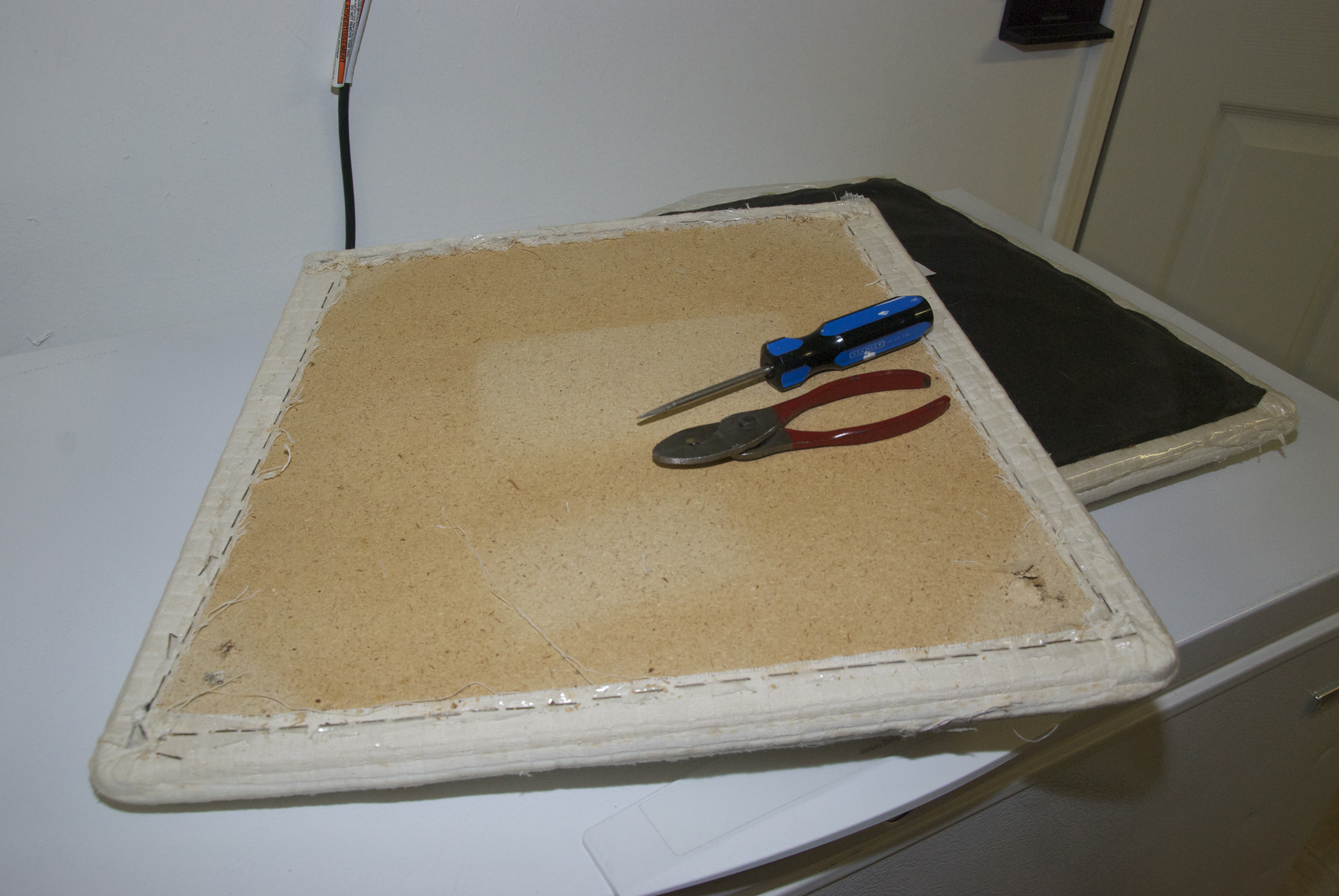
  • flat head screwdriver and pliers
  • sheet of foam (unless you are reusing the existing seat cushion)
  • upholstery fabric
  • scissors
  • staple gun and staples

1. Use a flat head screwdriver and pliers to remove all the old staples. Argh! Look at all those staples. This took a long time!

remove staples

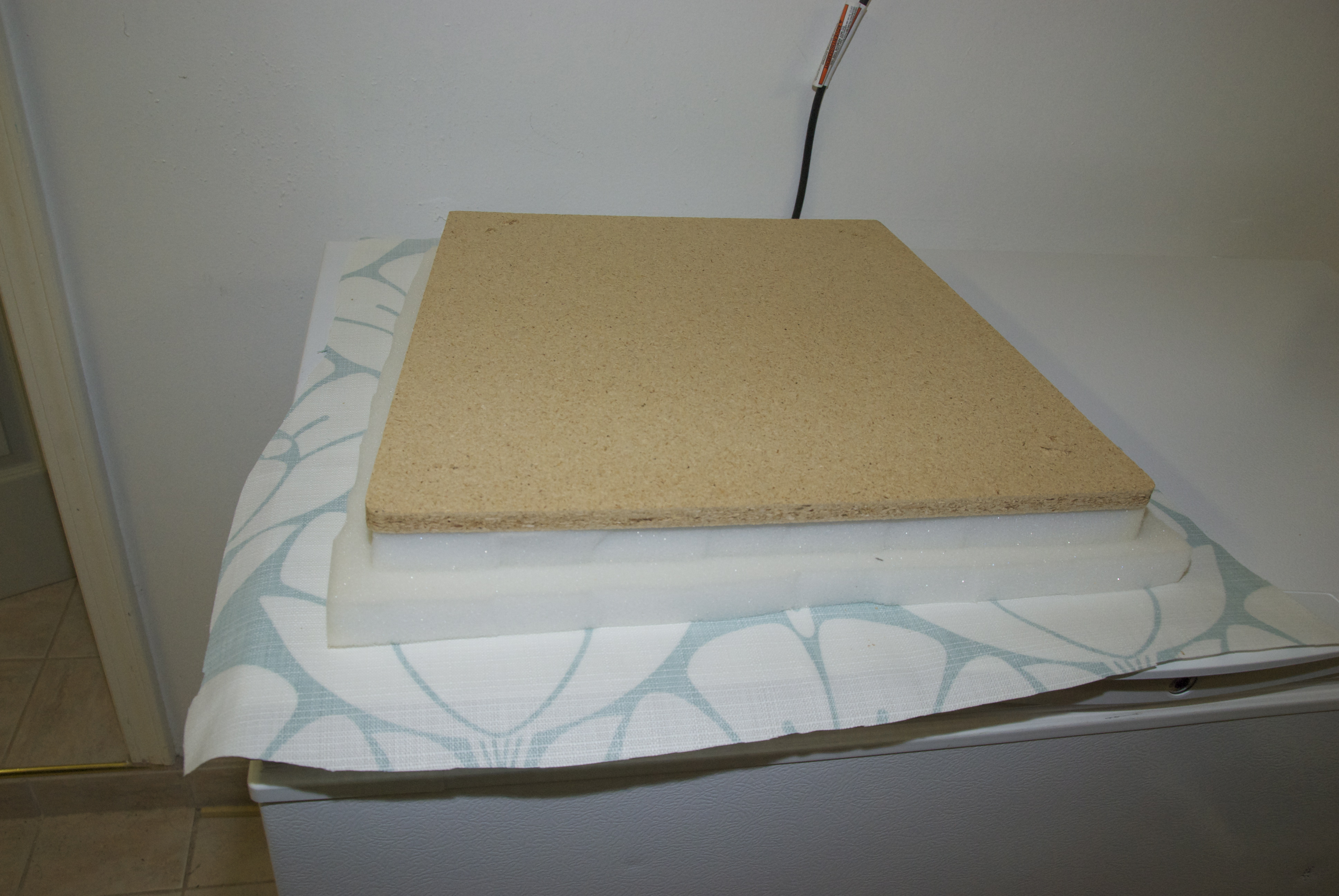
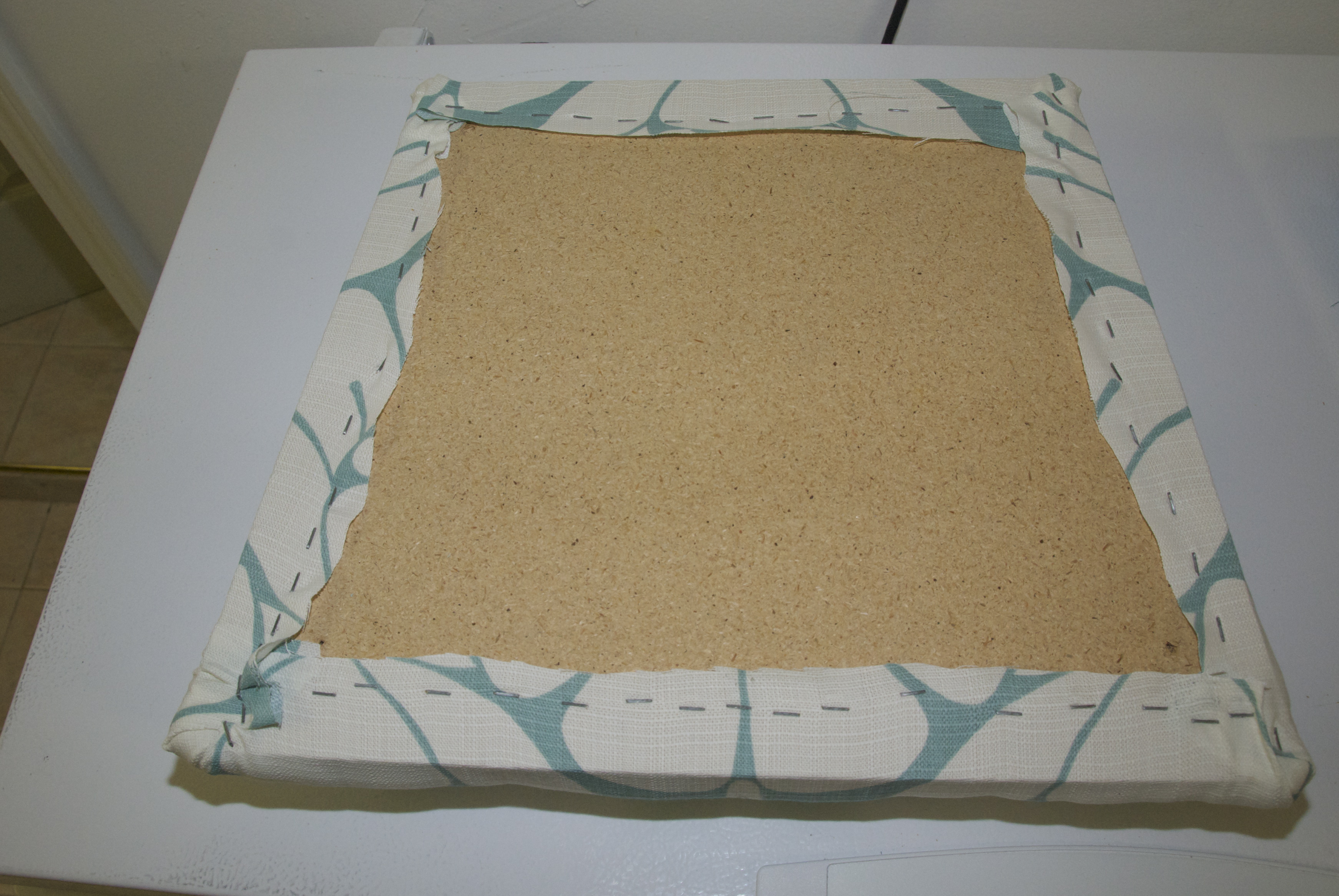
2. If you aren’t reusing the old foam, cut a new cushion from a sheet of foam from the craft store. I used two pieces of 1/2″ foam, one cut to fit the seat exactly and the other a bit wider, to wrap around the outside of the seat.

new foam

3. Center the fabric under the foam and seat bottom. For a large print, like the “Muse” on my Queen Anne chairs, pin the fabric in place, to make sure the pattern is centered.

Center fabric

4. Using the staple gun, tack the fabric onto the seat bottom on the center of each side. (Apparently, I forgot to take a picture of this!)

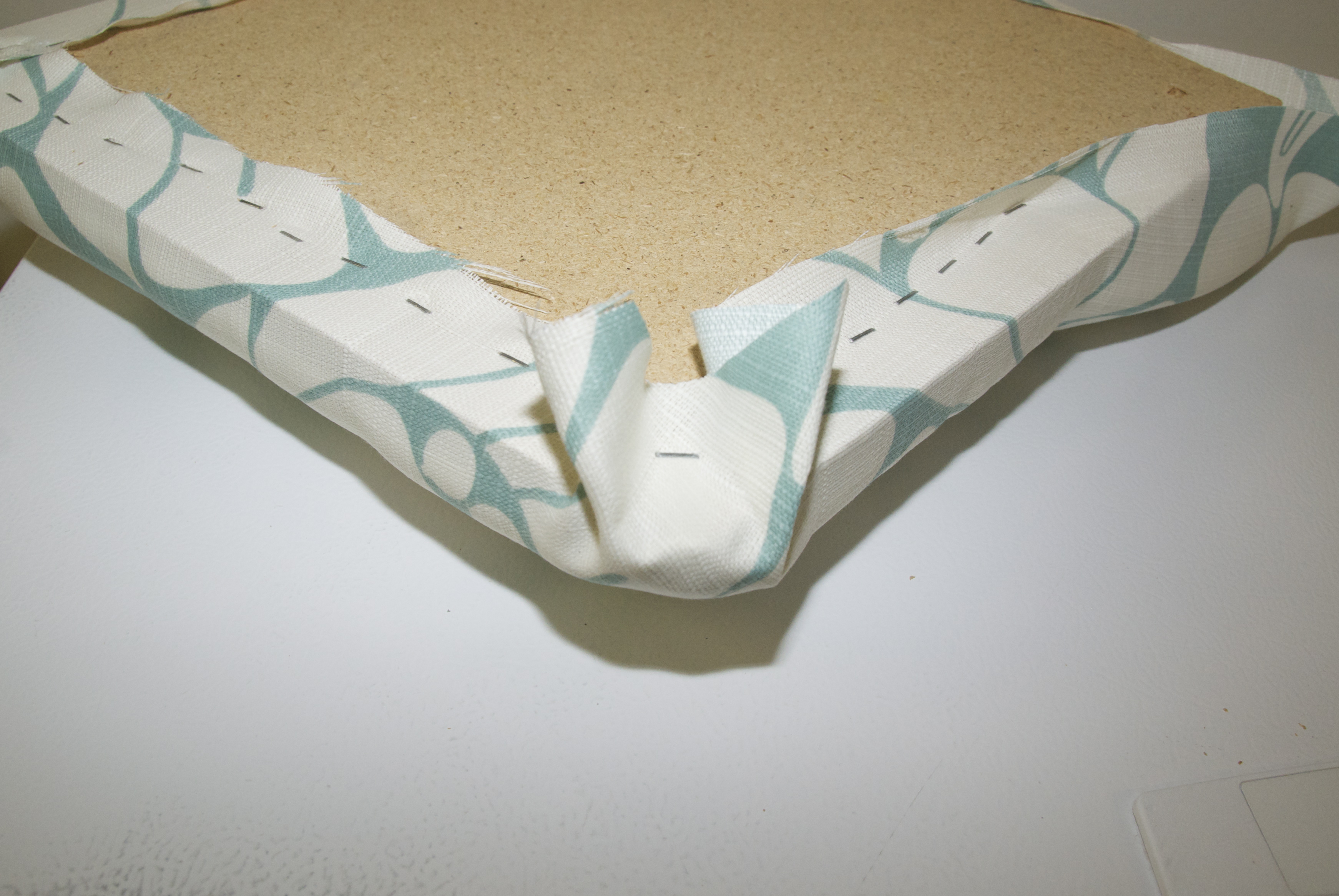
5. Next, staple from the center of each side towards the corners, stopping about two inches from the corner. Fold up the fabric at the corner and tack it to the bottom of the seat:

Tack the corner

6. Now finish stapling the fabric on the sides. Depending on the angle, sometimes you need an extra fold in the fabric.

7. Repeat for all sides and corners, and you’re done!

Let me know if you have any questions!

“Jewels”

Chair Makeover: The Queen’s New Clothes

I have a confession: I am in love… with my newly made-over chairs.

I like a lot of classic furniture, but I never was interested in traditional ornate wooden chairs. The curves and details just didn’t do it for me… until I saw how fabulous they can look when painted in a fresh color! Here are some of the inspirations that made my heart go pitter-patter.

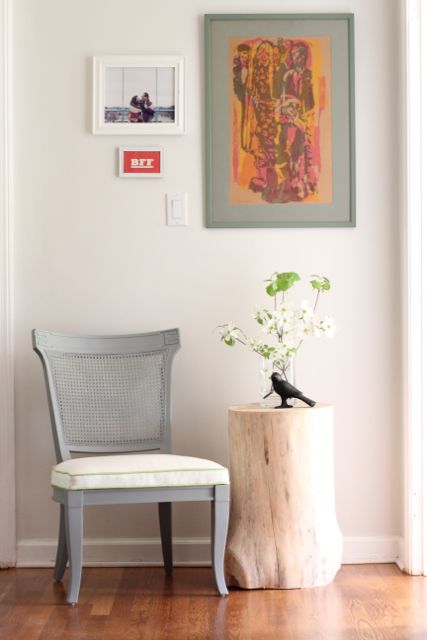
A fresh-looking chair in grey with a white and green seat by Molly at the Nesting Game. Click the picture to see the details on her blog.

Go to The Nesting Game

Gold leaf and blue chair

Kate at Centsational Girl has so many great ideas for furniture makeovers, including this sweet desk chair in blue with gold leaf.

Go to Centsational Girl

When I saw these chairs, I desperately and urgently wanted to make my own! And I could not believe my luck when, on the first day I looked, I found someone giving away two Queen Anne chairs for free on Craigslist. The chairs are not vintage, but all the better, so I needn’t feel guilty about painting them. The guy who was giving them away had several other pieces of furniture for free that had all been victims of his cat, as you can see in the “before” picture.

Queen Anne Before After

From worn and boring to fresh and elegant!

I wish I had the space and a use for ten of these chairs, because I’d love to paint some in apple green, light blue or white. The upholstery options are endless, too. For this project, I decided on grey. Grey is the popular “new neutral,” and I agree that it is beautiful and timeless.

Painting furniture can be broken down into just a few simple steps:

1) Prep: sand and wipe down your surface.
2) Prime: it’s worth the time and money to use a coat of primer, as this will seal the existing wood or paint and help the new paint adhere.
3) Paint: I used a grey spray enamel from the hardware store.

  • Tip: chairs like these have lots of of angles and curves, and it’s easy to miss areas, so I try to work my way around systematically. I stand on each of the four sides and spray anything that is facing me, working my way around the chair. Then, I work my way around again, standing at each of the four corners and again spraying anything that is facing me. By doing this, you shouldn’t miss any spots.

4) Clear topcoat: this step is also worth the time and money, as the paint will wear and could rub off on walls or other furniture.

queen anne after

Another look at the new chair. I love the feminine and elegant look! have a secret about that beautiful fabric that I’ll share soon!

I love home decorating ideas that don’t have to cost a lot of money to get a one-of-a kind beautiful result.  I definitely have my eye out for the next great find!  These chairs are for my sewing and craft room, which is also our guest room. In a house full of boys, it’s the one place where I have fun adding some flowers and curves.

UPDATE: I followed up with a post about the upholstery, including my new favorite choice for durable and beautiful fabric.

“Jewels”

This project is shared at:
HookingupwithHoH

Sew a Growth Chart – Tutorial

Bad news: I’m blogging and sewing tonight while sitting on a step stool. Good news: it’s because I am in the middle of making over my free Craigslist Queen Anne chairs for the sewing room. They are already repainted, and I just need to re-do the seats, which I hope to do this weekend.  Wait! What was I supposed to be talking about… oh yes…

In a recent post, I brainstormed ways to help my friend preserve the record of her children’s heights marked on a door jamb in their house. I loved looking at all the great ideas out there, as well as coming up with some of my own.

At the end of that post, I included a picture of the hanging fabric growth charts I made for my kids. In case you want to make one for your family or as a gift (I first designed this as a baby shower gift!), I’ve broken down the steps here. Let me know if you have any questions!

As I mentioned last time, I’m sure there are similar growth charts out there, but I designed this one myself, keeping in mind that I wanted it to be

  • portable – so that we could take it with us when we moved (a feature this post proves is valuable!)
  • easy to store – fabric can be rolled up for compact storage and ironed later – wood, obviously, cannot, and paper could get folds and wrinkles – though you could wrap around a paper towel roll to minimize this.
  • complete – I wanted to be able to record my kids’ growth from birth to adulthood. Many ready-made growth charts stop around five feet. Granted, most tweens and teens may not have any interest in growth charts anymore, but their parents might, so I made mine go up about 6’2″, just in case!

The finished size of this growth chart is approximately 11.5″ wide x 54.5″ high.

For each chart, you will need:

  • fabric markers or sharpies
  • white fabric (8.5″x58″): I used white cotton twill, which I chose for its stability and weight
  • backing fabric: I used twill or denim, again to add stability and weight
  • border fabric (equivalent to 1/2 yard of 42″ wide calico): I won’t be bossy here – use whatever you like!
  • 1/2″ diameter wooden dowel (approximately 2′ long)
  • two small screw eyes
  • ribbon for hanging

1) On a strip of white fabric that is 8.5″ wide for each growth chart, mark out inches from 1’6″ to 6’2″ (or whatever you like) by laying a tape measure on the fabric and using a ruler to draw lines with a fabric marker or Sharpie. I used a different color and longer marking every six inches. The short lines are 1.5″ and the long lines are 2″. Remember that lines on the finished product will be shorter, because a 1/2″ will be in the seam allowance.

If you are making more than one growth chart, you can be efficient and mark lines for two at a time, as shown below. You will need a slightly longer fabric strip and want to number from both ends, so the marks are on the left of each chart.

growth chart

Inches marked on white fabric using fabric markers.

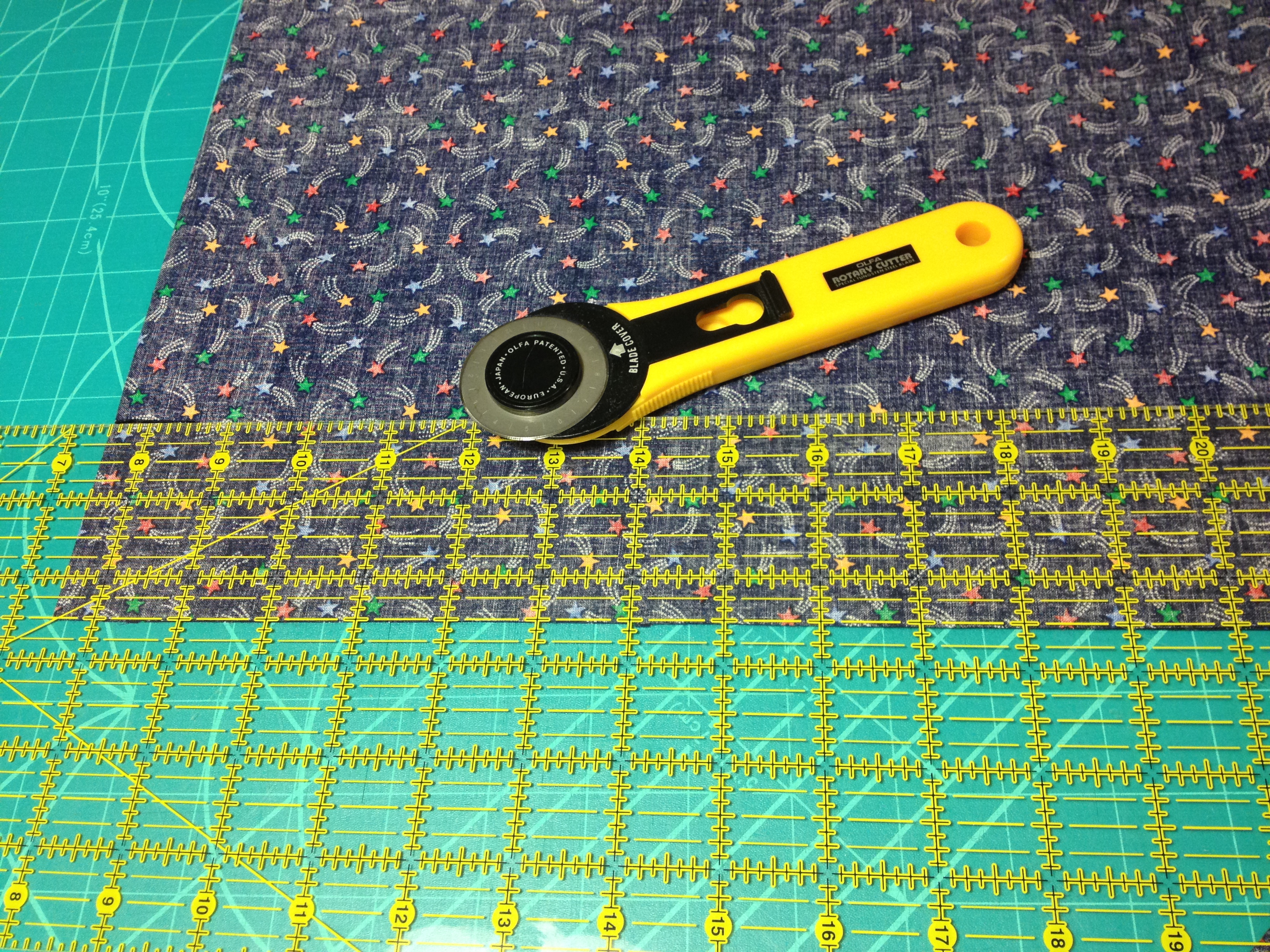
2) Cut out strips for a border. The side strips are 2.5″ wide. The chart should be 58″ long, but cut your strips about an inch longer, in case you are like me, and straight lines magically transform into uneven ones… For preparing the border, I used a rotary cutter with quilting ruler and mat. These tools are designed for quilting, where you have to piece together very precise lines and angles, but they work well for lots of other projects.

Quilting tools

Quilting tools: rotary cutter, quilting ruler, and mat. These are so useful for getting straight lines and square angles on all sorts of projects. I even use the mat and ruler for cutting paper.

3) Sew the side strips onto the white center, using a half inch seam allowance. Iron flat, with the seam toward the border. Trim the border pieces so they are flush with the white section. Again, the quilting tools are great for getting things straight and square.

4) Next, cut strips for the top and bottom border. These are 5.75″tall, and they should be 11.5″ wide. Again, I cut the pieces a bit wider, to compensate for the nasty elves in the sewing machine. Sew these on to the top and bottom, using a half inch seam allowance. Iron with the seam toward the border. Now that the front is complete, trim where necessary to make sure it’s even (square at the corners, same height on both sides, same width at top and bottom).

joiining growth chart

After trimming the center piece, join the top and bottom borders.

You could add any decorations you want to the front at this point. I put each child’s name at the top, piecing together letters from a fun teddy bear alphabet print. I also added a “Made with love by ‘Jewels'” tag to the bottom.

name label

I put each child’s name on his growth chart using letters from this cute teddy bear print.

5) Cut a piece of backing that is the full size of the front (should be about 11.5″ wide and 69″ long, but measure your actual piece).

6) With RIGHT sides together, pin, then sew the front and back pieces together, using a half inch seam allowance, leaving one of the short ends open, so you can turn the piece.

7) Cut diagonal triangles from the corners, so they turn neatly. Then, turn the growth chart right side out and tuck a half inch seam allowance under on the open end. Iron the whole piece flat.

trim corners

Cutting across the diagonal at the corner will give a neater finished appearance.

8) Cut two pieces of doweling that are the same length or a tiny bit shorter than the finished width of your growth chart. Attach the screw eyes to both ends of one piece.

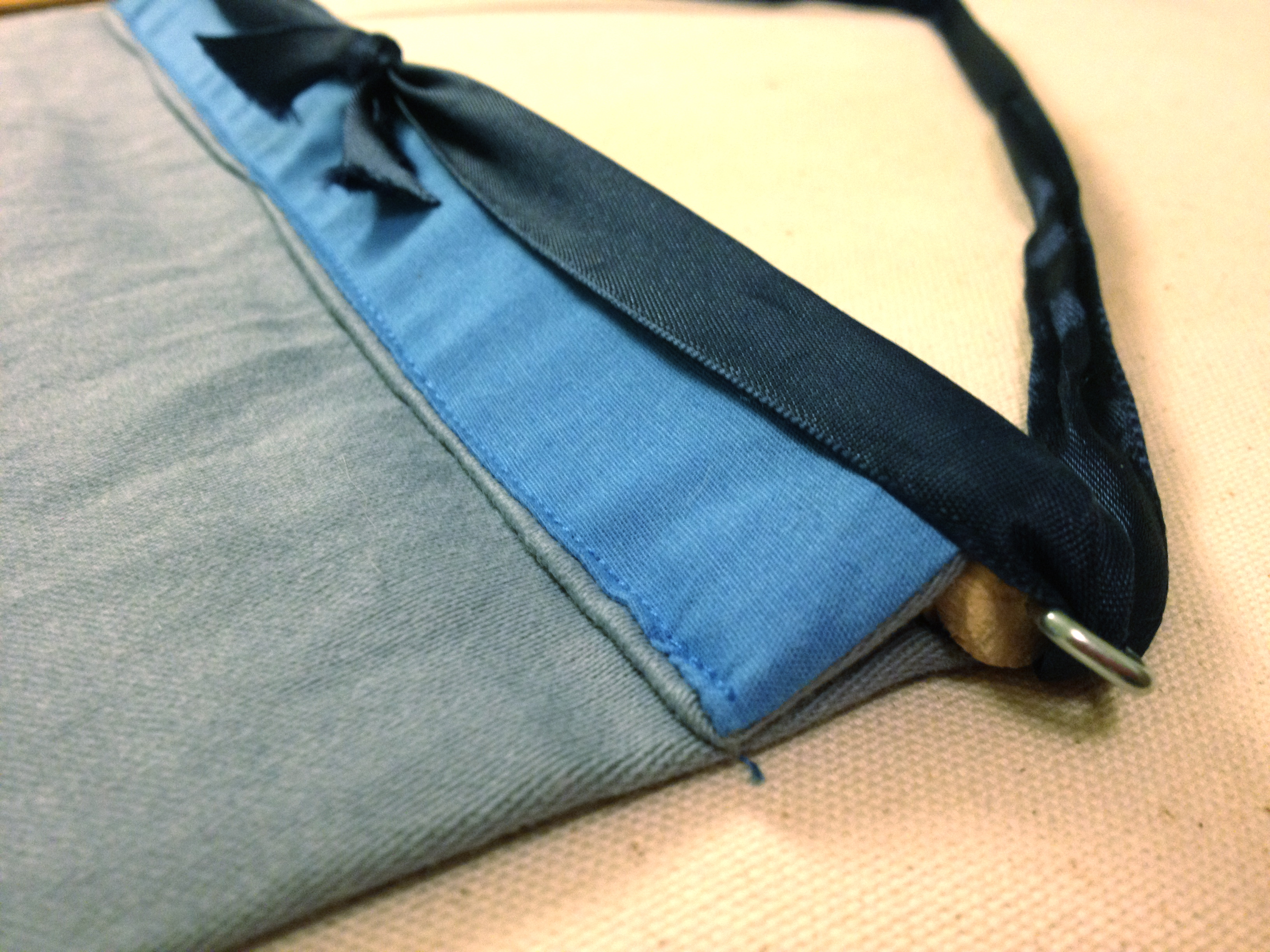
9) Fold towards the back and sew down a 1.25″ flap on the top and bottom to create a pocket for the dowels.  This will also close the end you left open.

10) Insert the plain dowel in the bottom pocket and the one with the screw eyes in the top.  Thread a ribbon through the screw eyes to hang the chart.

finishing the chart

Finish: Sew 1.25″ flaps on the top and bottom to hold the dowels. Insert screw eyes in the top piece and thread a ribbon through for hanging.

Tada!  The finished growth charts are hanging in the hallway outside our kids’ bath, opposite the newly organized laundry area.

finished growth charts

Finished growth charts

Hope I made that clear. I’d love to see pictures, if you make one of these yourself!

“Jewels”
This project is shared at:

Laundry Area Organization: Loads of Charm

When we moved into our house, we renovated the upstairs, and one of our goals was to bring the laundry up from the basement. With the kids, we do so much laundry that I knew this would be a huge improvement for us: no lugging baskets up and down the stairs, no descending into the damp basement daily.

And, indeed, we love having the laundry  close to our bedrooms – well, as much as one can use the word “love” in association with dirty clothes and folding. The laundry area moved to a small hallway next to the kids’ bathroom, which makes it easy for them to drop their things in the hamper when changing. The new location also means that we can quickly start loads, without going out of our way, and we can sort and fold in the comfort of a bedroom.

Of course, there are limitations to the new laundry arrangement, too. Because the area was added on, rather than part of the original house design, it’s small: just enough room for a stacked washer and dryer and a few shelves. And because it’s in the hallway, the laundry area is constantly visible – no shutting the doors to hide clutter!

On the bright side, decorating a small space is a doable project! Here’s our laundry area “before.” Not much to work with but also a manageable task that won’t drag on like our powder room.

laundry area before

BEFORE: top of laundry area

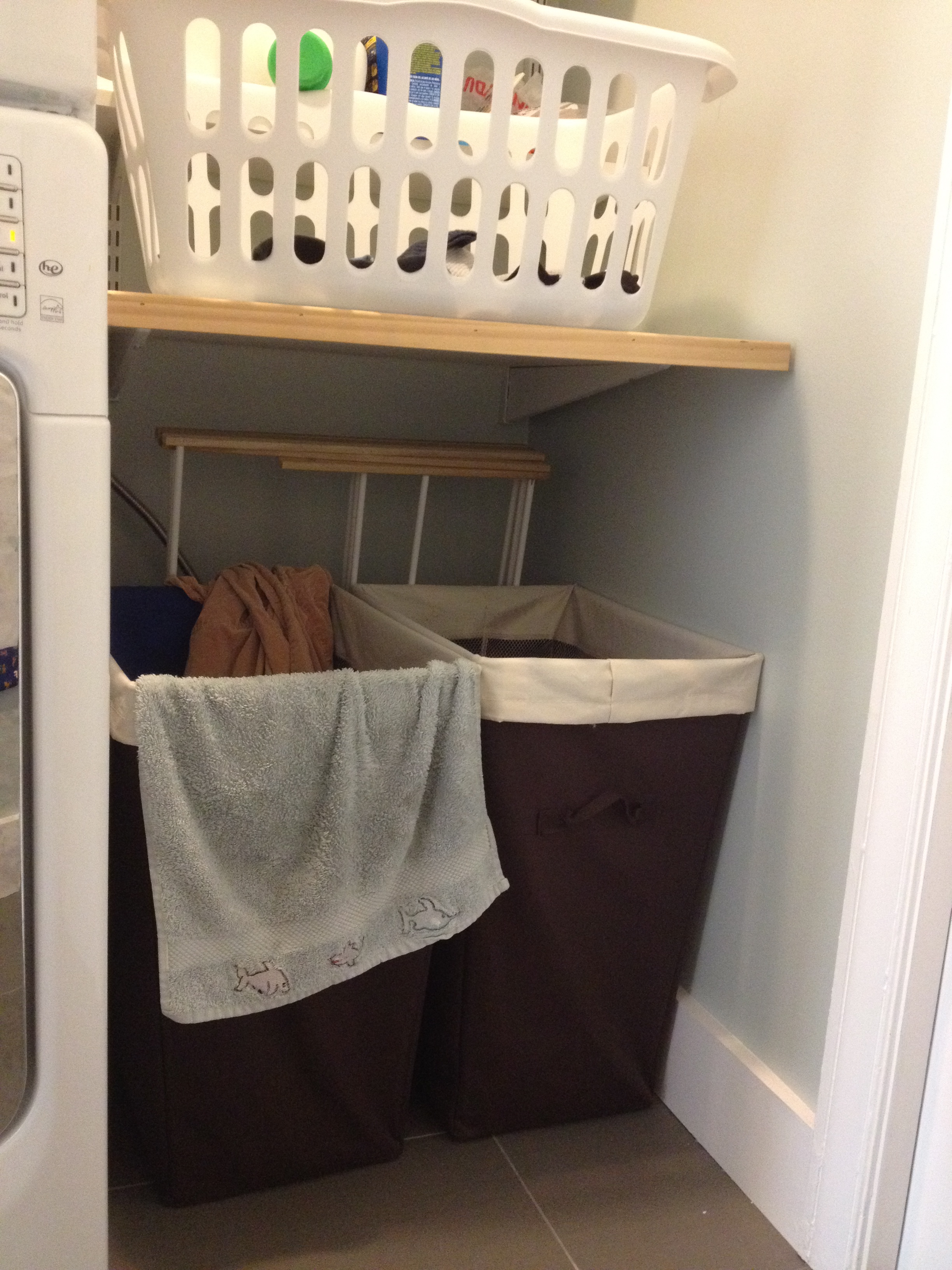
laundry area before - bottom

BEFORE: bottom of laundry area

Most of the examples of laundry room designs feature full rooms, and it was hard to apply those ideas to our little space. When I saw this laundry closet makeover by Amy at eat.sleep.decorate., I felt like it was just the inspiration I needed! I love the pretty storage baskets – all tied together by the cheerful green color scheme, but varied to give visual interest and a homey feel. I don’t always like designs to be symmetrical, but I think it works here, where there are so many things in a small space. The labels are adorable and functional too – even in a small space, where you basically know where things are, labels really help in both finding things quickly and in keeping things organized – you (and your family members – nah, who am I kidding?) are more likely to return things to their proper place, when it’s clearly labelled. Finally, I agree with her that a touch of art on the wall really makes this laundry area feel like a part of the home, rather than just a utilitarian necessity.

Amy's laundry closet

My inspiration: Amy at eat.sleep.decorate. created this fresh and organized laundry area. Click the picture to see her entire post with lots of great tips.

Go to eat.sleep.decorate.

I started by taking inventory and sorting what we had in the area:

  • Hampers for dirty clothes – I like to have separate ones for colors and whites, which makes starting loads easier, though we occasionally get things reshuffled by our toddler!
  • Baskets for clean clothes – I have one labeled for each child and a few extras.
  • Detergent, stain remover
  • Bags – mesh ones for delicates and wet-bags for cloth diapers.
  • Container for coins and other pocket treasures.
  • Other – garment drying racks, towels, cleaning supplies, etc..

Then I collected a variety of storage baskets to fit with the blue and white color scheme. Like the symmetry, a very simple color scheme works here, because it makes the area look less “busy.” I made some fabric-covered boxes for the top shelf (more on making those boxes in another post!) and the rest were items we had around the house. I love using the “root” basket for collecting coins and other odd items from pockets. It has a bit more style than you would expect for the laundry room, but I wasn’t using it for anything else at the moment, and its rustic shape and material contrasts nicely with the neat white and blue.  I moved around the shelves a little, to make things more accessible, too.

laundry after

AFTER: top of laundry area is neat and bright!

laundry after

AFTER: bottom of the laundry got a little sprucing up, too!

Amy used printables for her labels, and I think they look great. I don’t have a color printer, so I decided to print simple labels in black and white on this paper with blue and white clouds. I “laminated” them with clear contact paper and attached them to the containers either with clothespins or rickrack ribbon. For those, I punched holes, attached them to the baskets with safety pins, then hid the pins with a bit of ribbon.

labels

The labels help make the space feel organized. I tied these on with a bit of white rickrack.

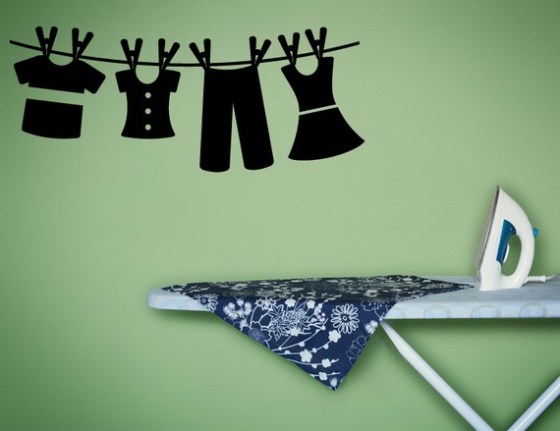
And for the final touch, some art! There are a lot of great ideas out there for laundry area art – vintage soap ads, wooden signs, etc.. I decided to do a simple wall decal. I’ve been hooked on decals since I did one in our nursery. Etsy has a lot of great ones with cute phrases, clothespin motifs, and more. I liked this laundry line decal and decided to try making one myself.

laundry decal

Adorable clothesline decal from Vinyl Wall Accents shop on Etsy. Click the picture to see all their designs and color options.

Go to shop on Etsy.

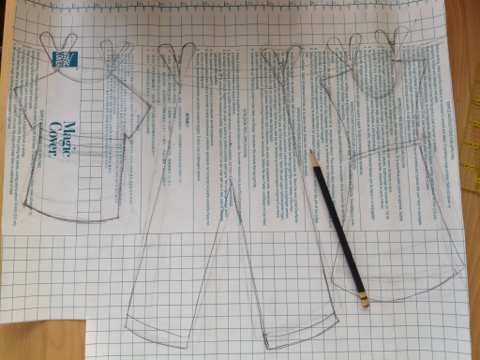
To make my decal, I cut a piece of white contact paper the size of the area I wanted to cover. On the back, I sketched my design. If you try this, remember that the finished decal will be a mirror image of your drawing – not an issue in this case, but definitely important if you are doing letters! Also, I freely disclose that I have never tried using contact paper to make a decal, and I’m not entirely sure that it is safe for the wall, but it is supposed to be removable, and from a quick browsing of the internet, it looks like other people have tried this, so I was willing to assume the risk (daredevil, I know!).

20120429-180901.jpg

To make your own decal from contact paper, sketch your design – in reverse – on the back of the paper. Then cut it out and hang!

laundry wall decal

I made the clothesline decal for our laundry area from white contact paper. It adds the perfect finishing touch!

decal

Close-up of the wall decal, cut out of white contact paper.

By the way, working on this area has made me think about a recent change to the laundry duties at our house.  I have been the main person doing laundry in our house (hubby more than makes up for it in the kitchen!), and it is a lot of work! Recently, our oldest, who is eight, asked if he could earn some money. He had just lost $6.50, most of his saved spending money, because I made him pay for his purchased lunch, the third time he forgot the one his dad packed (told you hubby more than makes up in the kitchen!).  So, what I saw was a win-win situation: I could be relieved of some laundry duties, while he could earn some spending money and also learn how to do laundry. The latter isn’t trivial – there was a boy in my freshman dorm who turned his bed sheets pink by washing them with some red clothes. Honestly, this doesn’t just happen in sitcoms; I saw it with my own eyes!

A small part of me feels a bit guilty about our kid doing our laundry to earn money, like when he mentioned the other day, “It seems like what is a lot of money to me is not a lot to you,” which is true. But overall, I think we have a great arrangement – my son gets to learn some domestic skills and earn spending money; I get more time to browse Pinterest and do projects for the blog. Okay, I’m (partially) kidding – I do also use some of the time to get ahead on other things around the house.  And, I never tell our son he has to do the laundry, but for now, he’s so excited about it that we have to stop him sometimes!

So, when you are thinking of home decorating ideas, don’t overlook your laundry area, no matter how small.  It’s a place where we all spend a lot of time, so I hope you got some inspiration to make your laundry area a pleasant place to be, too!

“Jewels”